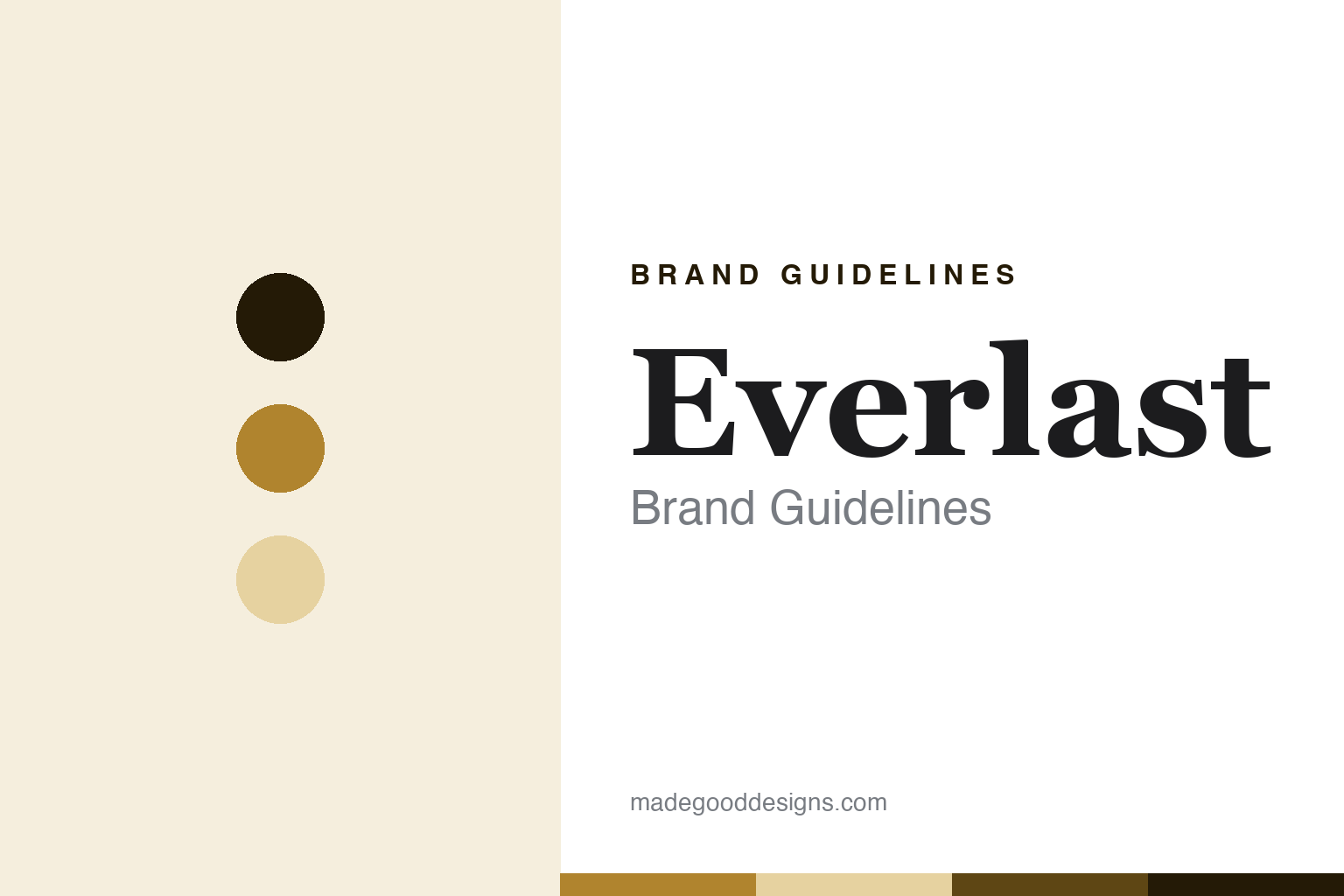
Everlast Brand Guidelines
The 1910 boxing heritage giant.
Aa
Two constants: a heritage-ochre palette and a heritage-serif register. Abstract homage — not an Everlast product or mark; no glove, bag or logo is reproduced.
The 1910 boxing heritage giant
Everlast is the century-old boxing heritage brand, founded in 1910 by Jacob Golomb, now owned by Frasers Group — a mass-market name whose heavy bags are still US-made while most gear is produced internationally by licensees.
Everlast opens the fighter’s-hands round as its heritage anchor and its conglomerate counterpoint — the most recognisable name in boxing, and the one that shows how a hundred-year-old maker becomes a licensed global brand. It was founded in 1910 by Jacob Golomb, a seventeen-year-old tailor’s son, in The Bronx, New York. Everlast makes and licenses the gear, and its answer to a round about where fight gear is made is a split one: some of it is still built in a US factory, and much of it is made around the world under its name.
Its identity is the 1910 boxing heritage giant. The century of history, the iconic red glove and the conglomerate ownership are the story here. A brand, heritage — and now mass-market. The 1910 boxing heritage giant.
(Honest notes, so the ownership is stated and the where-made claim stays measured. Everlast sells boxing gloves, heavy bags and protective gear as its heroes, and we report its performance language as the brand’s own. It was founded in 1910 by Jacob Golomb; a family-run site cites 1919, but 1910 is the brand-official and dominant date, so we use it. On ownership, the point that frames the round: Everlast is owned by Frasers Group, the United Kingdom retail group formerly named Sports Direct, which acquired it in 2007, and it runs a heavy licensing model, so much of the apparel and gear worldwide is made and sold by regional licensees under the Everlast name. On where it is made: its heavy bags and core boxing equipment are assembled at a genuine US factory in Moberly, Missouri, open since 1966, but gloves, most gear and apparel are made internationally by licensees, so we do not call it broadly “made in USA.” Its designs are IP we describe but do not reproduce; there is no official brand hex; these tones are an unofficial interpretation.)
Colour
Everlast lives in a heritage ochre. Click a swatch to copy the hex.
Everlast’s identity is historic, iconic and broad — a heritage ochre, an ink, a pale gold, a deep bronze, and a paper. The palette leans heritage ochre and pale gold: an old-leather, championship-belt register that nods to a century of boxing rather than a loud logo colour. It signals a boxing heritage giant — storied, familiar and mass-market. The honest caveat: with no published brand hex, these values are an original, unofficial interpretation, not first-party colours.
The lesson is a heritage ochre signals a historic, iconic identity. Everlast’s world is the red glove and the heavy bag, seen in a hundred title fights and on screen. For designers, it is a reminder that a warm ochre and a soft pale gold can carry a heritage brand — an old-leather tone held as colour, not as a product shot. Because these tones can fail as small text, keep type dark and let the colour live in the accents, palette and band. The takeaways: credit Jacob Golomb; date it to 1910; name Frasers Group; and treat any single hex as unofficial.
Typography
The register is a heritage serif — historic, iconic, storied.
Everlast’s identity carries a historic, iconic, storied spirit — a century-old name, not a start-up. A heritage serif captures the mood: classic, weighty and confident, the register of a brand that has been ringside since 1910. Set in a heritage-ochre palette, the heritage serif feels storied and familiar — exactly the personality Everlast carries. It behaves like an old championship name rather than a modern logo, mirroring worn leather. (Everlast’s real gloves, bags and the wordmark and crown emblem are things we describe but do not reproduce, and the exact typeface is not ours to use.) Because it is not ours to use, the honest description is “a heritage-serif brand,” shown here in a stand-in. The type behaves like the brand: historic, iconic and storied.
Aa
A heritage-serif brand — historic and iconic. (Specimen set in Playfair Display, a heritage-serif STAND-IN; NOT the Everlast logo or any glove.)
The fighter’s hands
Everlast stands for the 1910 boxing heritage giant.
Everlast opens the fighter’s-hands round as its heritage anchor. A heritage-ochre palette, a heritage serif and a 1910 founding make one thing — the 1910 boxing heritage giant — the whole identity: historic, iconic and mass-market. The century of history is the pitch, and the conglomerate ownership is the honest twist. The point is the most familiar name in boxing, opening a round about who makes fight gear and where.
Put to work, the identity is the brand told straight, ownership named and where-made measured. A maker in this spirit would credit Jacob Golomb, date it to 1910, and name Frasers Group. A reader in this spirit would keep the facts right: Everlast sells gloves, heavy bags and protective gear as its heroes; it was founded in 1910 in The Bronx; it is owned by Frasers Group (the former Sports Direct) since 2007 and runs a licensing model; and its heavy bags are US-made in Moberly, Missouri, while most gloves, gear and apparel are made internationally by licensees. Everlast opens the round, before Twins Special. The honest editorial moves are to date it to 1910, to name the conglomerate owner, to split the where-made claim honestly, and to keep any single hex unofficial.
For designers and brand-builders, Everlast opens the fighter’s hands: separate a heritage name from who owns it now — and split a made-here claim honestly. The lessons: let a century of history carry a brand while stating its current owner; date a heritage brand against a minor discrepancy; distinguish the one US-made line from the licensed rest; and never reproduce a mark. It is also a reminder to stay precise: Everlast is the 1910 boxing heritage brand, now owned by Frasers Group, whose heavy bags are made in Missouri while most gear is produced internationally by licensees — with the palette here an unofficial interpretation. Read that way, Everlast is less a glove than a heritage licence: historic, iconic, broad. The lesson for a brand is that history and honest ownership can coexist, and naming the conglomerate keeps the story earned. It is worth remembering, too, that Everlast began as a swimwear maker — Golomb named it for suits guaranteed to last more than a year, and pivoted to boxing when a young Jack Dempsey wanted gear that would last. Everlast made the-1910-boxing-heritage-giant the identity — proof that a heritage name can open a round.
Explore & save
Keep Everlast’s identity on hand — save it to a board in the Made Good inspiration library.
Everlast identity set
Pin the heritage-ochre palette and the heritage-serif register to your own board.