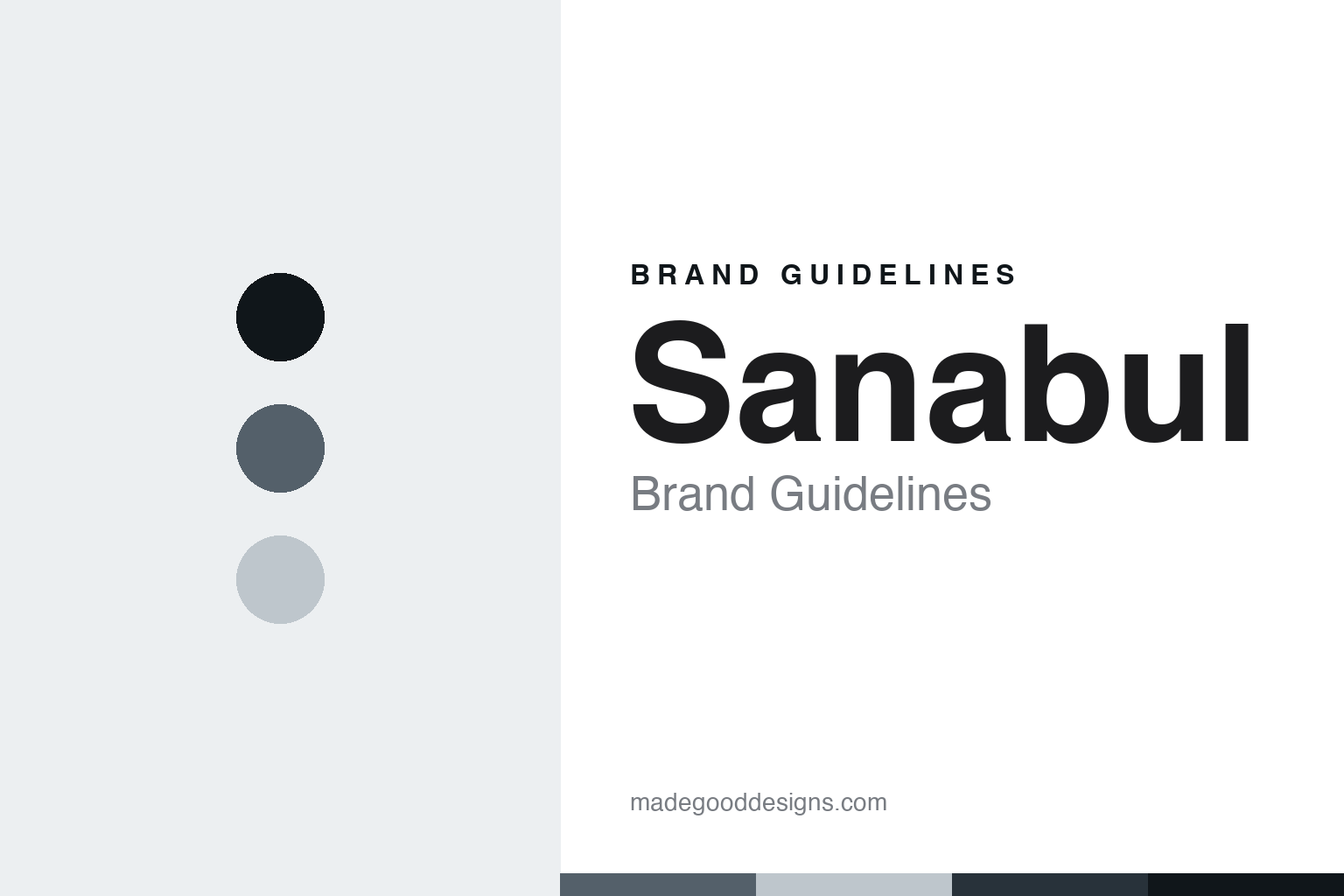
Sanabul Brand Guidelines
The value combat-sports brand.
Aa
Two constants: a slate palette and a value-sans register. Abstract homage — not a Sanabul product or mark; no glove, gi or logo is reproduced.
The value combat-sports brand
Sanabul is the founder-led California combat-sports brand founded in 2014 — an Amazon-native value maker of striking gloves and BJJ gis, designed in the US and made overseas.
Sanabul closes the fighter’s-hands round as its value node — the brand that made decent striking gear accessible at an entry price, and grew from an online seller into a name backed by champions. It was founded in 2014 in Los Angeles. Sanabul makes and sells the gear, and its answer to a round about where fight gear is made is a value one: designed in California, made overseas, priced for the beginner.
Its identity is the value combat-sports brand. The accessible pricing, the Amazon-native growth and the broad gloves-and-gis range are the story here. A brand, value. The value combat-sports brand.
(Honest notes, so the founder is attributed carefully and the where-made claim is measured. Sanabul sells striking gloves and BJJ gis as its heroes, led by its Essential and Essential Gel gloves, and we report its performance language as the brand’s own. On the founder: it is founder-led, and its founder and chief executive is reported to be Imran Jawaid; because that is drawn from third-party business databases and press rather than the brand’s own site, we attribute it carefully. It is US, private and independent, and notably the UFC champion Sean O’Malley is an equity partner as well as a marketing figure. On where it is made: Sanabul does not disclose a country of manufacture, saying it sources materials from around the world; combat gear at this price tier is overwhelmingly produced in Pakistan and China, so we say “designed in the US, made overseas,” without stating a specific factory as fact. Its designs, and athlete signature marks, are IP we describe but do not reproduce; there is no official brand hex; these tones are an unofficial interpretation.)
Colour
Sanabul lives in a slate. Click a swatch to copy the hex.
Sanabul’s identity is accessible, practical and modern — a slate, an ink, a pale steel, a deep slate, and a paper. The palette leans slate and pale steel: a plain, no-nonsense register that nods to a value brand rather than a loud logo colour. It signals a value combat-sports brand — practical, honest and entry-level. The honest caveat: with no published brand hex, these values are an original, unofficial interpretation, not first-party colours.
The lesson is a slate signals an accessible, value identity. Sanabul’s world is the entry-level glove and the training gi. For designers, it is a reminder that a neutral slate and a soft pale steel can carry a value brand — a practical tone held as colour, not as a product shot. Because these tones can fail as small text, keep type dark and let the colour live in the accents, palette and band. The takeaways: attribute Imran Jawaid carefully; date it to 2014; state designed-here, made-overseas; and treat any single hex as unofficial.
Typography
The register is a value sans — accessible, practical, modern.
Sanabul’s identity carries an accessible, practical, modern spirit — an everyday training object, not a luxury label. A value sans captures the mood: clean, friendly and confident, the register of an entry-level brand done well. Set in a slate palette, the value sans feels accessible and practical — exactly the personality Sanabul carries. It behaves like a straightforward, made thing rather than a loud logo, mirroring training-glove materials. (Sanabul’s real gloves, gis, the wordmark and athlete marks are things we describe but do not reproduce, and the exact typeface is not ours to use.) Because it is not ours to use, the honest description is “a value-sans brand,” shown here in a stand-in. The type behaves like the brand: accessible, practical and modern.
Aa
A value-sans brand — accessible and practical. (Specimen set in Manrope, a value-sans STAND-IN; NOT the Sanabul logo or any glove.)
The fighter’s hands
Sanabul stands for the value combat-sports brand.
Sanabul closes the fighter’s-hands round as its value node. A slate palette, a value sans and a 2014 founding make one thing — the value combat-sports brand — the whole identity: accessible, practical and modern. The accessible pricing is the pitch, and the Amazon-native growth is the proof. The point is a brand that democratised decent striking gear, closing a round about where fight gear is made and at what price.
Put to work, the identity is the brand told straight, founder attributed carefully and where-made measured. A maker in this spirit would attribute Imran Jawaid carefully, date it to 2014, and state designed-here, made-overseas. A reader in this spirit would keep the facts right: Sanabul sells striking gloves and BJJ gis as its heroes, led by the Essential and Essential Gel gloves; it was founded in 2014 in Los Angeles; it is US, private and founder-led, with the UFC champion Sean O’Malley as an equity partner; and it designs in the US and makes overseas, without disclosing a specific factory. Sanabul closes the round, after Rival. The honest editorial moves are to attribute the founder carefully, to state designed-here, made-overseas, to note the athlete-owner, and to keep any single hex unofficial.
For designers and brand-builders, Sanabul closes the fighter’s hands: let accessible value be the identity — and attribute a founder you can only source second-hand with care. The lessons: build a brand on accessible pricing and reach; attribute a founder carefully when the brand does not name them; state a designed-here, made-overseas reality plainly; treat athlete marks as personal rights; and never reproduce a logo. It is also a reminder to stay precise: Sanabul is the founder-led California combat-sports brand founded in 2014, an Amazon-native value maker of striking gloves and BJJ gis, designed in the US and made overseas — with the palette here an unofficial interpretation. Read that way, Sanabul is less a glove than an access point: practical, accessible, modern. The lesson for a brand is that value and honesty reinforce each other, and attributing the founder carefully keeps the story earned. Sanabul made the-value-combat-sports-brand the identity — proof that accessible value can close a round.
Explore & save
Keep Sanabul’s identity on hand — save it to a board in the Made Good inspiration library.
Sanabul identity set
Pin the slate palette and the value-sans register to your own board.