Goldpfeil Brand Guidelines
The gold arrow, remembered.
Aa
Two constants: a heritage-gold palette and a Bauhaus sans register. Abstract homage — not a Goldpfeil design or the gold-arrow mark.
The gold arrow, remembered
Goldpfeil was Offenbach’s great luxury leather house, founded in 1856 and closed in 2011 — remembered here, not sold.
Goldpfeil is a lesson in a name that closed but is still searched. A German house whose name means “gold arrow,” it was for over a century the largest of Offenbach’s luxury leather makers, known for fine box-calf and understated German luxury. Its answer to “what survives of the name?” is the starkest in this round: the house is gone, and the name lives on only as scattered licences. A gold arrow, remembered.
Its identity, in the past tense, was German box-calf luxury. Goldpfeil’s fine calfskin, its gold-arrow mark and its Offenbach making were the work it was known for. A house, now history. A name that outlived its factory by way of trademark alone.
(Honest notes, so the story stays precise and in the past tense. Goldpfeil was founded in 1856 in Offenbach am Main as Ludwig Krumm AG, taking the “gold arrow” as its mark, and became the leading name in Offenbach’s leather trade. Its decline is documented: it was absorbed into the Hong-Kong-based EganaGoldpfeil group in 1998, and after its owner’s death in 2007 that group filed for insolvency in 2008; the Offenbach factory closed for good in January 2011, with the German Leather Museum preserving its archive. The name then fragmented into licences — a German retailer used it sporadically, and a Tokyo company runs a Gold Pfeil line in Asia — so any goods carrying the name today are made in Asia, and genuinely German-made pieces are vintage only. Its gold-arrow mark is protected IP, described but never reproduced, and there is no official brand hex — these tones are an unofficial interpretation. This is design commentary about a closed house and does not promote any product.)
Colour
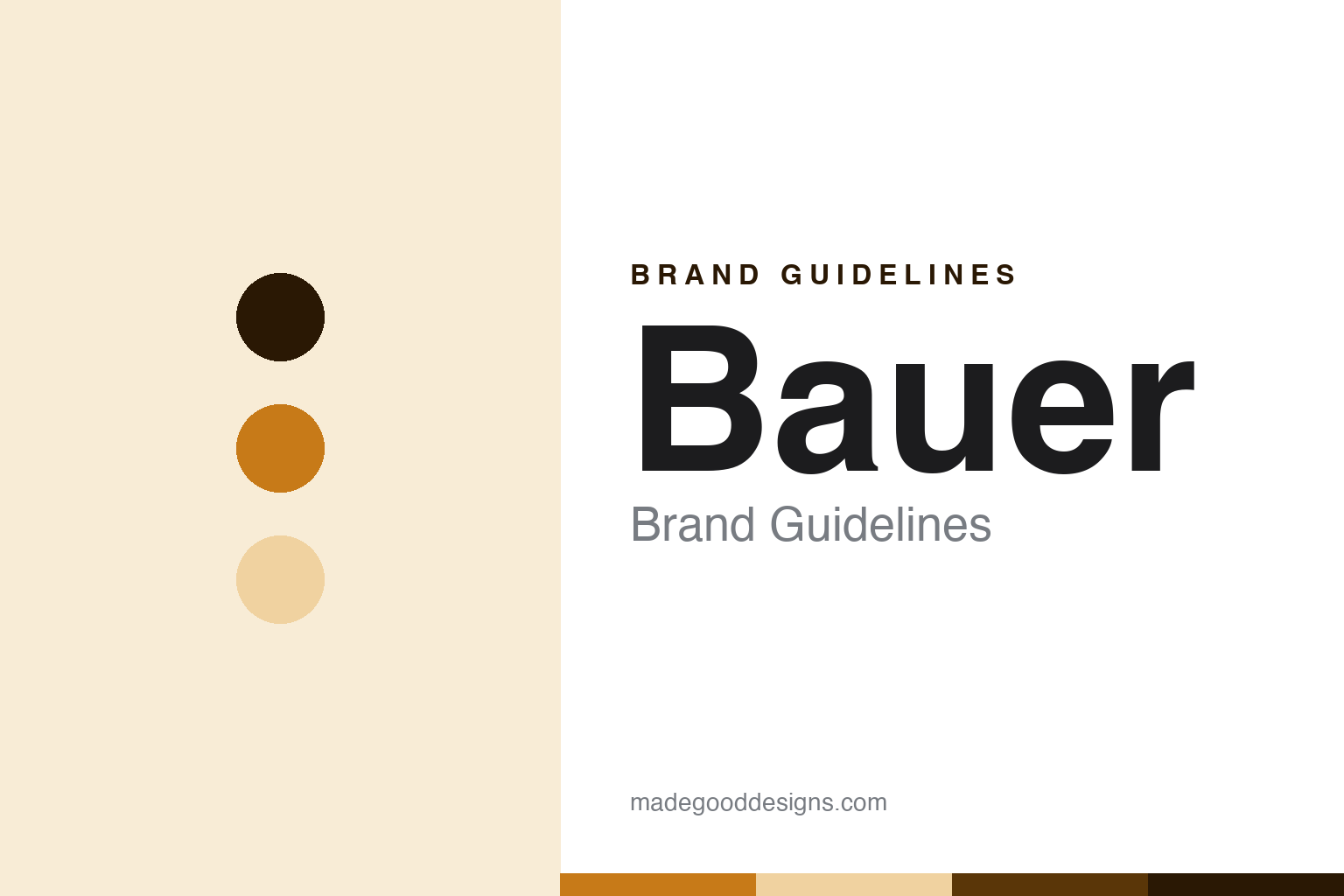
Goldpfeil lived in a heritage-gold palette. Click a swatch to copy the hex.
Goldpfeil’s identity was refined, German and understated — a heritage gold, an ink, a parchment, a bark brown, and a chalk. The palette leans gold and parchment: the register of a fine box-calf house whose very name was a gold arrow. It signalled heritage and restraint over show. The honest caveat: with no published brand hex, these values are an original, unofficial interpretation, not first-party colours.
The lesson is a gold palette signals a refined, German heritage identity. Goldpfeil’s world was a box-calf, Offenbach-made, discreet-luxury object. For designers, it is a reminder that a heritage gold and a soft parchment can carry a brand built on a fine leather and a long name — the gold of the arrow and the parchment of aged calfskin. Because these tones can fail as small text, keep type dark and let the colour live in the accents, palette and band. The takeaways: prize the material; keep it understated; tell the history plainly; and treat any single hex as unofficial.
Typography
The register is a Bauhaus sans — geometric, clean, German.
Goldpfeil’s identity carried a geometric, clean, German spirit — a refined object, not a loud one. A Bauhaus sans captures the mood: circular, even and modernist, the register of a German design heritage. Set in a gold palette, the Bauhaus sans feels geometric and clean — exactly the personality Goldpfeil carried. It was understated rather than flashy, mirroring a discreet box-calf luxury. (Goldpfeil’s real designs and gold-arrow mark are things we describe but do not reproduce, and the exact typeface is not ours to use.) Because it is not ours to use, the honest description is “a Bauhaus-sans spirit,” shown here in a stand-in. The type behaves like the maker did: geometric, clean and German.
Aa
A Bauhaus-sans spirit — geometric and clean. (Specimen set in Jost, a Bauhaus-sans STAND-IN; NOT the Goldpfeil wordmark or the gold-arrow mark.)
What survives of the name
Goldpfeil stands for the gold arrow, remembered.
Goldpfeil is a lesson in a name that survives only as memory and licence. A gold palette, a Bauhaus sans and a box-calf heritage make one long German luxury the whole story — remembered, not running. The closure is the point. The point is that even the leading house of a whole leather town can fall, and what remains is a mark: searched, licensed, but no longer the Offenbach maker it once was.
Told honestly, the identity is memory as design. A brand builder learning from Goldpfeil would see the full arc: a name that led its trade for over a century, a foreign acquisition, an insolvency, a factory that closed, and an archive saved by a museum. The cautionary thread is real — ownership that pooled the name into a group, then let it scatter into licences once the group failed. But the heritage is worth remembering accurately: a fine German box-calf house, understated, that made “gold arrow” a mark of quality. The lesson Goldpfeil teaches is that a name can outlive its house as pure trademark, and that the honest thing is to say so — never to imply the Offenbach house still makes. The heritage is the personality, and the closing of the factory is part of the record.
For designers and brand-builders, Goldpfeil closes this round about what survives of a name on its most sobering note: a name can endure as memory and licence long after the house is gone. The lessons: prize the material; keep the story honest; treat a licensed name for what it is; and never reproduce a protected mark. It is also a reminder to stay precise: Goldpfeil was a German luxury leather house founded in 1856 in Offenbach as Ludwig Krumm AG, whose factory closed in 2011, its name now surviving only as scattered licences — with the palette here an unofficial interpretation. Goldpfeil made a heritage worth remembering — proof that a name can outlive the house.
Explore & save
Keep Goldpfeil’s identity on hand — save it to a board in the Made Good inspiration library.
Goldpfeil identity set
Pin the heritage-gold palette and the Bauhaus-sans register to your own board.