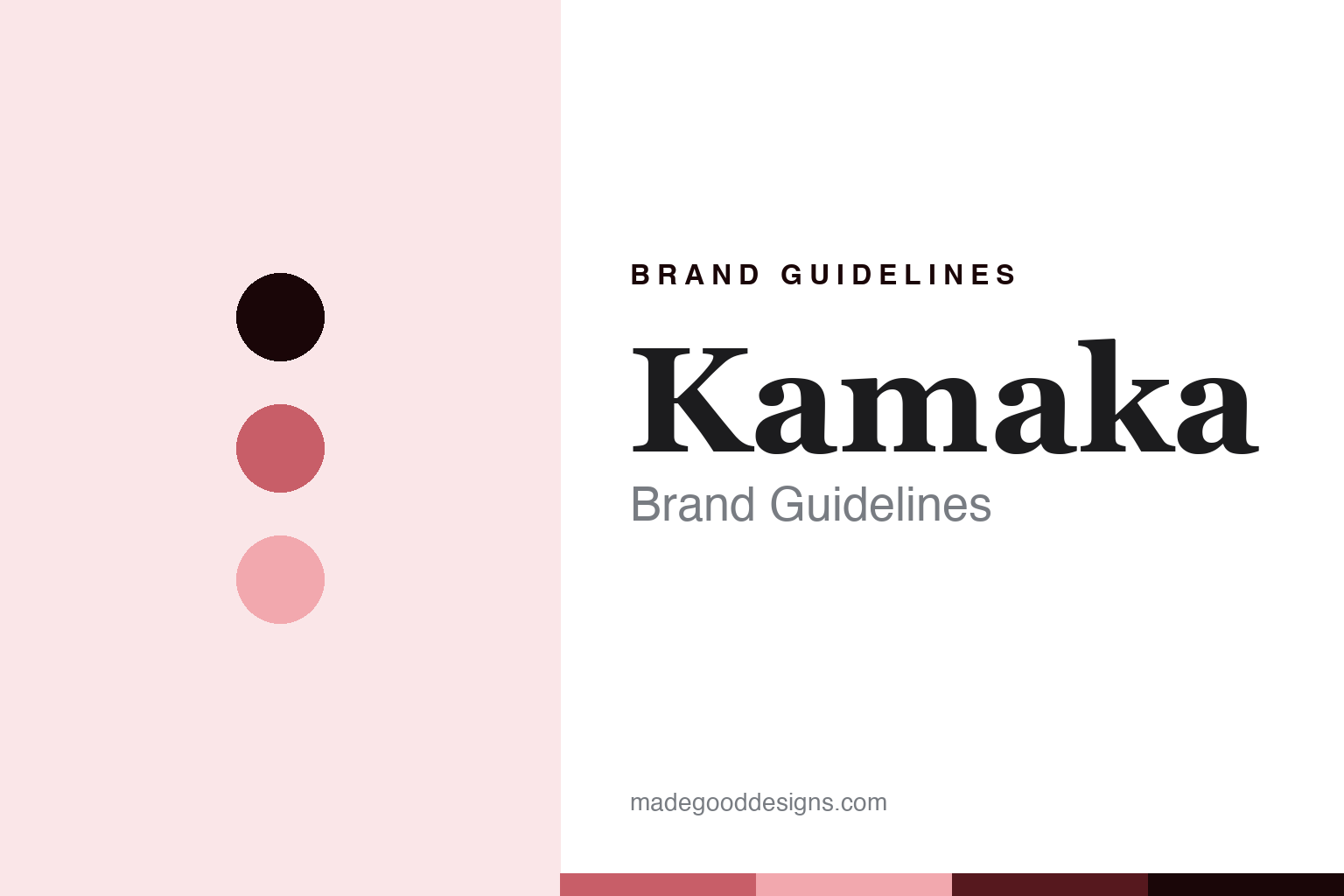
Kamaka Brand Guidelines
The family Hawaiian ukulele maker since 1916.
Aa
Two constants: a hibiscus-coral palette and an island-luthier-serif register. Abstract homage — not a Kamaka product or mark; no ukulele or pineapple silhouette, cultural motif or logo is reproduced.
The family Hawaiian ukulele maker since 1916
Kamaka is the family-owned Honolulu ukulele maker, handcrafting in Hawaii across four generations since 1916, home of the pineapple ukulele.
Kamaka brings the round its Hawaiian family maker — the Honolulu ukulele house, founded in 1916 and still owned and run by the founding family four generations on, handcrafting every instrument in Hawaii. Kamaka makes the instrument at the bench, and its answer to a round about the workshop is the Hawaiian-made ukulele — built entirely in Honolulu, with the maker’s own pineapple-shaped design among its heroes. A brand, Hawaiian.
Its identity is the family Hawaiian ukulele maker since 1916. The four-generation family ownership, the all-Hawaii handcraft and the pineapple ukulele are the story here — held with cultural care. A brand, Hawaiian. The family Hawaiian ukulele maker since 1916.
(Honest notes, so the heritage is respected, and the craft is credited. Kamaka Hawaii makes ukuleles as its heroes, handcrafted in Hawaii, and we report its performance language as the brand’s own marketing. It was founded in 1916 by Samuel K. Kamaka Sr., who had apprenticed under Manuel Nunes, and it is private and still family-owned, run across four generations, with no outside parent. On where it is made, the star theme of this round, its whole line is handcrafted in Hawaii, with no overseas line. Its pineapple ukulele, from 1927 and patented in 1928, is Kamaka’s own design, so we treat it as the maker’s trade dress and do not reproduce its shape. A note of respect: Kamaka is a genuine Native Hawaiian craft with a long place in Hawaiian music, recognised in the Hawaiian Music Hall of Fame, so we frame its Hawaiian identity as heritage rather than ornament and use no Hawaiian cultural motifs as decoration. Its designs are IP we describe but do not reproduce; there is no official brand hex; these tones are an unofficial interpretation.)
Colour
Kamaka lives in a hibiscus coral. Click a swatch to copy the hex.
Kamaka’s identity is Hawaiian, family and handcrafted — a hibiscus coral, an ink, a pale blossom, a deep madder, and a paper. The palette leans hibiscus coral and pale blossom: a warm island register that nods to Hawaii rather than a loud logo colour, and it stays a colour rather than borrowing any cultural pattern. It signals a family Hawaiian ukulele maker. The honest caveat: with no published brand hex, these values are an original, unofficial interpretation, not first-party colours.
The lesson is a hibiscus coral signals a Hawaiian, family identity. Kamaka’s world is a handcrafted Hawaiian ukulele. For designers, it is a reminder that a hibiscus coral and a soft pale blossom can carry an instrument brand — an island warmth held as colour, not as appropriated motif. Because these tones can fail as small text, keep type dark and let the colour live in the accents, palette and band. The takeaways: keep it family-owned and Hawaii-made; treat the pineapple shape as the maker’s own; frame Hawaiian heritage respectfully; and treat any single hex as unofficial.
Typography
The register is an island-luthier serif — handcrafted, editorial, Hawaiian.
Kamaka’s identity carries a handcrafted, editorial, Hawaiian spirit — a family island workshop, not a graphics label. An island-luthier serif captures the mood: refined, warm and confident, the register of a handcrafted ukulele. Set in a hibiscus-coral palette, the island-luthier serif feels handcrafted and Hawaiian — exactly the personality Kamaka carries, held respectfully. It is a made object rather than a logo, mirroring wood grain. (Kamaka’s real ukuleles, the pineapple shape and any cultural imagery are things we describe but do not reproduce, and the exact typeface is not ours to use.) Because it is not ours to use, the honest description is “an island-luthier-serif maker,” shown here in a stand-in. The type behaves like the brand: handcrafted, editorial and Hawaiian.
Aa
An island-luthier-serif maker — handcrafted and Hawaiian. (Specimen set in Playfair Display, an island-luthier-serif STAND-IN; NOT the Kamaka logo, the pineapple shape or any cultural motif.)
The workshop
Kamaka stands for the family Hawaiian ukulele maker since 1916.
Kamaka brings the round its Hawaiian family maker. A hibiscus-coral palette, an island-luthier serif and a 1916 founding make one thing — the family Hawaiian ukulele maker — the whole identity: Hawaiian, family and handcrafted. The four-generation family ownership is the pitch, and the all-Hawaii handcraft is the proof. The point is a Hawaiian-made ukulele from a family that has kept the bench for over a century, in a round about the maker’s bench.
Put to work, the identity is the family maker told straight, with cultural care — with the craft credited and the heritage respected. A maker in this spirit would keep it family-owned and Hawaii-made, treat the pineapple shape as the maker’s own, and frame Hawaiian heritage respectfully. A reader in this spirit would keep the facts right: Kamaka Hawaii makes ukuleles as its heroes, handcrafted in Hawaii; it was founded in 1916 by Samuel K. Kamaka Sr., who apprenticed under Manuel Nunes, and is private and still family-owned across four generations with no outside parent; its whole line is handcrafted in Hawaii with no overseas line; its pineapple ukulele, from 1927 and patented in 1928, is its own design; and Kamaka is a genuine Native Hawaiian craft with a recognised place in Hawaiian music, so its Hawaiian identity is framed as heritage, not ornament. Kamaka carries the round’s independent theme into the Pacific, with the strongest heritage and the clearest cultural-care obligation. The honest editorial moves are to date it to 1916, to credit Samuel K. Kamaka Sr., to keep it family and Hawaii-made, to treat the pineapple as its own design, and to use no cultural motif as decoration.
For designers and brand-builders, Kamaka continues the workshop: keep it family and Hawaii-made — and hold the heritage with care. The lessons: let a century of family craft carry a brand; keep an all-domestic handcraft as the claim; treat a maker’s own patented shape as its trade dress; frame a living cultural heritage as heritage, never as decoration; and never reproduce an instrument or a cultural motif. It is also a reminder to stay precise: Kamaka is the family-owned Honolulu ukulele maker, handcrafting in Hawaii across four generations since 1916, home of the pineapple ukulele — with the palette here an unofficial interpretation. Read that way, Kamaka is less a ukulele than a family bench: Hawaiian, family, handcrafted. The lesson for a brand is that family ownership and respected heritage reinforce each other, and keeping the craft in Hawaii keeps the story earned. Kamaka made the-family-Hawaiian-ukulele-maker the identity — proof that a bench can carry a round, its Hawaiian maker.
Explore & save
Keep Kamaka’s identity on hand — save it to a board in the Made Good inspiration library.
Kamaka identity set
Pin the hibiscus-coral palette and the island-luthier-serif register to your own board.