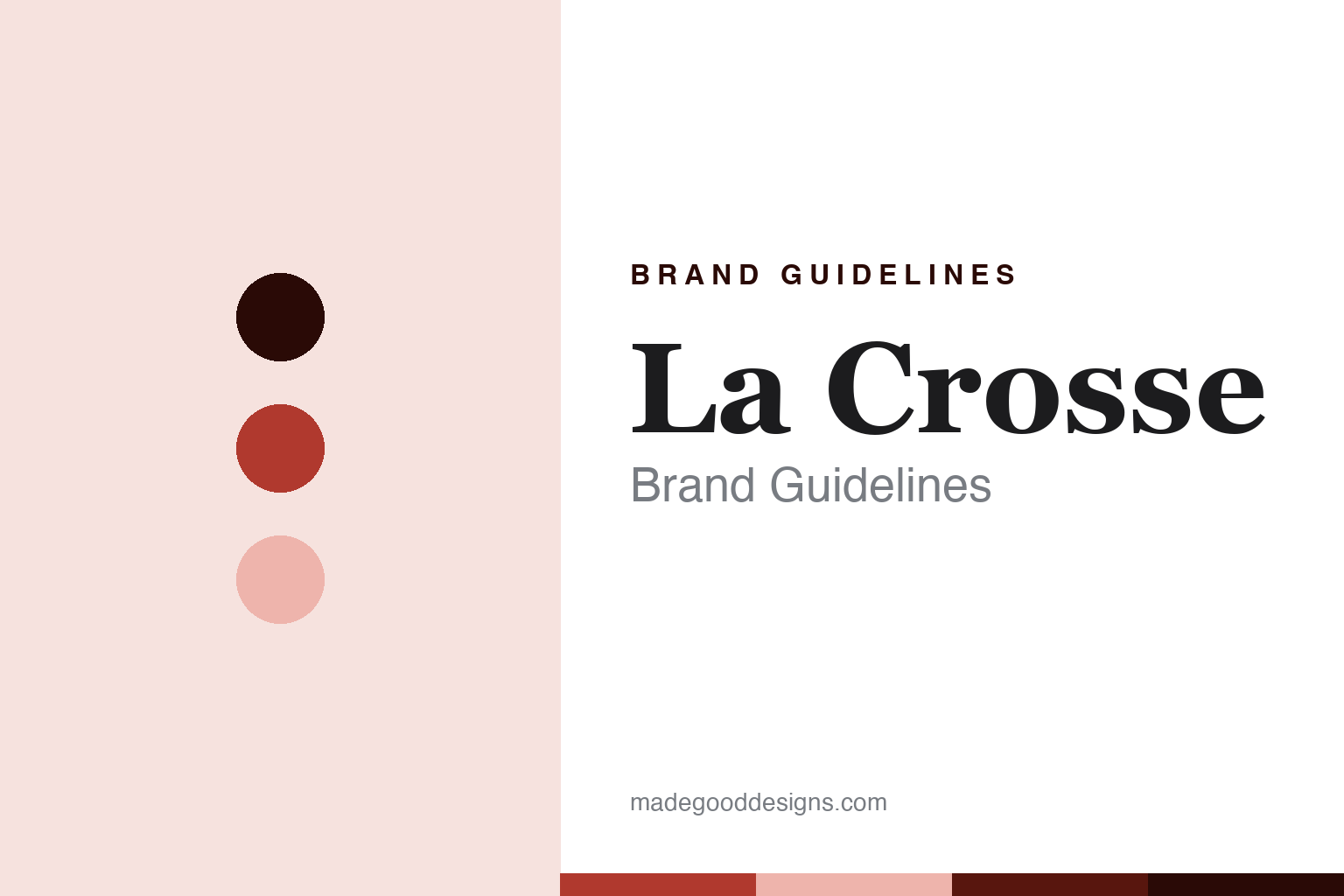
La Crosse Brand Guidelines
From German clocks to weather.
Aa
Two constants: a heritage-red palette and a heritage-serif register. Abstract homage — not a La Crosse product or mark; no station, clock or logo is reproduced.
From German clocks to weather
La Crosse is the family-owned Wisconsin company a US Army policeman founded in 1983 by importing German clocks — then brought the atomic clock to America.
La Crosse follows Ambient Weather as the round’s clock-heritage node — a Wisconsin company an Army policeman founded by importing German grandfather clocks, which brought the radio-controlled atomic clock to America and grew into weather stations, still family-owned. Its answer to a round about who owns the stations and where they are made is a family one: a genuine American family firm with a German-importing origin, designing at home and making abroad.
Its identity is from German clocks to weather. The importing origin, the atomic clock and the family ownership are the story here. Clocks first, weather next. From German clocks to weather.
(Honest notes, so the founding, the ownership and the making are framed accurately, with a heritage clarified. La Crosse sells atomic clocks and weather stations as its heroes — its radio-controlled clocks and colour weather stations with the La Crosse View app; we report its language as the brand’s own. On origin: La Crosse Technology was founded in 1983 by Allan McCormick, a US Army Military Police dog handler stationed in Germany, who began by importing German grandfather clocks, so its German heritage is an importing origin, not a German parent, and we note the second generation, his twin sons, became part-owners in 2022. On headquarters: La Crosse, Wisconsin. On ownership: it is independent and family-owned by the McCormick family, not German-owned, and we keep the separate German company Technoline distinct, as an OEM-sharing firm rather than a parent. On where it is made: designed and supported in the US but manufactured in China, reported rather than company-stated, with a 2009 manufacturing joint venture, and it still does some US wood-working for grandfather-clock cases. On products, attributed: it introduced the radio-controlled clock to the US commercial market, which the record dates to 1991 though a company page says 1996, and several firsts, such as the first colour LCD weather station, are self-claims. Its designs and the La Crosse Technology name are IP we describe but do not reproduce; there is no official brand hex; these tones are an unofficial interpretation.)
Colour
La Crosse lives in a heritage red. Click a swatch to copy the hex.
La Crosse’s identity is importing-born, family-owned and China-made — a heritage red, an ink, a pale red, a deep crimson, and a paper. The palette leans heritage red and deep crimson: a classic, timekeeping register that nods to atomic clocks and a family heritage rather than a loud logo colour. It signals from German clocks to weather — importing-born, family-owned and China-made. The honest caveat: with no official brand hex, these values are a heritage, unofficial interpretation, not first-party colours.
The lesson is a heritage red signals a timekeeping, family identity. La Crosse’s world is the atomic clock and the weather display. For designers, it is a reminder that a heritage red and a pale red can carry a family, timekeeping brand — a classic tone held as an accent, not a product shot. Because a bright hue can fail as small text, keep type dark and let the colour live in the accents, palette and band. The takeaways: date the founding to 1983 and Allan McCormick; clarify the German heritage as an importing origin, not a German parent; credit the family ownership; keep Technoline distinct; and attribute the atomic-clock and firsts claims.
Typography
The register is a heritage serif — importing-born, family-owned, China-made.
La Crosse’s identity carries an importing-born, family-owned, China-made spirit — a family firm that came from clocks. A heritage serif captures the mood: classic, editorial and timekeeping, the register of an atomic-clock maker. Set in a heritage-red palette, the heritage serif feels established and warm — exactly the personality La Crosse carries. It behaves like a made, timed thing rather than a loud logo, mirroring a cloud-band and a forecast-wave. (La Crosse’s real products and the name are things we describe but do not reproduce, and the exact typeface is not ours to use.) Because it is not ours to use, the honest description is “a heritage-serif brand,” shown here in a stand-in. The type behaves like the brand: importing-born, family-owned and China-made.
Aa
A heritage-serif brand — established and warm. (Specimen set in Fraunces, a heritage-serif STAND-IN; NOT the La Crosse logo or products.)
The weather-station node
La Crosse stands for from German clocks to weather.
La Crosse sits fifth in the round as its clock-heritage node. A heritage-red palette, a heritage serif and a 1983 founding make one thing — from German clocks to weather — the whole identity: importing-born, family-owned and China-made. The importing origin is the pitch, the atomic clock is the milestone, and the family ownership is the frame. The point is a genuine American family firm with a German-importing origin, in a round about who owns the stations and where they are made.
Put to work, the identity is the brand told straight, the heritage clarified and the claims attributed. A brand in this spirit would date the founding to 1983 and Allan McCormick, clarify the German heritage as an importing origin, credit the family ownership, keep Technoline distinct, and attribute the atomic-clock and firsts claims. A reader in this spirit would keep the facts right: La Crosse sells atomic clocks and colour weather stations with the La Crosse View app; it was founded in 1983 by Allan McCormick, a US Army policeman who imported German grandfather clocks; it is family-owned by the McCormicks, not German-owned; it is designed in the US and made in China; and it introduced the radio-controlled clock to the US market around 1991. La Crosse sits after Ambient Weather and before Ecowitt. The honest editorial moves are to date the founding, to clarify the heritage, to credit the family, and to attribute the claims.
For designers and brand-builders, La Crosse carries the weather-station node: clarify a heritage — importing origin, not a foreign parent. The lessons: a brand can come to its category from another, here La Crosse from clocks to weather; a founding is dated to 1983 and Allan McCormick, a US Army policeman stationed in Germany who began by importing German grandfather clocks; a heritage is clarified as an importing origin rather than a German parent company, with the German firm Technoline kept distinct as an OEM-sharing partner; an ownership is credited as independent and family-owned by the McCormick family; a making is attributed as designed in the US and made in China; and the milestones are attributed, the radio-controlled clock introduced to the US market around 1991 and the various firsts kept as self-claims. It is also a reminder to stay precise: La Crosse is the family-owned, China-made American atomic-clock-and-weather brand — with the palette here an unofficial interpretation, the German heritage an importing origin, and “La Crosse” a city name whose protectable mark is La Crosse Technology. The hook is that path: La Crosse came to weather from clocks, a US Army policeman importing German grandfather clocks founding La Crosse Technology in 1983, bringing the radio-controlled atomic clock to America, still a family-owned Wisconsin company. Read that way, La Crosse is less a single station than from German clocks to weather: importing-born, family-owned, China-made. The lesson for a brand is that clarifying a heritage and crediting the family reinforce each other, and dating the founding keeps the story earned. La Crosse made from-German-clocks-to-weather the identity — proof that an honestly-clarified heritage can anchor a node.
Explore & save
Keep La Crosse’s identity on hand — save it to a board in the Made Good inspiration library.
La Crosse identity set
Pin the heritage-red palette and the heritage-serif register to your own board.