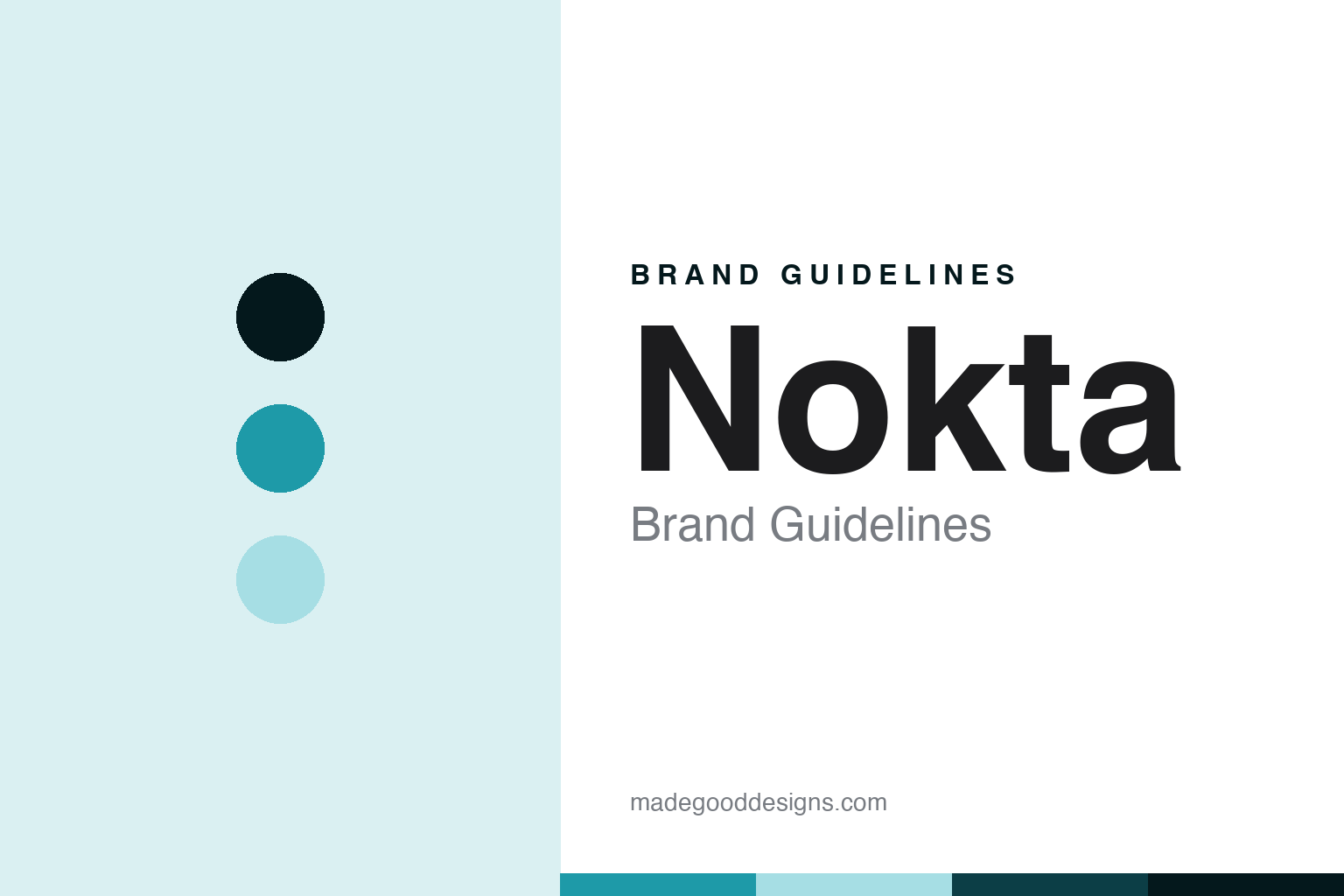
Nokta Brand Guidelines
The Turkish challenger.
Aa
Two constants: a Turkish-turquoise palette and a challenger-sans register. Abstract homage — not a Nokta product or mark; no detector, coil or logo is reproduced.
The Turkish challenger
Nokta is an Istanbul maker that grew by acquiring its rival Makro in 2014, unified as “Nokta” in 2021 — and drew a patent suit from Minelab over its Legend.
Nokta follows Minelab as the round’s challenger node — an Istanbul maker that grew by acquiring a rival, unified its name, and pushed hard enough at the high end to draw a patent suit from the premium brand in the previous node. Its answer to a round about who owns the detectors is the independent one: a Turkish company that stayed its own and took on the incumbents.
Its identity is the Turkish challenger. The Istanbul origin, the Makro acquisition and the Minelab suit are the story here. Independent, ambitious. The Turkish challenger.
(Honest notes, so the origin, the timeline, the ownership and a live dispute are framed accurately, with the round’s biggest corrections. Nokta sells feature-rich detectors as its heroes — the Legend flagship, the Simplex and the Anfibio; we report its language as the brand’s own. On origin and timeline, corrected: Nokta was founded in Istanbul around 2001, though its own site copyright reads 2003, so we flag the founding as uncertain; Makro was a separate, older Turkish brand; and, correcting the common “merger” story, Nokta acquired Makro in December 2014 and then traded as Nokta Makro, while 2017 was when it was certified as an official research and development centre, not a merger, and it unified its name to simply Nokta in 2021, not 2022, since 2022 is when the Legend launched. On ownership: it is an independent Turkish company, headquartered in Istanbul, operating within a self-stated Nokta Holding, with manufacturing stated in Istanbul, and an export figure we hedge. On a live dispute, dated and unresolved: Minelab filed a patent-infringement suit against Nokta in November 2022 over the Legend, Nokta publicly denied the claims as baseless, and since we could not confirm an outcome we report it as filed and unresolved rather than assert a winner. Its designs and the Nokta name are IP we describe but do not reproduce; there is no official brand hex; these tones are an unofficial interpretation.)
Colour
Nokta lives in a Turkish turquoise. Click a swatch to copy the hex.
Nokta’s identity is independent, acquisitive and feature-rich — a Turkish turquoise, an ink, a pale aqua, a deep teal, and a paper. The palette leans Turkish turquoise and deep teal: a bright, confident register that nods to an ambitious challenger rather than a loud logo colour. It signals the Turkish challenger — independent, acquisitive and feature-rich. The honest caveat: with no official brand hex, and a black-with-red-or-orange identity documented, these values are a confident, unofficial interpretation, not first-party colours.
The lesson is a Turkish turquoise signals a confident, challenger identity. Nokta’s world is the feature-rich, keen-value detector. For designers, it is a reminder that a bright turquoise and a deep teal can carry an ambitious, independent brand — a confident tone held as an accent, not a product shot. Because a bright hue can fail as small text, keep type dark and let the colour live in the accents, palette and band. The takeaways: flag the founding as uncertain around 2001; correct the timeline to a 2014 Makro acquisition, a 2017 R&D certification and a 2021 rename; describe the independent Turkish ownership; and report the Minelab suit as filed and unresolved.
Typography
The register is a challenger sans — independent, acquisitive, feature-rich.
Nokta’s identity carries an independent, acquisitive spirit — a challenger that grew by buying its rival. A challenger sans captures the mood: clean, current and confident, the register of an ambitious independent. Set in a Turkish-turquoise palette, the challenger sans feels bright and assured — exactly the personality Nokta carries. It behaves like a made, competitive thing rather than a loud logo, mirroring a discrimination-band and a sweep-arc. (Nokta’s real products and the name are things we describe but do not reproduce, and the exact typeface is not ours to use.) Because it is not ours to use, the honest description is “a challenger-sans brand,” shown here in a stand-in. The type behaves like the brand: independent, acquisitive and feature-rich.
Aa
A challenger-sans brand — bright and assured. (Specimen set in Sora, a challenger-sans STAND-IN; NOT the Nokta logo or products.)
The metal-detector node
Nokta stands for the Turkish challenger.
Nokta sits sixth in the round as its challenger node. A Turkish-turquoise palette, a challenger sans and an Istanbul origin make one thing — the Turkish challenger — the whole identity: independent, acquisitive and feature-rich. The Istanbul origin is the pitch, the Makro acquisition is the growth, and the Minelab suit is the sign of arrival. The point is an independent that stayed its own and took on the incumbents, in a round about who owns the detectors.
Put to work, the identity is the brand told straight, the timeline corrected and a live dispute reported unresolved. A brand in this spirit would flag the founding as uncertain around 2001, correct the timeline to a 2014 Makro acquisition, a 2017 R&D certification and a 2021 rename, describe the independent Turkish ownership, and report the Minelab suit as filed and unresolved. A reader in this spirit would keep the facts right: Nokta sells the Legend, Simplex and Anfibio; it was founded in Istanbul around 2001; it acquired Makro in 2014 and unified its name in 2021; and Minelab sued it over the Legend in 2022, a case Nokta denied and whose outcome is unconfirmed. Nokta sits after Minelab and before XP. The honest editorial moves are to flag the founding, to correct the timeline, to describe the ownership, and to report the suit unresolved.
For designers and brand-builders, Nokta carries the metal-detector node: correct a garbled timeline — and report a live suit without a verdict. The lessons: a brand can grow into a challenger by acquiring its rival, here Nokta and Makro; a founding is flagged as uncertain, around 2001 with the company’s own site reading 2003; a timeline is corrected against the common “two companies merged in 2017” story, since Nokta acquired Makro in December 2014, was certified as an R&D centre in 2017, and unified its name to Nokta in 2021, while 2022 is when the Legend launched; an ownership is described as an independent Turkish company in Istanbul within a self-stated holding; and a live dispute is reported without a verdict, Minelab’s November 2022 patent suit over the Legend, which Nokta denied and whose outcome could not be confirmed. It is also a reminder to stay precise: Nokta is the independent Turkish challenger of the detector aisle — with the palette here an unofficial interpretation and the suit reported unresolved. The hook is that ambition: Nokta is the Turkish challenger, an Istanbul maker that grew by acquiring its rival Makro in 2014, unified as Nokta in 2021, and drew a patent suit from Minelab over its Legend. Read that way, Nokta is less a single detector than the Turkish challenger: independent, acquisitive, feature-rich. The lesson for a brand is that correcting a garbled timeline and reporting a live suit without a verdict reinforce the honesty, and flagging an uncertain founding keeps it earned. Nokta made the-Turkish-challenger the identity — proof that a corrected timeline can anchor a node.
Explore & save
Keep Nokta’s identity on hand — save it to a board in the Made Good inspiration library.
Nokta identity set
Pin the Turkish-turquoise palette and the challenger-sans register to your own board.