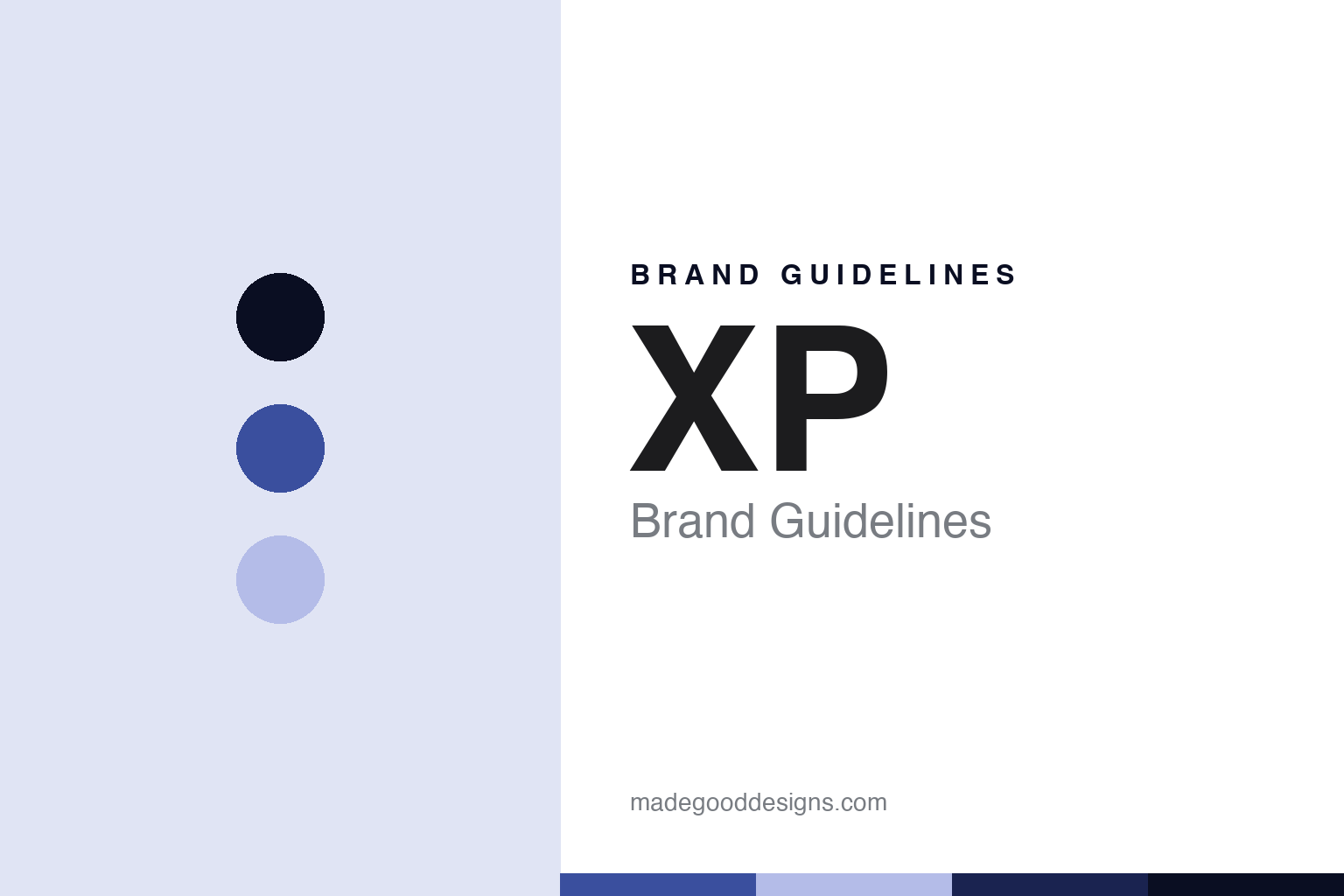
XP Brand Guidelines
The wireless French innovator.
Aa
Two constants: a French-indigo palette and a wireless-sans register. Abstract homage — not an XP product or mark; no detector, coil or logo is reproduced.
The wireless French innovator
XP is a Toulouse company, independent and founder-led — whose 2009 DEUS it markets as the first fully wireless detector, built (it says) in France.
XP closes the metal-detector round as its innovator node — a Toulouse company, independent and founder-led, whose 2009 DEUS it markets as the first fully wireless detector, and which says it builds in France. Its answer to a round about who owns the detectors is the independent-innovator one: a European family firm that changed the form of the tool and kept its own name.
Its identity is the wireless French innovator. The 1998 founding, the wireless DEUS and the independent ownership are the story here. No wires, own name. The wireless French innovator.
(Honest notes, so the founding, the founder, the ownership, the making and a marketing claim are framed accurately, with a correction. XP sells wireless detectors as its heroes — the DEUS and DEUS II, the ORX and the GoldMaxx; we report its language as the brand’s own. On origin: XP is a French company based near Toulouse, founded in 1998, with roots to 1982 when its founder and his brother bought their first detector and later set up workshops. On the founder, corrected: the founder is Alain Loubet, the director of the legal entity SARL Xplorer, and since the candidate name Alexandre Tartar is unverified and appears wrong we do not use it. On ownership: it is an independent, founder-led French firm, and since no formal dated shareholding document surfaced we describe it that way rather than assert a structure. On where it is made: XP says it controls design to production in France and built a new production facility in the south, which we attribute as the company’s own claim rather than an audited fact. On the marketing claim, attributed: XP launched the DEUS in 2009 and markets it as the world’s first fully wireless detector, with a wireless coil, remote and headphones, and a telescopic stem, which we attribute as XP’s own claim, widely repeated. Its designs and the XP name are IP we describe but do not reproduce; there is no official brand hex; these tones are an unofficial interpretation.)
Colour
XP lives in a French indigo. Click a swatch to copy the hex.
XP’s identity is independent, founder-led and wireless-pioneering — a French indigo, an ink, a pale indigo, a deep indigo, and a paper. The palette leans French indigo and deep indigo: a cool, modern register that nods to a wireless, engineered tool rather than a loud logo colour. It signals the wireless French innovator — independent, founder-led and wireless-pioneering. The honest caveat: with no official brand hex, and an orange-and-black identity documented, these values are a modern, unofficial interpretation, not first-party colours.
The lesson is a French indigo signals a modern, engineered identity. XP’s world is the wireless detector. For designers, it is a reminder that a cool indigo and a pale indigo can carry an independent, innovator brand — a modern tone held as an accent, not a product shot. Because a mid hue can fail as small text, keep type dark and let the colour live in the accents, palette and band. The takeaways: date the founding to 1998 near Toulouse; correct the founder to Alain Loubet and drop the wrong name; describe the independent, founder-led ownership; attribute the made-in-France claim; and attribute the first-fully-wireless claim.
Typography
The register is a wireless sans — independent, founder-led, wireless-pioneering.
XP’s identity carries an independent, founder-led spirit — a family firm that changed the tool. A wireless sans captures the mood: clean, current and engineered, the register of a wireless device. Set in a French-indigo palette, the wireless sans feels modern and precise — exactly the personality XP carries. It behaves like a made, engineered thing rather than a loud logo, mirroring a coil-circle and a signal-ring. (XP’s real products and the name are things we describe but do not reproduce, and the exact typeface is not ours to use.) Because it is not ours to use, the honest description is “a wireless-sans brand,” shown here in a stand-in. The type behaves like the brand: independent, founder-led and wireless-pioneering.
Aa
A wireless-sans brand — modern and precise. (Specimen set in Space Grotesk, a wireless-sans STAND-IN; NOT the XP logo or products.)
The metal-detector node
XP stands for the wireless French innovator.
XP closes the round as its innovator node. A French-indigo palette, a wireless sans and a 1998 founding make one thing — the wireless French innovator — the whole identity: independent, founder-led and wireless-pioneering. The 1998 founding is the pitch, the wireless DEUS is the innovation, and the independent ownership is the frame. The point is a European family firm that changed the form of the tool and kept its own name, in a round about who owns the detectors.
Put to work, the identity is the brand told straight, the founder corrected and the claims attributed. A brand in this spirit would date the founding to 1998 near Toulouse, correct the founder to Alain Loubet, describe the independent, founder-led ownership, attribute the made-in-France claim, and attribute the first-fully-wireless claim. A reader in this spirit would keep the facts right: XP sells the DEUS and DEUS II, the ORX and the GoldMaxx; it is a French company near Toulouse, founded in 1998; its founder is Alain Loubet of SARL Xplorer; it is independent and founder-led; and its made-in-France and first-fully-wireless lines are the company’s own claims. XP closes the round, after Nokta. The honest editorial moves are to date the founding, to correct the founder, to describe the ownership, and to attribute the claims.
For designers and brand-builders, XP closes the metal-detector node: correct a founder name — and attribute a “first” and a “made-in” claim. The lessons: a brand can change the form of its category’s tool, here XP with the wireless DEUS; a founding is dated to 1998 near Toulouse, with roots to 1982; a founder is corrected to Alain Loubet, the director of SARL Xplorer, with the unverified candidate name Alexandre Tartar dropped as wrong; an ownership is described as independent and founder-led rather than asserted with a structure, since no formal dated document surfaced; a making is attributed, XP saying it controls design to production in France and built a new southern facility, rather than presented as audited; and a marketing claim is attributed, the 2009 DEUS marketed as the world’s first fully wireless detector, widely repeated. It is also a reminder to stay precise: XP is the independent, founder-led French innovator of the detector aisle — with the palette here an unofficial interpretation and the made-in-France and first-wireless lines attributed. The hook is that innovation: XP is the wireless French innovator, a Toulouse company, independent and founder-led, whose 2009 DEUS it markets as the first fully wireless detector, built, it says, in France. Read that way, XP is less a single detector than the wireless French innovator: independent, founder-led, wireless-pioneering. The lesson for a brand is that correcting a founder name and attributing a “first” and a “made-in” claim reinforce the honesty, and dating the founding keeps it earned. XP made the-wireless-French-innovator the identity — proof that an honestly-attributed innovation can close a round.
Explore & save
Keep XP’s identity on hand — save it to a board in the Made Good inspiration library.
XP identity set
Pin the French-indigo palette and the wireless-sans register to your own board.