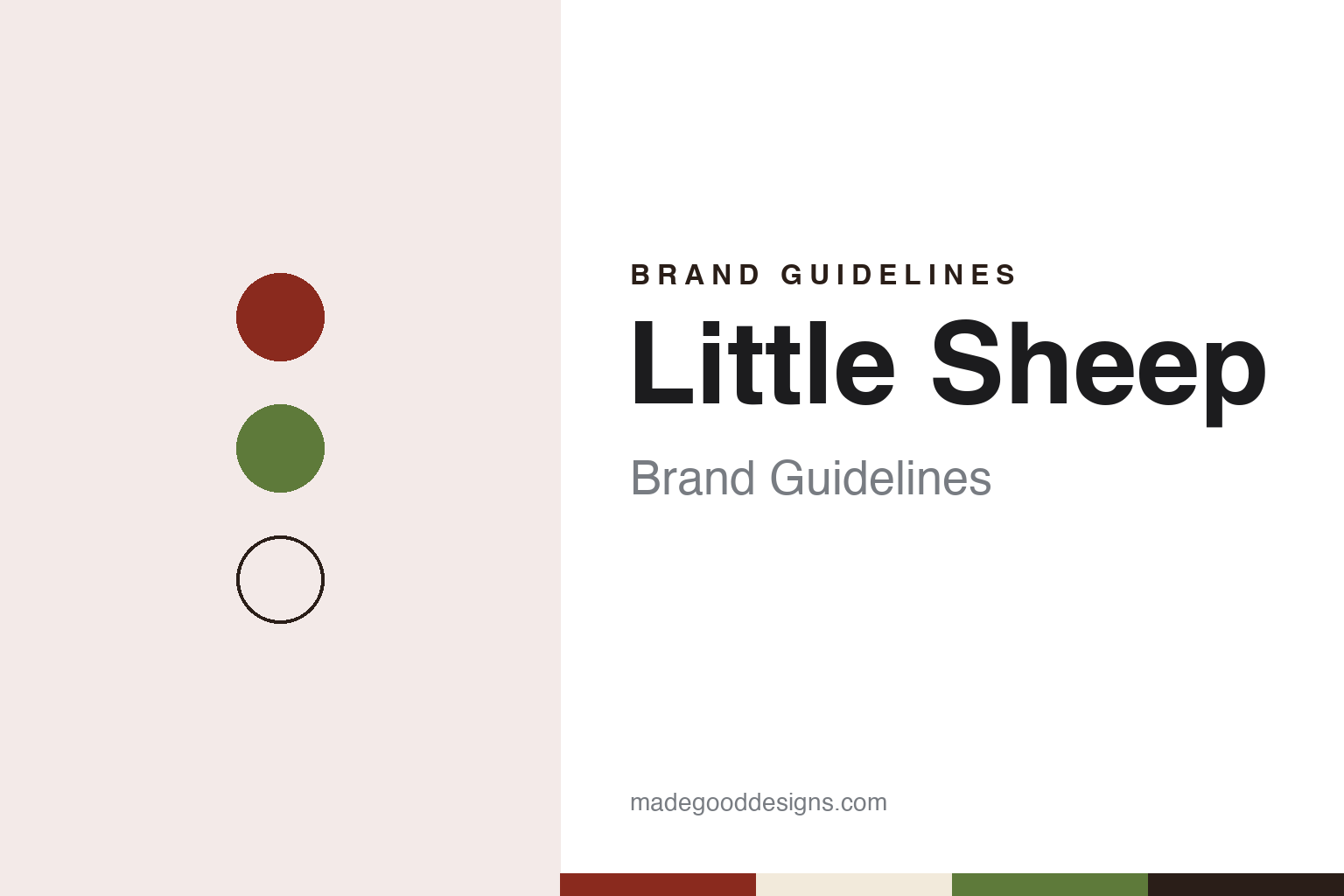
Little Sheep Brand Guidelines
The Inner Mongolian hot pot chain now run by Yum China.
Aa
Two constants: a broth red, steppe green and cream palette and a warm serif register. Abstract homage — not a Little Sheep product or mark; no logo, sign or menu is reproduced.
Baotou, 1999
A lamb hot pot restaurant in an Inner Mongolian steel city.
Little Sheep began in Baotou, in China’s Inner Mongolia region, in 1999. Its founders were Zhang Gang and Chen Hongkai, according to Nation’s Restaurant News in November 2011 and Chinese Wikipedia. English Wikipedia dates the first restaurant of the Inner Mongolia Little Sheep Catering Chain company to 8 August 1999, and gives two versions of how it started: in one, Zhang Gang, then running a telecommunications business, ate hot pot so often with friends that he decided to open a restaurant of his own; in the other, he watched a small chain of hot pot restaurants in Hohhot do well, bought recipes and built a business around them.
Growth was fast. English Wikipedia says two more restaurants opened in other districts of Baotou two months after the first, and that the company then set up branches in Shanghai in May 2001 and in Beijing and Shenzhen in January 2002. In November 2002 it opened in Chengdu, the Sichuan capital with a hot pot tradition of its own.
The chain also built its own supply side. English Wikipedia says a meat processing base was set up in early 2001 and a condiment base in January 2003. Chinese Wikipedia describes the business from the start as hot pot restaurants and franchising, alongside the development and sale of seasonings.
Overseas expansion followed. English Wikipedia says the first restaurant outside China opened in Los Angeles in November 2003, and a directly run restaurant opened in Toronto in October 2005. When Nation’s Restaurant News reported on the chain in March 2009, it described a company based in Inner Mongolia with restaurants mainly in China, as well as in Hong Kong, Japan, Canada and the United States.
Colour
A pot of broth on every table.
Little Sheep’s product is Mongolian hot pot. Nation’s Restaurant News described it in 2011 as a dish in which diners dip raw meat or vegetables into a shared pot of boiling broth, and in 2009 as a style built on a proprietary soup base and Mongolian lamb, with customers cooking their own food in pots at the table.
The soup is the point of difference. English Wikipedia contrasts the older Chinese habit of boiling sliced mutton in plain water and dipping each piece in sauce with Little Sheep’s method of simmering the meat in a seasoned broth made from dozens of ingredients, so that no dipping sauce is needed. It also says the chain’s lamb comes from the Xilingol grasslands of Inner Mongolia, as the company describes its sourcing.
The name itself caused problems. Chinese Wikipedia says the company applied repeatedly from 1999 to register “Little Sheep” as a trademark in Chinese, and that the applications were rejected for lacking distinctiveness, while large numbers of copycat restaurants used the same name. In November 2004, under the revised trademark law, the name was recognised as a well-known mark, and in 2006 it was formally registered. The episode shows how a plain, friendly name can be easy to remember and hard to protect.
Store counts moved with the company’s strategy. Chinese Wikipedia says the chain had more than 700 restaurants before its listing and cut back to just over 300 by May 2007 after tightening franchising. Nation’s Restaurant News counted 375 restaurants in March 2009, and in November 2011 reported 458 locations in China and 22 outside it.
Typography
Design and documentation.
Korean fried-chicken and hot-pot chains tend to present themselves through what happens to the food, not through a mascot. A chicken chain’s company pages will often explain a sauce before they explain a logo: a soy-and-garlic glaze, a chilli version, a honey version, each with its own year of launch and its own name on the menu. Kyochon, for example, describes sauce brushed on piece by piece and has carried the brush into its wordmark; bb.q points to a training centre it calls Chicken University. Hot-pot chains put the pot itself at the centre of the table, so the broth, the burner and the plates of raw ingredients around it become part of how the brand is seen.
Shop interiors and menus are where these identities become consistent. As franchise networks grew into the hundreds and then the thousands, the companies describe bringing in uniform interiors, standard menu boards and set colour schemes; Kyochon, for one, dates uniform shop interiors and orange-based menu boards to 1999, the year it passed 100 shops. Delivery boxes, sauce packs and takeout bags carry the same marks, and some chains have built whole shop formats around delivery and takeout.
Names are usually plain. Menus are organised by sauce or cooking method, and side brands are given short, descriptive names of their own; several groups now run cafés, bars or noodle formats under separate names alongside the main chain. Some write their names in Korean characters, some in Latin letters, and some with punctuation or a founding year built into the mark.
Corporate pages fill in the rest: who founded the company and when, which group owns it, where it is listed, and how many shops and countries it reports. Those figures come from the companies, and dated press reports are the way to check them. This guide reads each brand through those pages and through independent reporting, and treats colour and type as an interpretation, not a copy.
Aa
A warm serif for a lamb hot pot chain. (Specimen set in Fraunces, a serif STAND-IN; NOT the Little Sheep logo.)
Little Sheep
From a Hong Kong listing to Yum China.
The company went public in June 2008, when Little Sheep Group listed in Hong Kong, according to English and Chinese Wikipedia. Yum! Brands, the owner of KFC and Pizza Hut, arrived the next year: in March 2009 it announced it would buy a 20 percent stake, Nation’s Restaurant News reported, and by 2011 it held 27.2 percent.
Yum then moved to take full control. Nation’s Restaurant News reported in November 2011 that Yum had first announced its intention on 26 April 2011, made a formal offer on 13 May, and had received approval from China’s Ministry of Commerce; once the deal was finished Yum would hold 93.2 percent, with the remaining 6.8 percent staying with the founders. Chinese Wikipedia says the privatisation was completed in February 2012 and that the shares were delisted in Hong Kong from 2 February 2012.
Ownership changed shape again in 2016. Yum! Brands spun off its China business as Yum China, an independent listed company from 1 November 2016, according to English Wikipedia, which lists Little Sheep among Yum China’s brands alongside KFC, Pizza Hut and Huang Ji Huang. Chinese Wikipedia says Little Sheep is held and run by Yum China today.
Outside China the story split. Chinese Wikipedia says Little Sheep restaurants outside China were gradually renamed Happy Lamb from 2016, a separate lamb hot pot brand that Zhang Gang created after disagreeing with the direction taken under the new owner, and that the overseas stores are held by him; English Wikipedia dates the founding of Happy Lamb to 2017. Chinese Wikipedia adds that both names are now found in mainland China and Hong Kong.
For a design guide, Little Sheep shows how a simple, friendly name and a single table-side ritual can carry a chain across owners and borders. Compare Haidilao and Xiabuxiabu, two other Chinese hot pot chains. For this guide we use broth red, steppe green and cream with a serif, an unofficial interpretation; no product or logo is reproduced.
Explore & save
Keep Little Sheep’s identity on hand — save it to a board in the Made Good inspiration library.
Little Sheep identity set
Pin the Little Sheep broth red, steppe green and cream palette and the warm serif register to your own board.