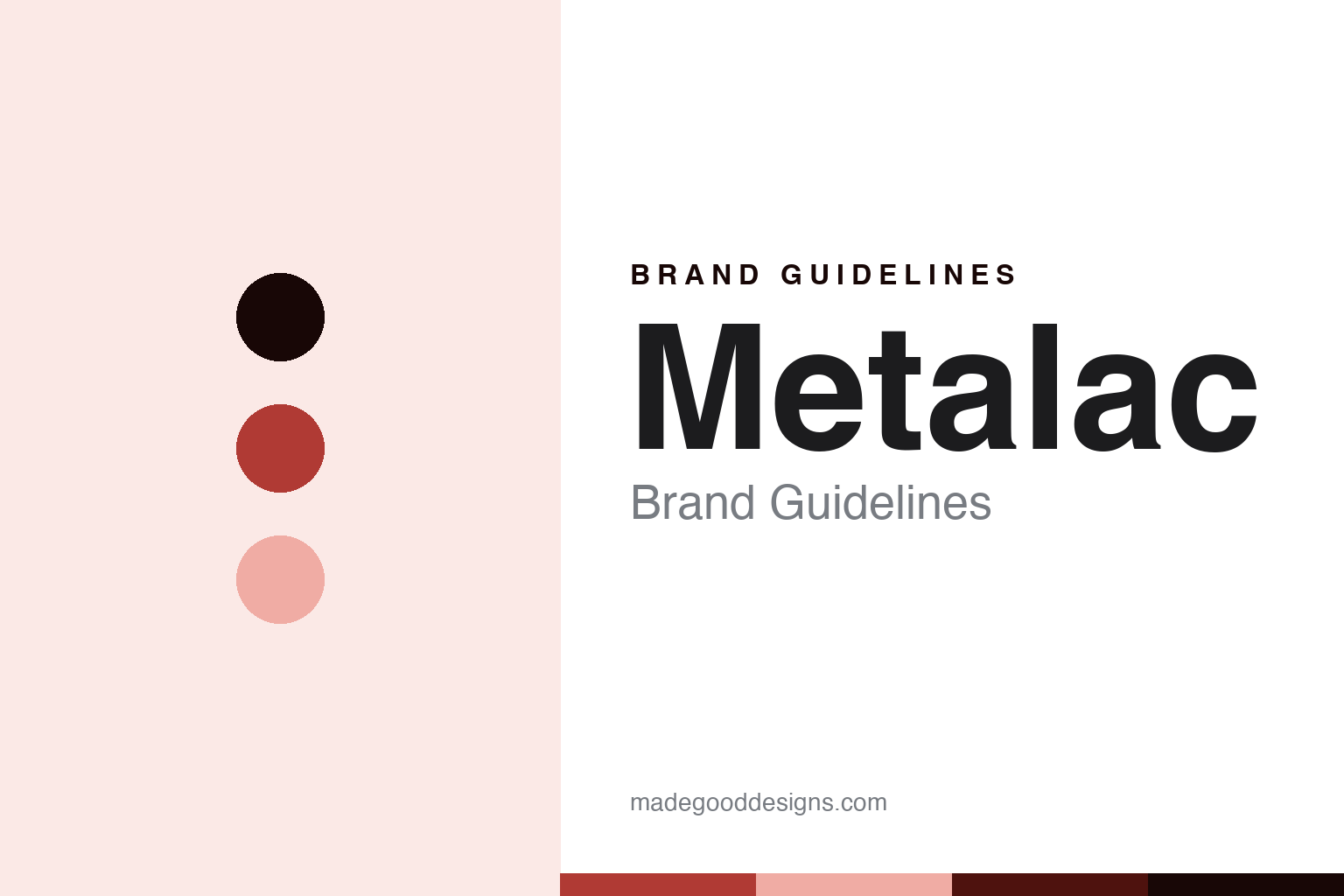
Metalac Brand Guidelines
The listed Serbian enamel works.
Aa
Two constants: a paprika-red palette and a works-sans register. Abstract homage — not a Metalac product or mark; no vessel silhouette or logo is reproduced.
The listed Serbian enamel works
Metalac is the Serbian enamelware works making cookware in its own factories since 1959, publicly listed.
Metalac brings the round its listed works — the Serbian company that has made cookware since 1959, famous for enamelled cookware, from its own factories in Gornji Milanovac, and today a publicly listed joint-stock group. Metalac makes enamelled cookware, and its answer to a round about the world of enamel is scale — an enamel works with its own factories, thousands of workers and a stock-market listing. A brand, works.
Its identity is the listed Serbian enamel works. The own factories, the 1959 heritage and the public listing are the story here. A brand, works. The listed Serbian enamel works.
(Honest notes, so the story stays precise, and the scope stays plain. Metalac, at metalac.com, has, in its own words, been making cookware since 1959, with enamelled cookware the line for which it is best known, and we report its performance language as the brand’s own marketing. It is based in Gornji Milanovac, in Serbia. On where it is made, the star theme of this round, it makes in its own factories — the Metalac group runs several manufacturing companies, including its cookware arm, and employs well over two thousand people — a genuine own-works rather than a badge. On who owns it, a theme of this round, it is a publicly listed joint-stock company with many subsidiaries, distinct among the round’s family-owned and design-house makers. We note, honestly, that its homepage speaks of cookware broadly, and we frame it as the enamelware heritage maker it is best known as. Its designs are IP we describe but do not reproduce; there is no official brand hex; these tones are an unofficial interpretation.)
Colour
Metalac lives in a paprika red. Click a swatch to copy the hex.
Metalac’s identity is works, listed and Serbian — a paprika red, an ink, a pale coral, a deep oxblood, and a paper. The palette leans paprika red and pale coral: a warm, Balkan register that nods to a red enamel pot rather than a loud logo colour. It signals a listed enamel works. The honest caveat: with no published brand hex, these values are an original, unofficial interpretation, not first-party colours.
The lesson is a paprika red signals a works, listed identity. Metalac’s world is a glazed, fired object. For designers, it is a reminder that a paprika red and a soft pale coral can carry an enamel brand — the tone of a Balkan kitchen. Because these tones can fail as small text, keep type dark and let the colour live in the accents, palette and band. The takeaways: run the factories; make it in Serbia; note the public listing; and treat any single hex as unofficial.
Typography
The register is a works sans — works, plain, listed.
Metalac’s identity carries a works, plain, listed spirit — an industrial group, not a graphics label. A works sans captures the mood: clean, sturdy and matter-of-fact, the register of a listed enamel works. Set in a paprika-red palette, the works sans feels works and listed — exactly the personality Metalac carries. It is a glazed object rather than a logo, mirroring vitreous enamel fused to steel. (Metalac’s real cookware is a thing we describe but do not reproduce, and the exact typeface is not ours to use.) Because it is not ours to use, the honest description is “a works-sans group,” shown here in a stand-in. The type behaves like the brand: works, plain and listed.
Aa
A works-sans group — works and listed. (Specimen set in Space Grotesk, a works-sans STAND-IN; NOT the Metalac logo or any vessel.)
The enamel
Metalac stands for the listed Serbian enamel works.
Metalac brings the round its listed works. A paprika-red palette, a works sans and a 1959 heritage make one thing — the listed Serbian enamel works — the whole identity: works, listed and Serbian. The own factories are the pitch, and the public listing is the story. The point is an enamel works with its own factories, thousands of workers and a stock-market listing, in a round about the world of enamel.
Put to work, the identity is scale told straight, as a works — with the making named and the listing noted. A maker in this spirit would run the factories, make it in Serbia, and note the public listing. A reader in this spirit would keep the facts right: Metalac has been making cookware since 1959, best known for enamelled cookware; it is based in Gornji Milanovac, in Serbia; it makes in its own factories — a group of several manufacturing companies, well over two thousand workers; and it is a publicly listed joint-stock company with many subsidiaries, distinct among the round’s family and design-house makers. Metalac joins Emalia Olkusz, Cinsa and Fujihoro on the genuine-own-works side of the round’s where-made thread, and brings the round its Balkan geography and its one publicly-listed owner. The honest editorial moves are to date it to 1959, to say it makes in its own Serbian factories, to note the public listing, and to frame it as the enamelware maker it is best known as while acknowledging its broader cookware range.
For designers and brand-builders, Metalac continues the enamel works: run the factories — and note the public listing. The lessons: let an own-factory scale be the brand; state a domestic making plainly; note a public listing as the distinct ownership it is; frame a broad maker by the line it is best known for without over-narrowing; and never reproduce a vessel. It is also a reminder to stay precise: Metalac is the Serbian enamelware works making cookware in its own factories since 1959, publicly listed — with the palette here an unofficial interpretation. Read that way, Metalac is less a pot than a works: fired, Serbian, listed. The lesson for a brand is that own-factory scale and an honest ownership note reinforce each other, and naming the Serbian factories keeps the story earned. Metalac made the-listed-Serbian-enamel-works the identity — proof that scale can carry a brand, the round’s Balkan works.
Explore & save
Keep Metalac’s identity on hand — save it to a board in the Made Good inspiration library.
Metalac identity set
Pin the paprika-red palette and the works-sans register to your own board.