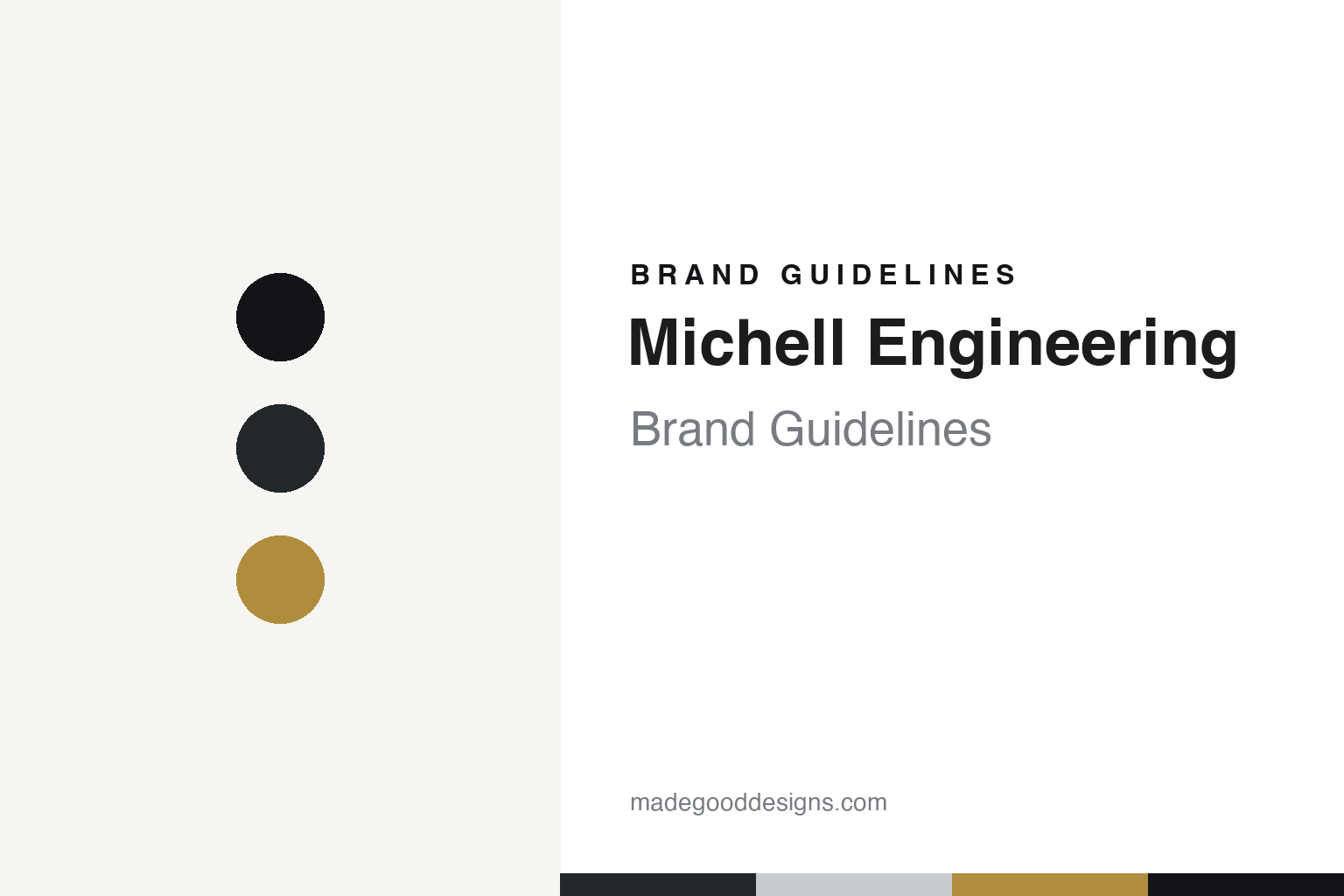
Michell Engineering Brand Guidelines
The Hertfordshire workshop behind the GyroDec turntable.
Aa
Two constants: a smoked acrylic, machined silver and brass palette and an engineered sans register. Abstract homage — not a Michell product or mark; no turntable, logo or nameplate is reproduced.
Borehamwood
A jobbing engineer beside the film studios.
Michell Engineering grew out of a small engineering business started by John Michell. The company’s own history dates its founding to the mid-1960s. SoundStage! Ultra, in a 2022 history of the firm by Jonathan Gorse, says Michell served an apprenticeship at Finchley Autos, began in a garden shed, and moved from north London to Theobald Street, Borehamwood, in Hertfordshire, in 1968. Companies House records the limited company, J. A. Michell Engineering Limited, as incorporated on 25 January 1973.
Borehamwood sits beside Elstree, long a centre of British film and television production, and the workshop’s early jobs included model-making. The company says John Michell built the spacecraft Discovery for Stanley Kubrick’s 2001: A Space Odyssey. SoundStage! Ultra adds that the firm made the illuminated eyes for C-3PO in Star Wars (1977), and Hi-Fi Choice, in a profile by David Price reprinted around 2016, says John made pieces for the sets of 2001, A Clockwork Orange and Star Wars.
Turntables came through a neighbour. Michell made parts for Transcriptors, the company founded by David Gammon and his brother Anthony, which, according to SoundStage! Ultra, moved into the Michell premises in 1968. When Transcriptors moved to Ireland in 1973, Michell took over making its Hydraulic Reference turntable under licence, the company says; those decks carried “By J.A. Michell Eng. Ltd” badges, a retailer’s history notes. Film and Furniture, quoting the Gammon family, says the J. A. Michell version was made only between 1973 and 1977.
Colour
A spinning shape that stayed.
One often-repeated story needs correcting. The turntable seen in Alex’s bedroom and hospital scenes in A Clockwork Orange (1971) was a Transcriptors Hydraulic Reference, designed by David Gammon in 1964, not a Michell design. Film and Furniture reported in 2021 that Kubrick visited Gammon’s Borehamwood factory in 1969 to ask for one, and that the deck in the film predates Michell’s licence. Resale listings that call it a “Michell” deck are describing the later licensed version.
Michell’s own designs began with the Focus One in the late 1970s, which Hi-Fi Choice describes as loosely based on the Hydraulic Reference and fitted with a unipivot tonearm. Then came the GyroDec. Sources differ on the year: Steve Rowland, who now runs the company, told Hi-Fi Choice it launched in 1981, while SoundStage! Ultra says serial number 001 left the Borehamwood line on 17 January 1982, priced at £590, and hi-fi+, reporting the company’s 2025 launch, also gives 1982. Its shape — a clear acrylic base, a weighted platter and an exposed mechanism, with what the company calls an inverted oil-pumping bearing — is tied by the company’s own story to Kubrick: SoundStage! Ultra says it drew on the spinning space station of 2001, while other accounts point to the Discovery model.
A family of decks followed: the cheaper Syncro in the mid-1980s; the cost-no-object Orbe in 1994; a version without the acrylic plinth, which Hi-Fi Choice calls the Spyder Edition and SoundStage! Ultra the GyroDec SE, around the turn of the millennium; and the TecnoDec and the TecnoArm, a reworking of a Rega tonearm that Hi-Fi Choice calls John Michell’s parting shot. By around 2016, Rowland said, Michell had made just short of 8,200 GyroDecs and 4,550 Spyder Editions, and was building 550 to 600 decks a year. He compared the deck to a Porsche 911: a new one and the first one look the same, he said, but they are “completely different beasts.”
Typography
British turntables and loudspeakers.
Britain’s loudspeaker tradition owes much to the BBC. The LS3/5A, a small monitor for outside-broadcast vans, was developed by the BBC Research Department at Kingswood Warren, and the BBC licensed a handful of British firms that began making it in 1975, English Wikipedia says; sales estimates run from 60,000 to 100,000 pairs.
That licensing model survives: Graham Audio says it hand-builds BBC-licensed models, including the LS3/5 and LS5/9. PMC was formed by Peter Thomas, formerly of the BBC, and Adrian Loader, and sold its first BB5 monitors to the BBC and Metropolis Studios; ATC, founded by Billy Woodman in 1974, counts Abbey Road Studios and the BBC among its users, English Wikipedia says.
Smaller regional makers grew alongside. Castle was started in Skipton in 1973 by engineers from Wharfedale, the company says, and Michell Engineering, the turntable maker founded by John Michell, worked from Borehamwood from 1968 until it moved to Stevenage in 2019, SoundStage! reported.
Ownership is not always British. Castle has belonged since 2007 to IAG, a Chinese group based in Shenzhen, and Epos, founded in 1983 by Robin Marshall, says it was bought in 2020 by the loudspeaker designer Karl-Heinz Fink; its website gives an address in Essen, Germany.
The others are spread across England: PMC at Biggleswade in Bedfordshire, ATC near Stroud in Gloucestershire, Neat Acoustics at Barnard Castle in County Durham, Graham Audio at Newton Abbot in Devon, and Castle, today, at IAG’s address in Huntingdon.
This guide sets out what can be checked about each brand — who founded it, who owns it, and what it says about where its products are made — and marks clearly what rests only on the company’s own word.
Aa
An engineered sans for a machined object. (Specimen set in Archivo, a sans STAND-IN; NOT the Michell logo.)
Michell Audio
Still in the family, in a new building.
John Michell fell ill in 2002 and died on 23 October 2003, the company says, leaving the business to his daughters Julie and Beverley and his son-in-law Stephen. Hi-Fi Choice reported that the family “resisted invitations to sell up” and put Steve Rowland, who had joined ten months earlier, in charge. Companies House lists Julie Rowland as a director since October 2003 and Stephen Rowland since January 2024, and records the two of them as the people with significant control. Jonathan Nye was quoted as managing director in 2025.
The workshop has moved. After 51 years in Borehamwood, the company relocated to Stevenage, also in Hertfordshire, in July 2019, SoundStage! Ultra says, and Companies House shows the registered office moving from Theobald Street to Arlington Business Park that month. The website now gives the Stevenage address, describes “a small team” and trades as Michell Audio; some retailers still describe the decks as made in Borehamwood, which is out of date. In October 2025 the company launched a new Gyro at £5,995 without arm or cartridge, with a chassis machined from solid 19mm aluminium in place of the cast part used before, “designed and manufactured in the UK,” hi-fi+ reported; in Britain it is distributed by PMC Distribution UK. Not everything is made in-house: the Cusis cartridge was developed with an outside maker, SoundStage! Ultra notes, and Hi-Fi Choice says its generator comes from Benz. We found no documented design awards, logo designer or house typeface.
Name traps are common. Michell Instruments, the humidity-sensor maker, is an unrelated company, as are other firms registered at Companies House as “Michell Engineering.”
For a design guide, Michell Engineering shows how one shape — exposed, mechanical and, its makers say, barely changed in outline for four decades — can carry a whole brand. Compare SME, another British turntable engineer, and Rega. For this guide we use smoked acrylic, machined silver and a brass gold with a sans, an unofficial interpretation; no product or logo is reproduced.
Explore & save
Keep Michell Engineering’s identity on hand — save it to a board in the Made Good inspiration library.
Michell Engineering identity set
Pin the Michell smoked acrylic, machined silver and brass palette and the engineered sans register to your own board.


