Nakilat Brand Guidelines
Qatar’s gas shipper, told through ship classes and names.
Aa
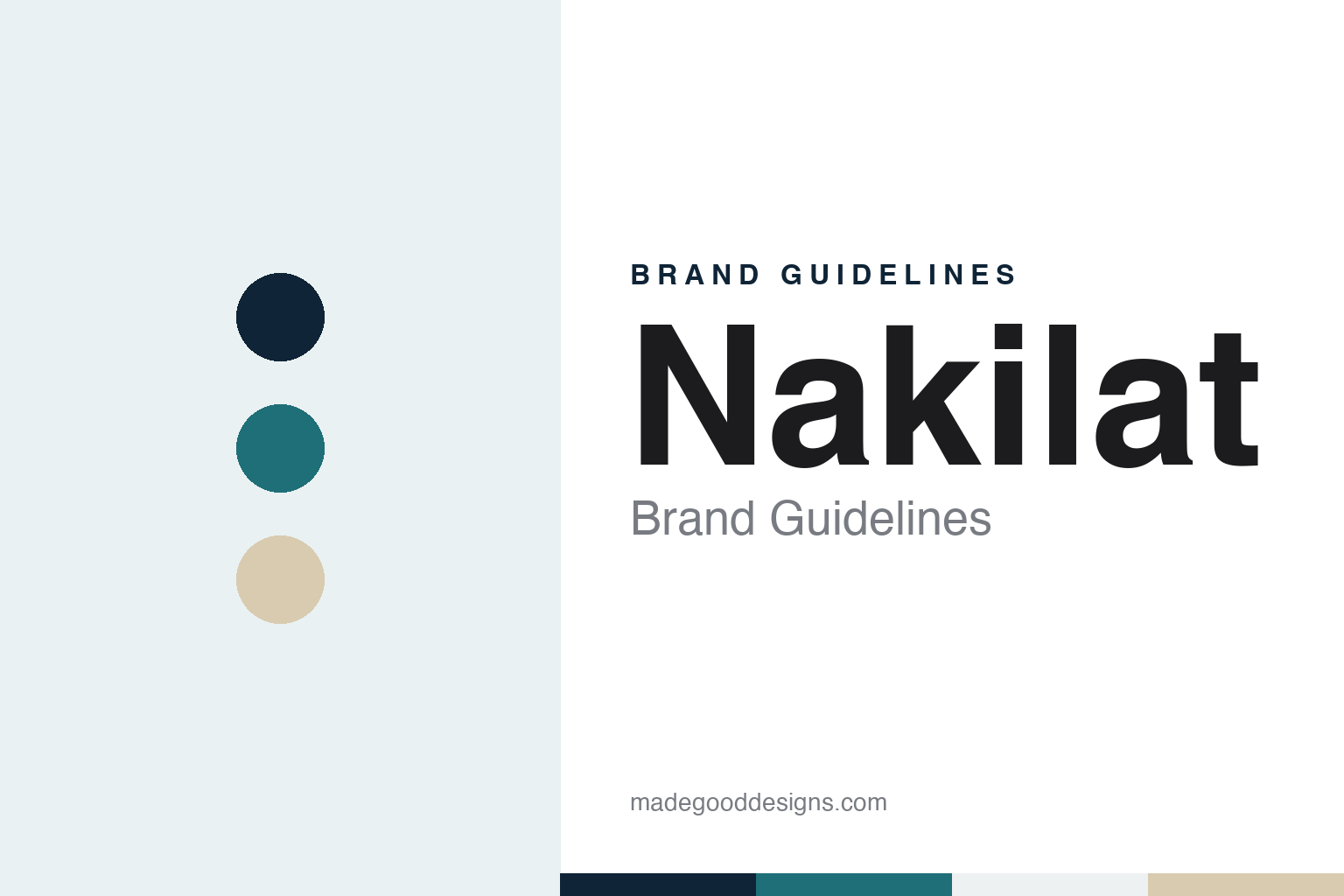
Two constants: a Nakilat deep sea, teal and sand palette and a Clear sans register. Abstract homage — not a Nakilat vessel or mark; no ship, logo or funnel marking is reproduced.
Qatar Gas Transport
A shipping company built around one cargo.
Nakilat is the name used by Qatar Gas Transport Company Limited, a shipping and maritime company based in Qatar. The company says it was established in 2004 to support the growth of Qatar’s natural gas exports, and its ships carry liquefied natural gas (LNG) from Qatar to markets abroad. English Wikipedia, citing Edaa, the Qatari securities depository, names two shareholders holding 5% or more as of 31 December 2025: the shipping group Milaha and the civil fund of the General Retirement and Social Insurance Authority.
The company describes its fleet by ship class. On its website it counts 66 LNG carriers — 21 conventional ships of 145,000 to 174,000 cubic metres, 31 Q-Flex ships of 210,000 to 217,000 cubic metres and 14 Q-Max ships of 263,000 to 266,000 cubic metres — plus one LPG/ammonia carrier and one floating storage and regasification unit (FSRU). The Q-Flex and Q-Max classes, it says, carry 50 to 80 percent more cargo than conventional carriers. Some ships are wholly owned and others jointly owned with international shipping companies.
Nakilat says its LNG fleet makes up about 11 percent of the global LNG fleet’s carrying capacity, and calls it one of the largest LNG shipping fleets in the world. Most of its ships are on long-term charters, it says, and the rest work in the spot market. Q-Max names on its fleet list include Mozah, Al Dafna and Umm Slal; conventional ships include Al Jassasiya and Ejnan.
Colour
Ship management, partners and a yard.
Nakilat has brought more of its ship management in-house over time. English Wikipedia records that management of its four LPG carriers passed from Shell to its subsidiary Nakilat Shipping Qatar in June 2012, that four Q-Flex ships co-owned with OSG followed in 2014, and that the transfer of ten LNG carriers from Shell was completed in August 2017. The company now says it manages 25 LNG carriers itself, together with the FSRU and its LPG/ammonia carrier.
Partnerships run through the fleet. In June 2018, English Wikipedia says, Nakilat formed a joint venture with Excelerate Energy that took a 55 percent interest in the FSRU Exquisite, stationed at Port Qasim in Pakistan; Nakilat describes itself as the majority partner in that venture. In March 2019 it agreed a joint venture with Maran Ventures for four more LNG carriers, and its fleet list includes ships with Maran Gas names, such as Maran Gas Achilles, Maran Gas Delphi and Maran Gas Sparta.
On shore, Nakilat runs the Erhama Bin Jaber Al Jalahma Shipyard in Ras Laffan Industrial City, inaugurated on 23 November 2010, according to English Wikipedia. Its subsidiary Qatar Shipyard Technology Solutions, established in 2010, handles repair, conversion and fabrication there; the company lists two dry docks sized for very large crude carriers, a floating dock and 3,150 metres of piers and quays. The yard also houses Qatar Fabrication Company (QFAB), a joint venture with McDermott formed in February 2019.
Other units fill out the group: Nakilat Agency Company for port agency work, the towage joint venture Nakilat SvitzerWijsmuller, set up in 2006 with Svitzer, part of the A. P. Moller–Maersk group, and a Vessel Support Unit for supplies and storage for ships in Qatari waters.
Typography
Design and documentation.
LNG and gas-carrier owners sell a service rather than a product, and their websites tend to show the ships themselves. Corporate pages lean on deep blues, teals and white, with photographs of carriers at sea, at terminals and in shipyards. The hull type in those pictures — a membrane carrier with its long flat deck, or a Moss-type carrier with its row of spherical tanks — is often the most distinctive image a company has.
The fleet list is the core document. Owners such as GasLog publish each vessel by name, cargo capacity in cubic metres, year built, propulsion and ownership share, and use engine shorthand such as TFDE, X-DF and ME-GI that their customers read at a glance. Floating storage and regasification units, or FSRUs, get their own project pages, usually set out by country and terminal, as BW LNG does for its units in Brazil, Pakistan, El Salvador and the Philippines.
Charter and terminal pages sit alongside investor sections. Listed owners carry results, filings, presentations and governance documents; owners that have gone private often keep the investor pages they built while listed. Sustainability pages report fuel-efficiency targets and new engine types in the companies’ own terms, and are read here as company statements rather than independent findings.
This guide sets out what can be checked about each owner — who founded it, who owns it today, which deals have closed and which are only announced — and marks clearly what rests on the company’s own word. Vessel names, capacities and dates come from dated company pages and trade press; the colours and typefaces shown are an unofficial interpretation, not a brand standard.
Aa
A clear sans — classes, names and numbers. (Specimen set in Manrope, a sans STAND-IN; NOT the Nakilat logo.)
Nakilat
A fleet in expansion.
The largest change is under way now. In February 2024 QatarEnergy selected Nakilat as owner and operator of up to 25 conventional-size LNG carriers, and in March it signed 15-year time-charter agreements for them, The Peninsula reported: 17 to be built at Hyundai Heavy Industries and eight at Hanwha Ocean, the former Daewoo Shipbuilding & Marine Engineering, each of 174,000 cubic metres and chartered to QatarEnergy affiliates. In May 2024, Gulf Times reported, Nakilat signed a long-term agreement to charter and operate nine QC-Max carriers of 271,000 cubic metres each, being built at Hudong-Zhonghua in China. Steel was cut for the eight Hanwha ships in March 2025, the same paper reported.
On 2 November 2026 the company announced the naming of nine new vessels at HD Hyundai Heavy Industries, Hanwha Ocean and HD Hyundai Samho, MarineLink reported: seven LNG carriers, among them Al Ghuwair, Al Jazi and Al Mirzam, and two LPG/ammonia carriers, Energy South and Energy East. Five belong to the 25-ship programme; the other four come from a separate six-ship order at HD Hyundai Samho. When the projects are complete, the company says, its fleet will grow to 107 ships.
Its website presents the group in English and Arabic as a set of businesses — fleet, ship repair, towage, agency and vessel support — with fleet lists grouped by class, from Q-Max carriers down to tug boats, mooring boats and pilot boats.
For a design guide, Nakilat shows a fleet identity built on scale and on names: classes such as Q-Flex and Q-Max, and ships such as Mozah and Al Ghuwair listed beside partner names such as Maran Gas Achilles. Compare Excelerate Energy, its partner in the FSRU Exquisite, and Maran Gas, whose named carriers appear on Nakilat’s fleet list. For this guide we use a deep sea navy, a teal and a sand tone with a sans, an unofficial interpretation; no product or logo is reproduced.
Explore & save
Keep Nakilat’s identity on hand — save it to a board in the Made Good inspiration library.
Nakilat identity set
Pin the Nakilat deep sea, teal and sand palette and the Clear sans register to your own board.