Optical Center Brand Guidelines
A 1991 Boulogne shop, franchisees grown from its own staff, and a move abroad.
Aa
Two constants: an ink blue, paper and coral palette and a retail grotesque register. Abstract homage — not an Optical Center product or mark; no frame, logo or shopfront is reproduced.
Boulogne-Billancourt, 1991
One optician, one shop, one surname on the lease.
Optical Center began with a single shop. French Wikipedia says the optician Laurent Lévy qualified as an opticien-lunetier in 1989 and, two years later, in 1991, opened the first Optical Center in Boulogne-Billancourt, in the Hauts-de-Seine just west of Paris. The trade site Observatoire de la Franchise gave the same founding year and founder in January 2018, and French Wikipedia describes him as the company’s sole shareholder.
The chain sells prescription glasses, sunglasses, contact lenses and hearing aids. Hearing came early in its growth: in November 2007 the optical trade magazine Acuité reported that the Optical Center shop in central Neuilly-sur-Seine was opening a hearing room staffed by audioprothésistes, the French hearing-aid specialists, with more shops to follow; the founder told the magazine he wanted to make wearing hearing aids simpler and less daunting. Optics and hearing side by side became part of the format, and the Dublin shops opened in 2025 were described the same way.
Its expansion followed a distinctive franchise rule. French Wikipedia dates the first franchise to 1997, in Rouen. When Acuité covered the opening of the chain’s 100th franchised shop, at Schweighouse-sur-Moder in Alsace, in November 2007, it reported that Optical Center then had 180 shops across France and that franchisees were recruited only from inside the company, after at least two years working in its shops and a selection process; the network’s development director described the head office helping new franchisees find premises and build a business plan. French Wikipedia gives the internal apprenticeship as two to three years in company-run branches.
The model scaled quickly. French Wikipedia says the network passed 500 shops in France and abroad by June 2017 and was then the third-largest optical chain in France. In January 2018 Observatoire de la Franchise counted 529 points of sale, 508 of them in France, and called Optical Center the third player in the French optical market. French Wikipedia gives more than 700 shops in 2022, more than fifty of them outside France, and more than 750 in eight countries in 2024.
Colour
Big shops, mobile units and a long list of countries.
Optical Center’s public image is built on scale and on the shop itself. When it opened two shops in Dublin in April 2025 — one in the Jervis Shopping Centre in the city centre and one at the Omni Park Shopping Centre to the north — Ecommerce Mag reported that each had about 250 square metres of selling space, which the company’s announcement described as three times the local average, with dedicated areas for both optics and hearing. The magazine reported that Ireland followed an earlier move into England.
The same report listed the countries and territories where the chain already traded outside mainland France: Belgium, Switzerland, Spain, Réunion, Guadeloupe, Martinique, Israel, Canada and Luxembourg, with more than 100 shops outside France and about 6,500 staff. The Luxembourg shop that Observatoire de la Franchise covered in January 2018 was part of that push; the trade site then listed Belgium, Switzerland and Canada among the markets the company was exploring.
Beyond shops, the company has used vehicles. French Wikipedia says it put 57 vehicles on the road in 2020 for sight and hearing checks across France and had more than 100 by 2024; in January 2023, French Wikipedia adds, it launched a metaverse project for online optical and hearing retail. Its advertising has long been built on convenience. In January 2007 Acuité reported a campaign of three television spots, of 25, 20 and 10 seconds, on national channels including those of France Télévisions, which showed a wearer walking past a long queue to make the point that renewing glasses need not mean waiting; the company told the magazine it had already promoted the same in-store service on the sides of buses.
For a design reader, the identity is a retail one: a short English name, used unchanged in French, Irish and Canadian shopping centres, over large shopfronts with optics and hearing side by side. The company’s own websites block automated access, so this guide does not describe its logo or colours; the palette below is our own.
Typography
How optical chains present themselves.
Optical retail chains are first of all shops, and their own material usually starts there. When studying one, look at how the fascia carries the name from across a shopping centre, how the frame wall is lit, grouped and photographed, and how the company’s news pages show openings and refits. Store counts appear again and again in these pages, so read them as dated figures from the company rather than as fixed facts.
Campaign imagery is the second layer. Many chains work with a well-known face, from footballers to television presenters, and describe that person plainly as an ambassador; others build films around customers, families or a single repeated line. For a design study, note who is in the frame, whether the glasses or the person lead the picture, and how one slogan or visual device carries across television, radio, social media and the shop window.
The website is now a third shopfront. Optical chains commonly offer an online try-on, either a camera-based virtual fitting or a service that lets visitors choose frames online and reserve them in a nearby shop, along with appointment booking and frame advice pages. These tools carry the identity into small interface details: buttons, product grids, colour accents and the photography of frames on plain backgrounds.
Behind the shop sign sits a corporate structure that a design guide should state carefully. Some chains are cooperatives of independent opticians, some run franchise networks, and many belong to investment firms or to a larger eyewear group. Corporate pages on owners, takeovers and franchise terms explain why one name can look different from country to country, and why a familiar sign can change hands while the shops stay open. In the guides that follow, owners and dates come from dated sources, and palettes are our own interpretation rather than official brand colours.
Aa
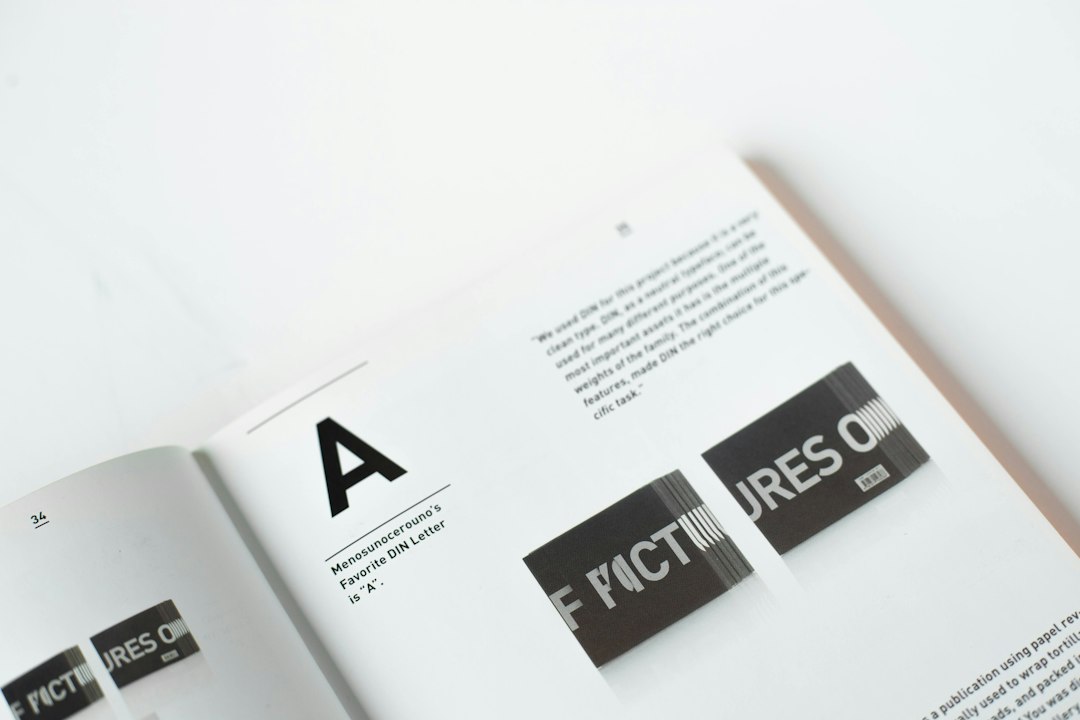
A plain retail grotesque for a short English name. (Specimen set in Archivo, a sans STAND-IN; NOT the Optical Center logo.)
Optical Center
Regulators, courts and rivals.
Optical Center has a long record in French courts and before regulators, and it has been on both sides. French Wikipedia says that in June 2002 the competition authority, then the Conseil de la concurrence, sanctioned 35 opticians in the Lyon area for putting pressure on Optical Center and its suppliers over its low-price offers, and that in 2009 Optical Center won a case against the Alain Afflelou chain.
It has also been sanctioned. In June 2018 the French data regulator, the CNIL, fined the company over the inadequate security of customer data on its website, France 24 and Global Security Mag reported on 7 June 2018. The CNIL said it had been alerted in July 2017 and found that, by typing addresses into a browser, a visitor could open hundreds of other customers’ invoices; it noted that the company fixed the flaw quickly, recorded an earlier CNIL sanction over website security in 2015, and made its decision public. French Wikipedia also says that on 13 December 2016 the Paris court of appeal ordered the company to stop advertising discounts against reference prices that were never actually charged.
The most widely reported dispute with a rival involved Optic 2000. In January 2015 the Paris commercial court ordered Optic 2000 to pay damages to Optical Center, in a case Optical Center had brought in 2007 over alleged invoicing practices in some shops, the Journal de l’Économie reported on 19 January 2015; Optic 2000 denied the claims and appealed. French Wikipedia says the Paris court of appeal overturned the ruling in September 2016 and that the Cour de cassation rejected Optical Center’s further appeal in February 2018.
For a design guide, Optical Center shows how a founder-owned chain can build a recognisable shop format quickly through franchisees trained inside the business, and then carry the same name unchanged across borders. Compare Optic 2000, the cooperative it met in court, and Specsavers, one of the chains it now meets in Ireland. For this guide we use ink blue, warm paper and a coral accent with a sans, an unofficial interpretation; no product or logo is reproduced.
Explore & save
Keep Optical Center’s identity on hand — save it to a board in the Made Good inspiration library.
Optical Center identity set
Pin the Optical Center ink blue, paper and coral palette and the retail grotesque register to your own board.