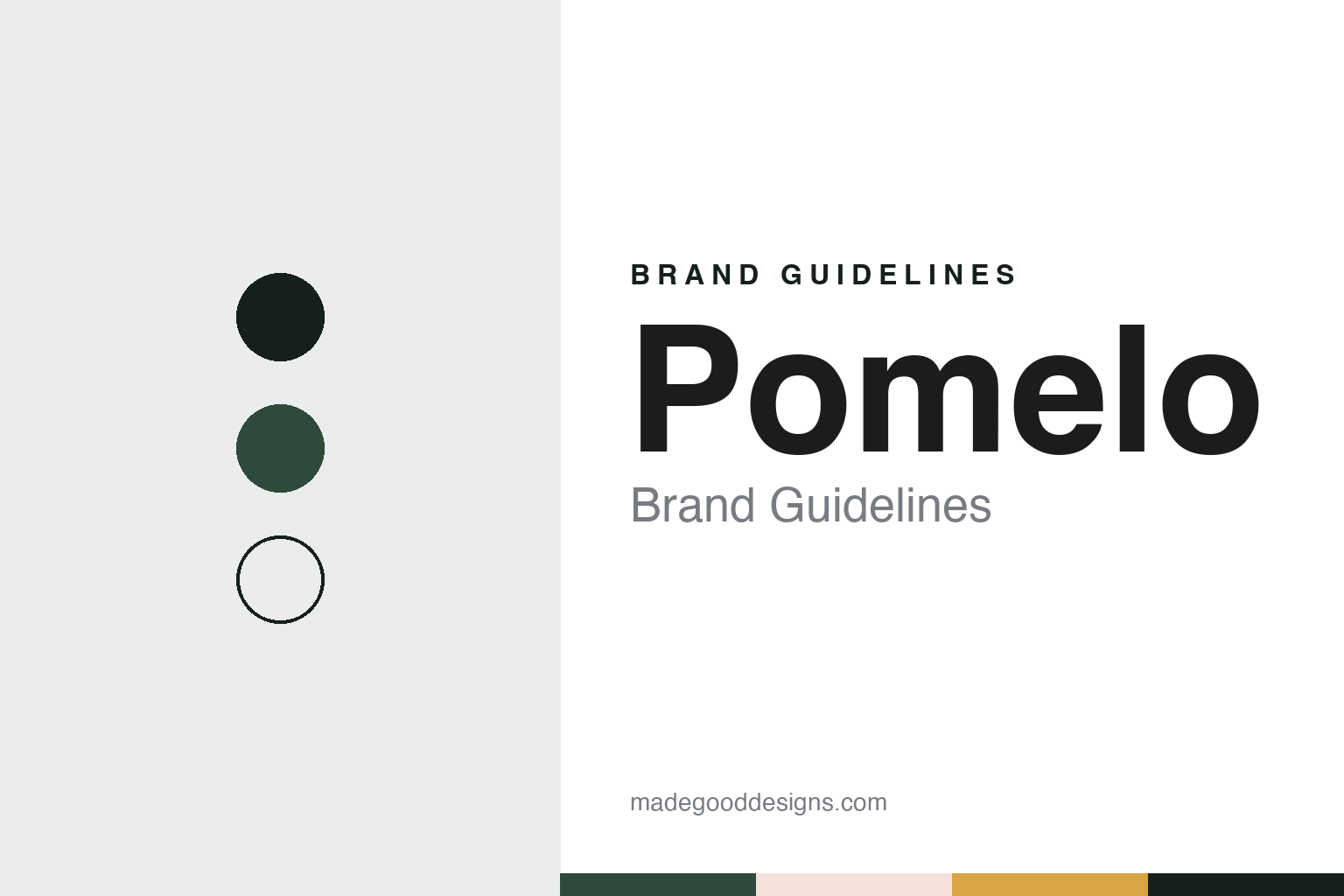
Pomelo Brand Guidelines
David Jou’s Bangkok online fashion label, launched in 2014.
Aa
Two constants: a Pomelo rind green and blush palette and a Rounded sans register. Abstract homage — not a Pomelo product or mark; no garment, logo or label is reproduced.
Born online
A fashion label built for the phone.
Pomelo is a Bangkok fashion label that started as a website. Its co-founder and chief executive, the Korean-American entrepreneur David Jou, had co-founded and run Lazada Thailand, the online marketplace, as managing director before starting Pomelo, Inside Retail Asia reported in March 2020. He had also acted as an angel investor in several small start-ups, the same report said. In that interview Jou said Pomelo was born in 2013 and launched to the public at the beginning of 2014. That explains why sources give both years: TechCrunch in 2017 and Inside Retail Asia in 2022 wrote that it was founded in 2014, while Inside Retail Asia in 2024 said it was launched in 2013.
Jou described the starting point to Inside Retail Asia. Bangkok in 2013, he said, already had designers, graphic artists, a busy fashion industry and people who understood digital technology. What the region lacked was online shopping: the building blocks — logistics, fast internet, smartphones and social media — were only just being put in place. The idea was a direct-to-consumer fashion brand that used digital tools and social media to remove the middleman, a brand made for the digital era, in his words.
The early collections looked north. With K-pop and Korean fashion booming when Pomelo launched, the team took ideas from what was trending on the streets of Seoul, according to the 2020 interview. It built the brand through search, social media and email, and later recruited key opinion leaders to sell through live streaming in different markets. Jou summed the business up in the same interview as “a technology company that makes fashion.”
Colour
Online orders, fitting rooms and partner stores.
Pomelo sells mainly its own women’s clothing. In October 2017, TechCrunch described it as a Bangkok-headquartered online fashion site selling its own branded clothes across Southeast Asia, shipping to more than 40 countries but focused mainly on Thailand, Indonesia and Singapore. Its website, in November 2026, describes its range of dresses, tops, knits, jackets and denim as designed and made in house, a claim given here as the company’s own. In March 2024 Inside Retail Asia described its offer as women’s clothing from local designers and international brands.
The label moved off the screen early. In 2017 TechCrunch reported that Pomelo had piloted an experience store in Bangkok where shoppers could order anything from the web store and find it waiting in a dressing room at a time they chose; payment was taken in advance, and customers kept what they wanted and walked out. The 2020 Inside Retail Asia report traced the same path: first pop-up stores to test the market, then flagships, with nine stores in Thailand and a flagship on Singapore’s Orchard Road by then.
Its next idea was a network of partner stores. In January 2020, Inside Retail Asia reported, Pomelo had signed up its first 35 partner stores in Thailand — cafés, salons, fitness studios, florists and other clothing shops — where online customers could collect orders, try them on, and return or exchange what did not fit. Partners paid no sign-up fee, earned a commission on collections, and had to offer a fitting room. Jou said the core customers were women aged 25 to 34.
The range widened too. The same report named a collection called Purpose and a cosmetics line, Beet, among the categories Pomelo had added.
Typography
Design and documentation.
Southeast Asia’s fashion, bag, accessory and lifestyle brands mostly speak through their own channels: a wordmark over a shopfront, a seasonal campaign, a named collection and an online shop. Many began as small businesses (a leather wholesaler, a garment maker, a family shop) and only later built a retail identity, so the brand story is often told through a founding date, a first boutique and a list of markets reached.
Collections and collaborations do much of the visual work. Labels name their lines by occasion, material or season, and add licensed characters, local actors and regional pop stars as ambassadors or muses. These partnerships change from season to season, while the name, the lettering and the shop interior usually stay fixed.
Ownership is often layered. Several labels sit inside larger groups: in Malaysia, Padini Holdings runs Vincci alongside its own clothing labels and sells them together in its concept stores, and Bonia Corporation holds a family of leather goods brands. In the Philippines and Thailand, groups such as Golden ABC and Jaspal Group own more than one label each, and each guide in this series describes its group from that brand’s own sources. Some companies are listed on their home stock exchange and publish corporate pages on founders, directors, subsidiaries and shareholdings; others remain private.
This guide sets out what can be checked about each brand: who founded it and when, who owns it now, where it sells and how it presents its name, with dated reporting from newspapers and trade press, and with the companies’ own claims marked as theirs. The palettes and type samples are our own interpretations, not official brand assets.
Aa
A rounded sans — a label made for the phone. (Specimen set in DM Sans, a sans STAND-IN; NOT the Pomelo logo.)
Pomelo
Investors from China and Thailand.
Pomelo is a privately held company backed by investors from outside and inside Thailand. TechCrunch reported in October 2017 that JD.com, the Chinese online retailer, had led a new investment in the company, joining earlier backers including Jungle Ventures and 500 Startups. According to Inside Retail Asia, writing in 2020, Thailand’s retail and shopping-centre group Central Group also invested in 2017. In March 2024 the same publication described Pomelo as an unlisted company whose core market was Thailand.
Its reach has changed over time. By March 2020, Inside Retail Asia reported, Pomelo had a presence in five countries and customers in more than 50, after expanding to Singapore, Hong Kong and Malaysia. In September 2022 the publication counted 26 physical stores across Thailand, Singapore, Malaysia and Indonesia, with online delivery to 50 countries.
Selling across borders was part of the plan from early on. In 2017 TechCrunch reported that Pomelo had set up a cross-border warehouse in Hong Kong as a first step towards selling more outside Southeast Asia. Jou told the site that, unlike general marketplaces such as Lazada and Shopee, which sell across many categories, Pomelo would go much deeper into working out how fashion can be sold online.
The brand’s design story is one of channels as much as clothes. Pomelo began with a website and an app, then added dressing-room pick-ups, flagships and partner stores in cafés and salons, each one a way of letting an online customer try on a garment before keeping it.
As of November 2026, Pomelo’s Thai website was trading, selling dresses, tops, knits, jackets, denim and accessories.
For a design guide, Pomelo shows how a fashion label born online can treat stores, fitting rooms and partner shops as parts of one system rather than as separate businesses. Compare Jaspal, an older Bangkok fashion group that grew through shopping-centre stores, and Zalora, an online fashion retailer that also began in Southeast Asia. For this guide we use a rind green, a blush and a citrus gold with a rounded sans, an unofficial interpretation; no product or logo is reproduced.
Explore & save
Keep Pomelo’s identity on hand — save it to a board in the Made Good inspiration library.
Pomelo identity set
Pin the Pomelo rind green and blush palette and the Rounded sans register to your own board.
Source & notes
Frequently Asked Questions
What font can I use to match the Pomelo look?
This guide describes Pomelo’s type as “A rounded sans — a label made for the phone”. Its type specimen is set in DM Sans from Google Fonts as a stand-in; DM Sans is not Pomelo’s own lettering.
What colours are in the Pomelo palette?
This guide’s Pomelo palette is Rind green #2F4A3A, Ink #16201A, Pith blush #F4E1DC, Citrus gold #D9A441 and Paper #FAF7F4. The tones are the guide’s own unofficial interpretation, not official Pomelo hex codes.
When was Pomelo founded?
Pomelo was founded in 2013 (launched online in 2014), in Bangkok, Thailand.