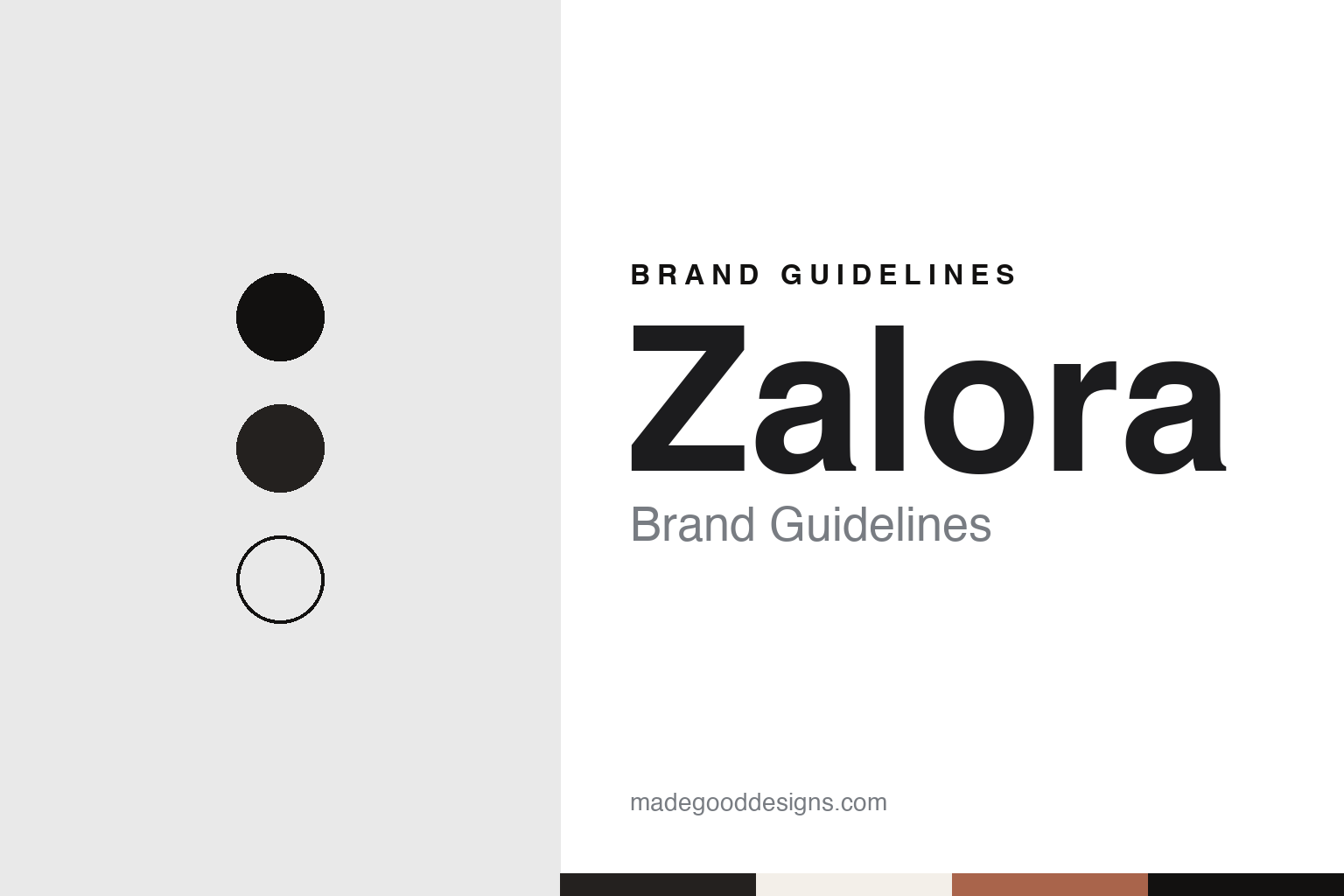
Zalora Brand Guidelines
Rocket Internet’s 2012 fashion store and Global Fashion Group.
Aa
Two constants: a black, linen and clay palette and a geometric sans register. Abstract homage — not a Zalora asset or mark; no logo, app screen or product is reproduced.
Rocket Internet, 2012
A fashion store built for a region.
Zalora is an online fashion store for Southeast Asia, and it began as a venture of Rocket Internet, the Berlin company that builds and backs online businesses. The Next Web reported in May 2013 that Zalora had launched in March 2012 and was selling dresses, shoes, bags and shirts across eight markets: Malaysia, Singapore, Indonesia, Thailand, the Philippines, Vietnam, Taiwan and Hong Kong. Its backers in a 2013 investment round included Summit Partners, Kinnevik, the Tengelmann Group and Verlinvest, alongside Rocket Internet’s usual financial partners, the same report said. Writing in 2016, TechCrunch described Rocket Internet as having started both Zalora and its general-merchandise sister site Lazada in 2012.
In its early years Zalora bought and held its own stock. In January 2014 TechCrunch reported a second layer, the Zalora Marketplace, in which vendors from across Southeast Asia and Hong Kong could open their own branded storefront inside the Zalora site, run by the seller with support from a Zalora account manager. The publication described the marketplace as a way to grow without having to own more inventory, and quoted Zalora’s managing director as saying its sites drew more than 15 million visits a month. It also noted that Rocket’s Australian and New Zealand fashion site, The Iconic, sat alongside Zalora at the time.
In 2014 Rocket Internet created Global Fashion Group (GFG), a holding company for its fashion e-commerce businesses around the world, and Zalora became one of its regional platforms, TechCrunch reported in 2017. GFG says its earliest platform launched in 2011 and that it now runs three: The Iconic in Australia and New Zealand, Dafiti in Latin America and Zalora in Southeast Asia. Zalora gives 2012 as its founding year in its own company statements.
Colour
Fewer markets, one regional warehouse pool.
The map has shrunk since 2013. In April 2016 TechCrunch reported that Zalora was selling its Thailand and Vietnam businesses; in February 2017 the same publication wrote that both had been sold the year before. In Thailand the buyer was Central Group. In June 2017 the Bangkok Post reported that Central Group Online had renamed the site it bought from Rocket Internet the previous year as Looksi, moving it from the Thai Zalora address to a new Looksi domain; the company’s president told the paper the change was partly meant to avoid confusion with Lazada. Also in February 2017, TechCrunch reported that Zalora had sold 49 percent of its Philippine operations to the Ayala group.
By November 2026, GFG and Drapers listed Zalora in five markets: Indonesia, Malaysia, the Philippines, Singapore and Hong Kong. Taiwan, Thailand and Vietnam, all on the 2013 list, are no longer among them. The company says it sells international and local brands alongside its own labels across apparel, shoes, accessories, beauty and luxury, for men and women.
Logistics sits close to the centre of the business. In November 2026 Drapers reported that Marks & Spencer had agreed a partnership with GFG under which M&S womenswear, menswear, kidswear and lingerie launched on Zalora in Southeast Asia, with stock for the region held in a single pool in Kuala Lumpur and orders fulfilled within the region through GFG’s own network. GFG’s chief executive told the magazine that the arrangement let a global brand reach the region without running its own local fulfilment centre and carrier network. For Zalora that makes the platform as much a distribution service for other labels as a shop window.
Typography
Platforms and storefronts.
Southeast Asia’s e-commerce platforms present themselves first through their apps. The home screen of a marketplace carries its name, a run of category icons, banners for the current sale and links to payments, top-ups and delivery services, and that screen does much of the work a shop front once did. Tokopedia, which English Wikipedia says took its name from the Indonesian word for “shop” and the word “encyclopedia,” and Bukalapak, whose name means “open a market stall,” both chose plain Indonesian words that describe what the service does.
Shopping-festival dates and partner programmes carry much of the identity beyond the app. Date-named sales, celebrity brand ambassadors and seasonal campaigns appear on the platforms’ own pages and in the local press; Indonesian Wikipedia records Tokopedia’s ambassadors from 2014 onwards. Programmes for small shops, such as Mitra Tokopedia and Mitra Bukalapak for family-run warungs, take the platform name off the screen and onto counters, signs and receipts.
For Vietnam’s retailers — phone and electronics chains, grocery chains and supermarket groups — the store fascia is a public face alongside the app and the website, and the companies’ corporate pages set out their store formats, sister banners and owners. Store counts and formats in this guide are given only as a dated source reports them.
Corporate pages and the press also carry the ownership story, which in this region often changes the brand itself. Tokopedia merged with Gojek into GoTo in May 2021, TechCrunch reported, and in 2024 it took in TikTok Shop’s Indonesian business, while Bukalapak listed in Jakarta in August 2021 and ended its physical-goods marketplace in early 2025. This guide sets out what can be checked about each company — founders, owners, listings and mergers — and says plainly when a fact rests only on the company’s own word.
Aa
A clean geometric sans for a fashion platform. (Specimen set in Jost, a sans STAND-IN; NOT the Zalora logo.)
Zalora
A 2018 refresh by Superunion.
The identity has been reworked along the way. In February 2018 Campaign Asia reported a brand refresh by Superunion, the WPP brand agency, built around a campaign line, “You own now,” and aimed, in the magazine’s words, at “a more ownable and modern look.” In its own statements the company sets its name in capitals, ZALORA, while the press usually writes Zalora; this guide follows the press spelling. The group’s sister platforms keep names of their own rather than sharing the Zalora one: The Iconic in Australia and New Zealand, and Dafiti in Brazil and Colombia, according to GFG and Drapers.
Ownership is layered. Zalora is part of Global Fashion Group, which English Wikipedia says is registered in Luxembourg, headquartered in London and listed on the Frankfurt Stock Exchange since July 2019. The Zalora name has also left markets it once served: the Thai site became Looksi under Central Group in 2017, as the Bangkok Post reported, and the Philippine business has had a local partner in Ayala since the 2017 stake sale reported by TechCrunch. What remains is a single regional platform, run across five markets from one shared stock pool.
For a design guide, Zalora shows how a fashion platform carries one name across several countries while its owners, partners and market list change around it. Compare Lazada, the general-merchandise site Rocket Internet started the same year, and Qoo10, a marketplace that grew from Singapore. For this guide we use a wardrobe black, linen white and a clay accent with a geometric sans, an unofficial interpretation; no product or logo is reproduced.
Explore & save
Keep Zalora’s identity on hand — save it to a board in the Made Good inspiration library.
Zalora identity set
Pin the Zalora black, linen and clay palette and the geometric sans register to your own board.
Source & notes
Frequently Asked Questions
What font can I use to match the Zalora look?
This guide describes Zalora’s type as “A clean geometric sans for a fashion platform”. Its type specimen is set in Jost from Google Fonts as a stand-in; Jost is not Zalora’s own lettering.
What colours are in the Zalora palette?
This guide’s Zalora palette is Wardrobe black #24211F, Ink #121110, Linen white #F3EFE9, Clay #A9644B and Paper #FAF8F4. The tones are the guide’s own unofficial interpretation, not official Zalora hex codes.
When was Zalora launched?
Zalora was launched in March 2012, in Southeast Asia. Zalora is known for Online fashion, Zalora Marketplace.
Who owns Zalora?
Zalora is part of Global Fashion Group. Zalora is known for Online fashion, Zalora Marketplace.