Tiki Brand Guidelines
A 2010 Ho Chi Minh City bookshop turned marketplace.
Aa
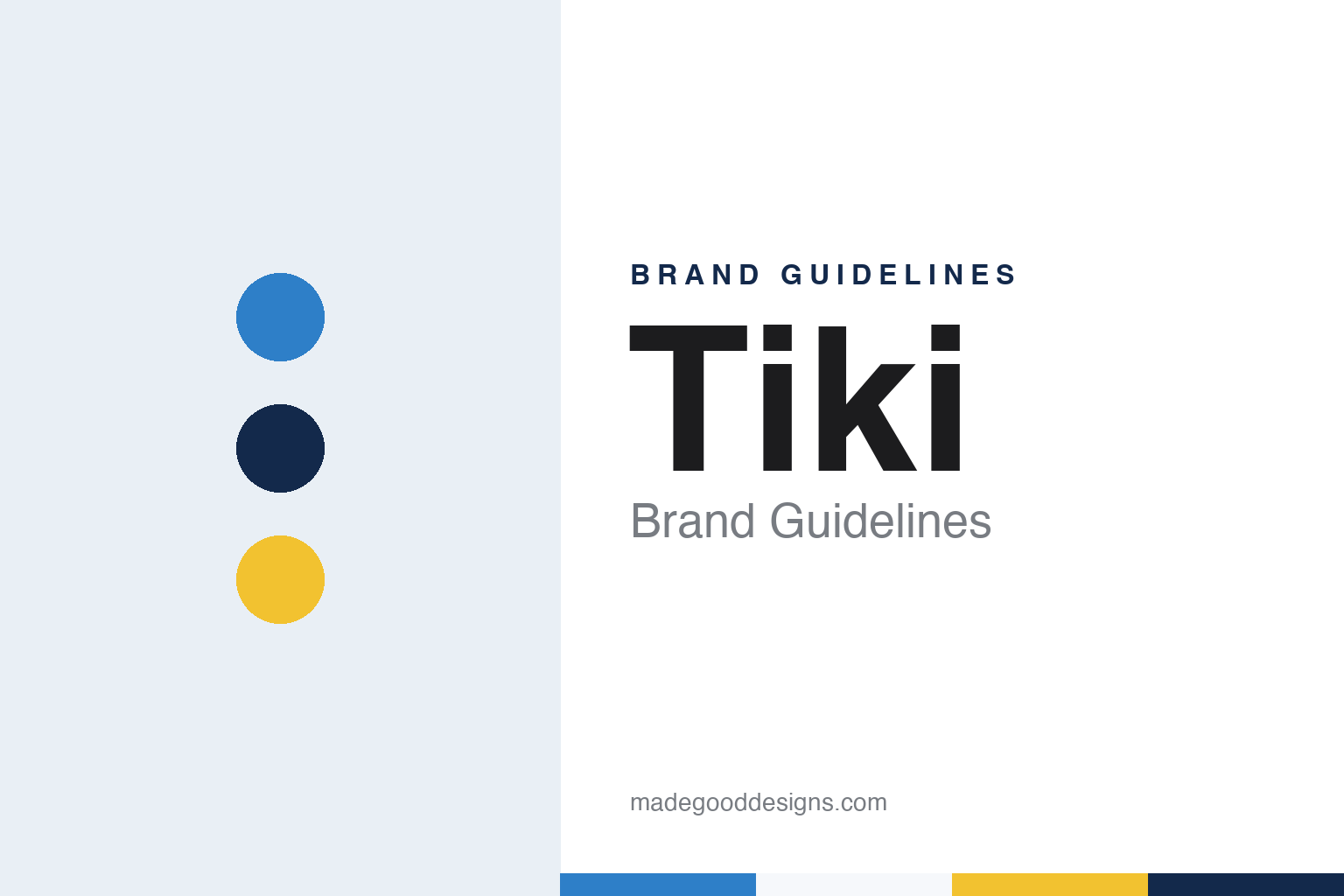
Two constants: a sky blue, ink blue and yellow palette and a rounded sans register. Abstract homage — not a Tiki product or mark; no logo, app screen or parcel is reproduced.
Search and save
A hundred imported books and a motorbike.
Tiki is a Vietnamese online marketplace based in Ho Chi Minh City. It was founded in 2010 as an online platform for selling books, Tuoi Tre News reported in November 2021, and Vietnamese Wikipedia, citing the company, dates the launch to March 2010. The founder is Trần Ngọc Thái Sơn, a software engineer with a master’s degree from the University of New South Wales in Australia. According to The Investor, writing in August 2023, he started the business with his own savings, wrote the site’s code himself, bought about a hundred English-language books from Amazon and delivered the orders by motorbike around Ho Chi Minh City, where the company is still headquartered.
The name is a contraction. Vietnamese Wikipedia says Tiki stands for “Tìm kiếm & Tiết kiệm,” which translates as “search and save”; The Investor gives the same derivation, from two Vietnamese words meaning “searching” and “economical.” The result is a four-letter word with two matching syllables, written in lower-case Latin letters and easy to say in Vietnamese or English.
The bookshop did not stay a bookshop for long. Vietnamese Wikipedia says that in 2013 and 2014 Tiki added stationery, household essentials, electronics and home appliances to a catalogue of more than 51,000 book titles, and began running a warehouse of about 3,000 square metres. By November 2018 Tiki was a business-to-consumer site selling more than 300,000 products in 12 categories, KrASIA reported. Vietnamese Wikipedia, citing the company’s own seller academy, says Tiki opened its site to outside sellers as a marketplace in April 2017. By November 2021 the company had nearly 4,000 employees and 20 million registered customers, Tuoi Tre News reported. Books remain a named department: the homepage still lists “Nhà Sách Tiki,” the Tiki bookshop, alongside electronics, home goods, fashion, groceries and cross-border imports.
Colour
A marketplace with its own store and logistics arm.
Tiki’s “about” page names Công ty TNHH TI KI, which sets up and runs the tiki.vn marketplace for independent sellers; Tiki Trading, the group’s own retail unit, which sells goods and services on the same site; and TikiNOW Smart Logistics, which provides end-to-end logistics, shipping and postal services for the platform. The page says the retail unit and the marketplace together offer 10 million products in 26 categories; that is the company’s own figure.
The logistics company has its own management. In August 2023 The Investor reported that Vũ Thị Nhật Linh, who had joined Tiki in 2015 and led the development of the platform between 2018 and 2022, was named general director of TikiNow Logistics, after a year as deputy general director in charge of the supply chain, warehouses, delivery and after-sales departments.
Speed is the message the homepage repeats. Its header carries the short line “Tốt & Nhanh,” good and fast, followed by a strip of service promises that includes two-hour delivery, a 30-day return period, a commitment that goods are genuine and a refund pledge for counterfeit items; these are Tiki’s own terms. The same pages show the wider business around the store. Ticketbox, which The Investor described in 2023 as an online event-management and ticket-distribution system, sits within the group, and the site menu lists bill payments, mobile top-ups, card and wallet offers and buy-now-pay-later options next to the product departments.
Typography
Platforms, shopfronts and corporate pages.
Southeast Asia’s e-commerce platforms present themselves first through their apps. The home screen of a marketplace carries its name, a run of category icons, banners for the current sale and links to payments, top-ups and delivery services, and that screen does much of the work a shop front once did. Tokopedia, which English Wikipedia says took its name from the Indonesian word for “shop” and the word “encyclopedia,” and Bukalapak, whose name means “open a market stall,” both chose plain Indonesian words that describe what the service does.
Shopping-festival dates and partner programmes carry much of the identity beyond the app. Date-named sales, celebrity brand ambassadors and seasonal campaigns appear on the platforms’ own pages and in the local press; Indonesian Wikipedia records Tokopedia’s ambassadors from 2014 onwards. Programmes for small shops, such as Mitra Tokopedia and Mitra Bukalapak for family-run warungs, take the platform name off the screen and onto counters, signs and receipts.
For Vietnam’s retailers — phone and electronics chains, grocery chains and supermarket groups — the store fascia is a public face alongside the app and the website, and the companies’ corporate pages set out their store formats, sister banners and owners. Store counts and formats in this guide are given only as a dated source reports them.
Corporate pages and the press also carry the ownership story, which in this region often changes the brand itself. Tokopedia merged with Gojek into GoTo in May 2021, TechCrunch reported, and in 2024 it took in TikTok Shop’s Indonesian business, while Bukalapak listed in Jakarta in August 2021 and ended its physical-goods marketplace in early 2025. This guide sets out what can be checked about each company — founders, owners, listings and mergers — and says plainly when a fact rests only on the company’s own word.
Aa
A friendly rounded sans for a short, lower-case name. (Specimen set in Nunito, a sans STAND-IN; NOT the Tiki logo.)
Tiki
Owned through Singapore.
The ownership has moved several times. In 2016 the Vietnamese technology group VNG became Tiki’s main shareholder, The Investor reported in February 2025; by 30 June 2019 the Chinese e-commerce group JD.com had raised its holding to about a quarter of the company through a series of investments. Today Tiki is held through Tiki Global Pte. Ltd., a Singapore company that owns more than 90 per cent of the Vietnamese business, according to the same report. VNG recalled its two representatives from Tiki Global’s board in October 2024, ending Tiki Global’s status as a VNG affiliate, although VNG kept a minority stake as a long-term investment.
The leadership changed shape in 2023. That August, The Investor reported, Trần Ngọc Thái Sơn moved to the role of chairman of Tiki Global, and Richard Trieu Pham, who had joined Tiki in 2019 as chief financial officer and president, became general director of the Vietnamese company, with responsibility for its fintech and insurtech lines and for Ticketbox.
Competition has shaped the brand’s recent years. The Investor wrote in February 2025 that before 2016 Tiki’s main rival in Vietnam was Lazada, that Shopee’s arrival reshaped the market, and that Tiki has since struggled to hold its share as TikTok Shop has grown. The platform was still trading in November 2026, with its homepage listing more than twenty departments, from books and household goods to phones, laptops, sports gear and international imports.
For a design guide, Tiki shows how a short name built from two plain words can carry a store from one shelf of imported books to a multi-category marketplace with its own retail unit and logistics company. Compare Shopee and Lazada, the two regional marketplaces it has competed with in Vietnam. For this guide we use a sky blue, an ink blue and a warm yellow with a rounded sans, an unofficial interpretation; no product or logo is reproduced.
Explore & save
Keep Tiki’s identity on hand — save it to a board in the Made Good inspiration library.
Tiki identity set
Pin the Tiki sky blue, ink blue and yellow palette and the rounded sans register to your own board.
Source & notes
Frequently Asked Questions
What font can I use to match the Tiki look?
This guide describes Tiki’s type as “A friendly rounded sans for a short, lower-case name”. Its type specimen is set in Nunito from Google Fonts as a stand-in; Nunito is not Tiki’s own lettering.
What colours are in the Tiki palette?
This guide’s Tiki palette is Search sky blue #2E7FC8, Ink blue #13294B, Saver yellow #F2C230, Slate #4A5A70 and Paper #F6F8FB. The tones are the guide’s own unofficial interpretation, not official Tiki hex codes.
When was Tiki founded?
Tiki was founded in 2010, in Ho Chi Minh City, Vietnam.
Who founded Tiki?
Tiki was founded by Trần Ngọc Thái Sơn in 2010.
Who owns Tiki?
Tiki is owned via Tiki Global Pte. Ltd., Singapore. Tiki is known for Tiki Trading, TikiNOW, Ticketbox.