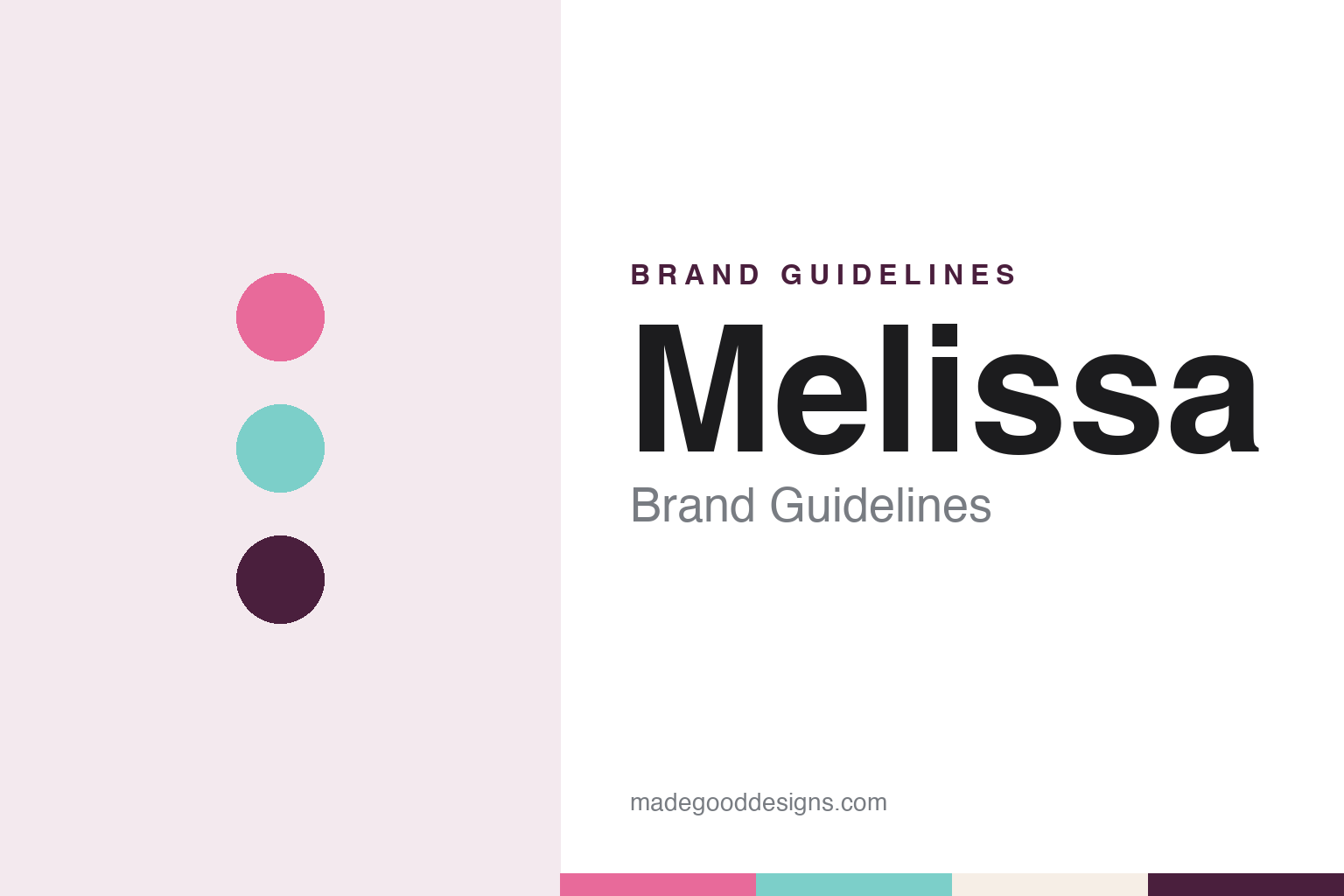
Melissa Brand Guidelines
The plastic sandal that a wine-basket maker turned into a fashion brand.
Aa
Two constants: a jelly pink, clear aqua and deep plum palette and a rounded sans register. Abstract homage — not a Melissa product or mark; no shoe, logo or store design is reproduced.
Melissa Aranha
A plastic sandal from a wine-basket maker.
Melissa is a footwear brand of Grendene, the Brazilian shoe company founded in 1971 in Farroupilha, in the state of Rio Grande do Sul, by the brothers Alexandre and Pedro Grendene Bartelle. Portuguese Wikipedia gives the founding date as 25 February 1971 and the first company name as Plásticos Grendene. Grendene’s own history says the business began by making plastic holders for the large wine bottles produced in the hills of Rio Grande do Sul, replacing wicker ones, and from 1976 made plastic parts for farm machinery before moving on to soles and heels for shoes.
The brand dates from 1979. According to Grendene’s history, Pedro Grendene Bartelle noticed the strap sandals worn by fishermen on the French Riviera, and the idea became the Melissa Aranha, an injected-plastic sandal; aranha is Portuguese for spider. English Wikipedia gives the same account. Portuguese Wikipedia, citing a teaching case published by the Fundação Getulio Vargas, says the sandal was promoted through the telenovela Dancin’ Days, whose lead character wore it, and that this made the plastic sandal known across Brazil. InfoMoney reported in November 2022 that the Aranha was first sold in beachwear boutiques.
The shoes were first made at a plant in Rio Grande do Sul, Portuguese Wikipedia says, and production moved in the early 1990s to a new factory in the north-east of Brazil. Grendene opened plants in Fortaleza in 1990, Sobral in 1993 and Crato in 1997, all in the state of Ceará, and its history says that in 2009 it made more than 150 million pairs of shoes, entirely in Brazil.
The early decades were uneven. Melissa’s director, Paulo Pedó, told InfoMoney in 2022 that the brand rose and fell with plastic’s place in fashion and was at one point discontinued. Grendene’s history says that in 1996, after two years without launches, it began to reposition Melissa, bringing the model Claudia Schiffer to Brazil to show new designs, and that in 1998 it set up a separate division for the brand.
Colour
Designers, galleries and a scent.
Collaboration has been part of Melissa since the 1980s. Grendene’s history dates its partnerships with outside designers to 1983, beginning with Jean-Paul Gaultier, Thierry Mugler, Jacqueline Jacobson and Elisabeth de Senneville. The company says Melissa took part in São Paulo Fashion Week in 2002, worked with the Brazilian designer Alexandre Herchcovitch from 2003, released designs with Vivienne Westwood and the architect Zaha Hadid in 2008, and launched a collection with Karl Lagerfeld in New York in 2013. IstoÉ Dinheiro, writing in February 2012, listed collaborators including Westwood, Jason Wu, Herchcovitch, Pedro Lourenço, Fernando and Humberto Campana, Karim Rashid and Hadid. Grendene says Melissa and the Campana brothers marked fifteen years of partnership with a joint collection in 2018.
The material is part of the identity. IstoÉ Dinheiro reported that the shoes are made from a plastic the company calls Melflex, and that their scent is used in marketing; InfoMoney described it in 2022 as a tutti-frutti smell. When the brand marked its 25th anniversary, O Estado de S. Paulo wrote in March 2005 that the sandal had brought plastic into Brazilian fashion as a raw material. The paper described the anniversary exhibition, Plastic.o.rama, at the Museu de Arte Moderna in Rio de Janeiro: a hundred invited artists, designers and others each received a white pair of the Melissa Original 79 in a white box and were asked to reinterpret it. The guests included Herchcovitch, the Campana brothers and the advertising executive Washington Olivetto, and the show was curated by the journalist Érika Palomino and the creative director Giovanni Bianco.
The brand’s stores are run as showcases. The first Galeria Melissa opened on Rua Oscar Freire in São Paulo in 2005, according to both Grendene and IstoÉ Dinheiro, which reported in 2012 that a gallery in New York’s SoHo was the brand’s first concept store outside Brazil. That store later closed: Interior Design magazine reported in September 2017 that a Melissa store a few blocks away had shut in 2016, and described its replacement, a 4,000-square-foot gallery by the Brazilian designer Muti Randolph on the ground floor of a cast-iron building in SoHo. Its entrance is a tunnel of criss-crossing LED lines between mirrors, its wooden displays are modelled on the building’s original columns of 1900, and exhibitions by emerging artists change every quarter. The magazine said Randolph had also designed the São Paulo and London galleries; Grendene dates the London gallery, in Covent Garden, to 2014.
Typography
How the category presents itself.
Brazil’s fashion and footwear brands cover a wide range: rubber flip-flops and plastic jelly shoes, women’s shoes and handbags, beachwear and printed dresses, and men’s basics and denim. Many of them sit inside a small number of listed groups, and their corporate pages set out founders, owners and stock-market listings alongside the product ranges.
Footwear is led by large manufacturers. Alpargatas, founded in São Paulo in 1907, has made Havaianas since 1962, and Portuguese Wikipedia describes it as an Itaúsa company since its 2017 change of ownership. Grendene, founded in Farroupilha in 1971 and listed on the São Paulo stock exchange since 2004, makes Melissa, Ipanema and Rider, with plants in the north-eastern states of Ceará and Bahia, according to Portuguese Wikipedia.
Clothing and women’s shoes have consolidated too. Portuguese Wikipedia says Azzas 2154 was formed in 2024 from the merger of Arezzo&Co, the Belo Horizonte shoe group behind Arezzo and Schutz, and Grupo Soma, the Rio de Janeiro group built on Animale and Farm, which had bought Cia. Hering in 2021. Ownership in the sector changes often, so each guide in this series states its brand’s owner as a dated fact.
These brands present themselves through campaigns with well-known faces, collaborations with foreign labels and their own stores and brand spaces, from Galeria Melissa in São Paulo to Casa Ipanema in Rio de Janeiro. This guide sets out what can be checked about each brand — who founded it, who owns it and where it says its products are made — and marks clearly what rests only on the company’s own word.
Aa
A soft, rounded sans for a moulded-plastic brand. (Specimen set in Nunito, a rounded sans STAND-IN; NOT the Melissa logo.)
Melissa
A brand inside a listed shoemaker.
Melissa has never been a separate company. Its owner, Grendene, began trading on the Novo Mercado of the São Paulo stock exchange on 29 October 2004, and Portuguese Wikipedia names the Grendene family as its controlling owners. Grendene’s other brands include Ipanema, launched in 2001, as well as Rider, Grendha and Zaxy. InfoMoney reported in November 2022 that Melissa was the only Grendene brand with its own store network, about 400 Clube Melissa franchises, and quoted Pedó as saying the brand was present in 80 countries. Grendene says that in 2012 its earlier Jelly franchise stores became Clube Melissa, and that in 2024, for the brand’s 45th anniversary, the franchise stores were renamed simply Melissa and given a new visual identity.
The company has also reorganised its business abroad. Grendene says it set up a joint venture, Grendene Global Brands, based in the United Kingdom, in 2021, holding 49.9 per cent; InfoMoney named 3G Radar as the partner in 2022, and Grendene says it acquired the whole of the venture in 2024. InfoMoney listed Galeria Melissa locations at Galeries Lafayette in Paris, on Rua Oscar Freire and in New York. For the São Paulo gallery’s twentieth anniversary in 2025, Grendene says, Melissa published a book, released a documentary web series and worked with the São Paulo art museum MASP.
For a design guide, Melissa shows how a single material, a recognisable smell and a run of designer collaborations can carry a brand through changes in fashion. Compare Ipanema, Grendene’s beach-sandal brand, and Havaianas, another Brazilian rubber-and-plastic footwear name. For this guide we use jelly pink, clear aqua and a deep plum with a rounded sans, an unofficial interpretation; no product or logo is reproduced.
Explore & save
Keep Melissa’s identity on hand — save it to a board in the Made Good inspiration library.
Melissa identity set
Pin the Melissa jelly pink, clear aqua and deep plum palette and the rounded sans register to your own board.
Source & notes
Frequently Asked Questions
What font can I use to match the Melissa look?
This guide describes Melissa’s type as “A soft, rounded sans for a moulded-plastic brand”. Its type specimen is set in Nunito from Google Fonts as a stand-in; Nunito is not Melissa’s own lettering.
What colours are in the Melissa palette?
This guide’s Melissa palette is Jelly pink #E86A9A, Clear aqua #7CCFC9, Deep plum #4A1F3D, Sandal cream #F6EEE6 and Ink #1E1A1D. The tones are the guide’s own unofficial interpretation, not official Melissa hex codes.
When was Melissa launched?
Melissa was launched in 1979, in Rio Grande do Sul, Brazil.