NaRaYa Brand Guidelines
Narai Intertrade’s 1989 Bangkok bow bag and an ICONSIAM flagship.
Aa
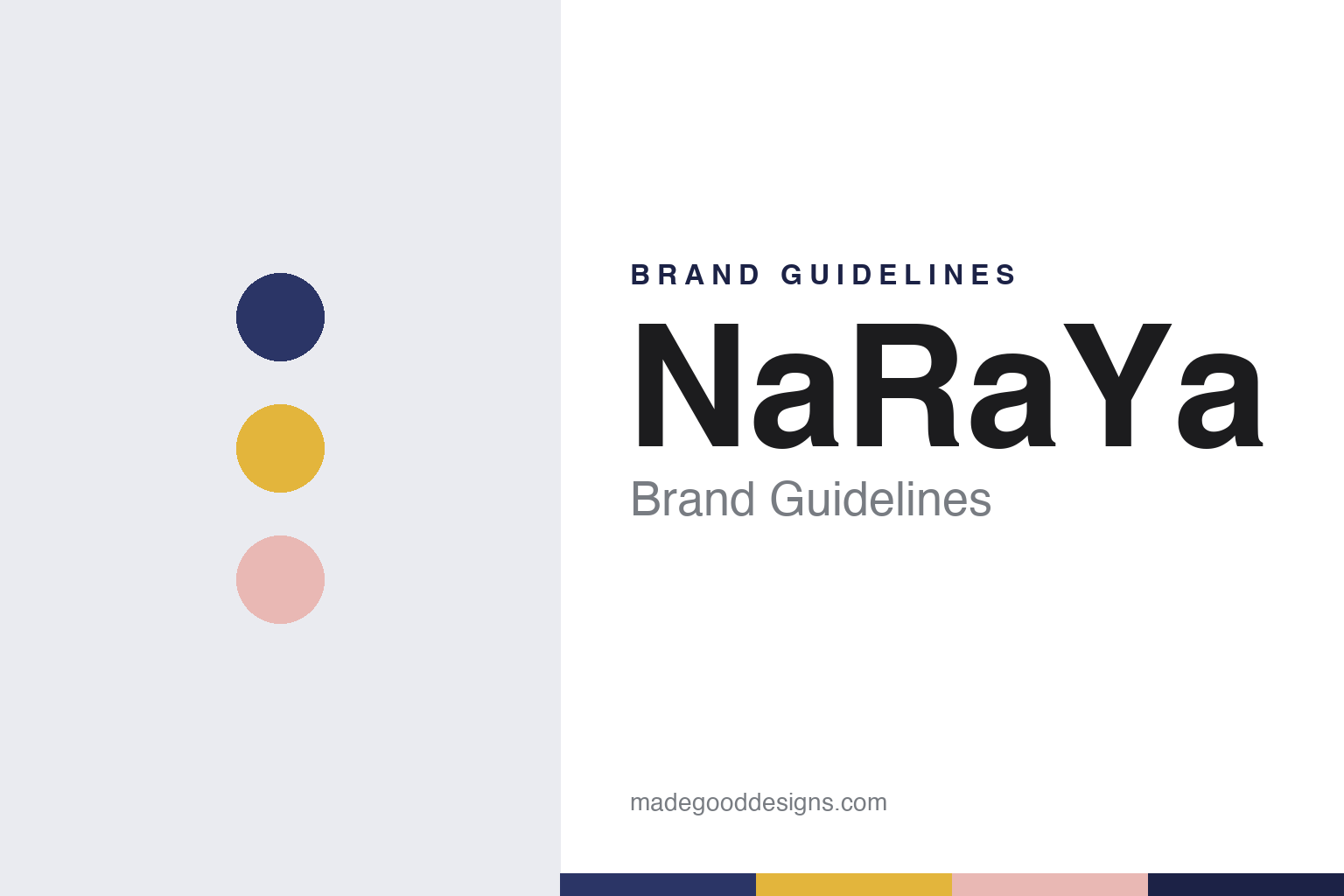
Two constants: an ink blue, ribbon yellow and soft rose palette and a soft display serif register. Abstract homage — not a NaRaYa product or mark; no bag, logo or pattern is reproduced.
Narai Phand
A two-square-metre start in Bangkok.
NaRaYa is a Thai bag and textile brand from Bangkok. The company behind it, Narai Intertrade Co., Ltd., says it was founded on 6 October 1989 by Vassilios Lathouras and Wasna Roongsaenthong. Thai trade press uses the founder’s married name: Marketeer, in October 2019, described Wasna Rungsaenthong Lathouras as the brand’s founder and the president of Narai Intertrade, and Brand Buffet gave her the same title when it covered a store opening in November 2018. The Bangkok Post, in April 2018, called Narai Intertrade a Thai maker of handbags and textile products under the NaRaYa brand.
The beginnings were small. The company’s own timeline says that in 1993 it set up a modest factory with 15 artisans and 15 sewing machines, and that its products were sold from a two-square-metre retail space at Narai Phand in Bangkok. Brand Buffet, reporting on the brand’s 35th anniversary in October 2024, also traced it to 1989 and to a selling space of just two square metres, and said its products had reached customers largely through word of mouth.
The name came after the company. NaRaYa says its trademark was registered in 1996, and that the name refers to Phra Narai, the Thai name for Vishnu, chosen because it is easy to say in many languages. The registered company name, Narai Intertrade, shares the same root. In 2006, the company says, it set up its headquarters on Chaengwattana Road in Nonthaburi province, which remains the base of the business.
Colour
Fabric bags tied with a bow.
The product that made the name is a fabric bag finished with a bow. Marketeer, writing for the brand’s 30th anniversary in October 2019, described NaRaYa’s signature as cloth bags tied with a bow and finished with careful stitching, and said its selling approach rested on modest prices, neat sewing, attractive shopfronts, a wide range and goods kept in stock. The magazine also reported that Chinese shoppers had given the bags a nickname that translates as the “Bangkok bag.”
The range has widened since. When NaRaYa opened a flagship store at ICONSIAM in Bangkok in November 2018, Brand Buffet reported, the shop covered more than 1,350 square metres and included a NaRaYa Tea Room. The same report listed the group’s other labels at the time: Nara by NaRaYa, LaLaMa by NaRaYa, Aphrodite by NaRaYa, a bag line for women made with more upscale materials, and Evangelisa NaRaYa Silk, a clothing, bag and jewellery line in Thai silk. Pasin Lathouras, then assistant to the president, told the trade site that the brand had done no marketing in its first 28 years.
Where the goods are made is part of the brand’s story, and here the detail comes from the company. NaRaYa says it opened two factories in Buriram province in 2008, another in Khon Kaen province in 2011 and a distribution centre in Pathum Thani province in 2016. It now describes a workforce of more than 3,000 employees who work with more than 4,000 makers in rural communities. In October 2024 Pasin Lathouras, by then executive vice-chairman, told Brand Buffet that every NaRaYa bag is made by Thai hands from design to sewing, and that most of the raw materials also come from Thailand.
Typography
Design and documentation.
Southeast Asia’s fashion, bag, accessory and lifestyle brands mostly speak through their own channels: a wordmark over a shopfront, a seasonal campaign, a named collection and an online shop. Many began as small businesses (a leather wholesaler, a garment maker, a family shop) and only later built a retail identity, so the brand story is often told through a founding date, a first boutique and a list of markets reached.
Collections and collaborations do much of the visual work. Labels name their lines by occasion, material or season, and add licensed characters, local actors and regional pop stars as ambassadors or muses. These partnerships change from season to season, while the name, the lettering and the shop interior usually stay fixed.
Ownership is often layered. Several labels sit inside larger groups: in Malaysia, Padini Holdings runs Vincci alongside its own clothing labels and sells them together in its concept stores, and Bonia Corporation holds a family of leather goods brands. In the Philippines and Thailand, groups such as Golden ABC and Jaspal Group own more than one label each, and each guide in this series describes its group from that brand’s own sources. Some companies are listed on their home stock exchange and publish corporate pages on founders, directors, subsidiaries and shareholdings; others remain private.
This guide sets out what can be checked about each brand: who founded it and when, who owns it now, where it sells and how it presents its name, with dated reporting from newspapers and trade press, and with the companies’ own claims marked as theirs. The palettes and type samples are our own interpretations, not official brand assets.
Aa
A soft display serif for a brand built on a fabric bow. (Specimen set in DM Serif Display, a serif STAND-IN; NOT the NaRaYa logo.)
NaRaYa
Three decades of anniversaries and shops.
The company’s public face has been its leadership. In the Bangkok Post’s April 2018 report, Wasna Lathouras was named as president of Narai Intertrade and Pasin Lathouras as assistant to the chief executive, and the paper said the company wanted to become a globally recognised label with a presence in major fashion cities. The same report named George Hartel as NaRaYa’s chief operating officer, and in November 2018 Brand Buffet quoted him on the company’s new focus on online selling. By the 35th-anniversary event in October 2024, Brand Buffet named Pasin Lathouras as executive vice-chairman of Narai Intertrade.
Anniversaries have been the brand’s main showcases. For its 30th, Marketeer reported, NaRaYa released a film whose title translates as “Bag of Life,” made by the agency Dentsu One in Bangkok and directed by Thanonchai Sornsriwichai, which told the founder’s story. It also wrapped a BTS Skytrain in bows, stitch lines and the brand’s signature yellow, released five anniversary collections and held a celebration at ICONSIAM on 6 October 2019. For its 35th, Brand Buffet reported an exhibition of about 300 square metres telling the brand’s story from 1989 onward.
The store network has been counted at different dates. As of October 2024, Brand Buffet reported more than 18 NaRaYa branches in Thailand, with products also sold in several countries abroad. In November 2018 the same publication reported that Thai customers could buy NaRaYa online through Lazada and JD Central, and that the company was turning to online marketing for the first time.
For a design guide, NaRaYa shows how a single detail, a fabric bow, can carry a brand from a two-square-metre space to a riverside flagship, and how anniversaries can retell a founder’s story in film, on a train and in an exhibition. Compare Jaspal, another Bangkok fashion group, and Pomelo, a Bangkok fashion label. For this guide we use an ink blue, a ribbon yellow and a soft rose with a serif, an unofficial interpretation; no product or logo is reproduced.
Explore & save
Keep NaRaYa’s identity on hand — save it to a board in the Made Good inspiration library.
NaRaYa identity set
Pin the NaRaYa ink blue, ribbon yellow and soft rose palette and the soft display serif register to your own board.
Source & notes
Frequently Asked Questions
What font can I use to match the NaRaYa look?
This guide describes NaRaYa’s type as “A soft display serif for a brand built on a fabric bow”. Its type specimen is set in DM Serif Display from Google Fonts as a stand-in; DM Serif Display is not NaRaYa’s own lettering.
What colours are in the NaRaYa palette?
This guide’s NaRaYa palette is Ink blue #2B3566, Ribbon yellow #E3B53C, Soft rose #E9B8B4, Night indigo #1C2246 and Cotton white #FAF6EF. The tones are the guide’s own unofficial interpretation, not official NaRaYa hex codes.
When was NaRaYa founded?
NaRaYa was founded in 6 October 1989 (Narai Intertrade), in Bangkok, Thailand.
Who founded NaRaYa?
NaRaYa was founded by Vassilios Lathouras and Wasna Roongsaenthong in 6 October 1989 (Narai Intertrade).