Shinola Brand Guidelines
A Detroit lifestyle brand built on American manufacturing — with a lightning bolt, a revived name and an honest asterisk.
Aa
Two constants: a Detroit-blue palette and a vintage serif. Abstract homage — not the Shinola wordmark or lightning bolt.
Built in Detroit
Shinola built a brand on American manufacturing and a Detroit story.
Shinola is a Detroit-based lifestyle brand — watches, leather goods, bicycles, journals, audio — built almost entirely on a story: American manufacturing, and specifically the revival of Detroit. Its taglines said it plainly: “Built in Detroit,” “Where American is made.” The watches are assembled at a facility near downtown Detroit, and the whole brand trades on craftsmanship, revival and a romantic “Made in America” narrative. Its identity leans vintage and heartfelt: a serif “Shinola / Detroit” wordmark paired with a horizontal lightning bolt (which founder Tom Kartsotis reportedly has tattooed on his wrist). (Honest caveats: the wordmark’s typeface isn’t officially documented, so don’t name a font; and Shinola publishes no official brand hex — the palette leans on cream, black and a Detroit blue, treated here as an interpretive homage.)
But the story carries a crucial, honest asterisk. In 2016 the U.S. Federal Trade Commission challenged Shinola’s unqualified “Built in Detroit” / “Made in USA” claims, because the watches rely heavily on imported components — notably Swiss movements (from Ronda AG) and other imported parts, with only final assembly in Detroit. Under the FTC’s standard, an unqualified “Made in USA” claim requires that all or virtually all significant parts and processing be US-origin, which Shinola didn’t meet. The resolution (via an FTC closing letter, not a lawsuit or fine) required Shinola to qualify its claims — e.g., “Built in Detroit with Swiss and imported parts.” So the accurate description is assembled in Detroit with Swiss and imported components, not “fully made in the USA.”
The brand’s origin has a twist too. Modern Shinola was founded in 2011 by Tom Kartsotis — the founder of Fossil — through his firm Bedrock Manufacturing, and it revived a defunct name: “Shinola” was an old American shoe-polish brand (founded in Rochester, NY, in 1877, gone by around 1960), immortalised in the salty saying “you don’t know [it] from Shinola.” Kartsotis acquired the dormant name for its authentic-Americana ring. The signature model is the Runwell (its first serialized run, hand-assembled in Detroit, sold out fast). Shinola remains privately held under Bedrock — a brand built on an American-manufacturing story that comes with an honest, well-documented asterisk.
Colour
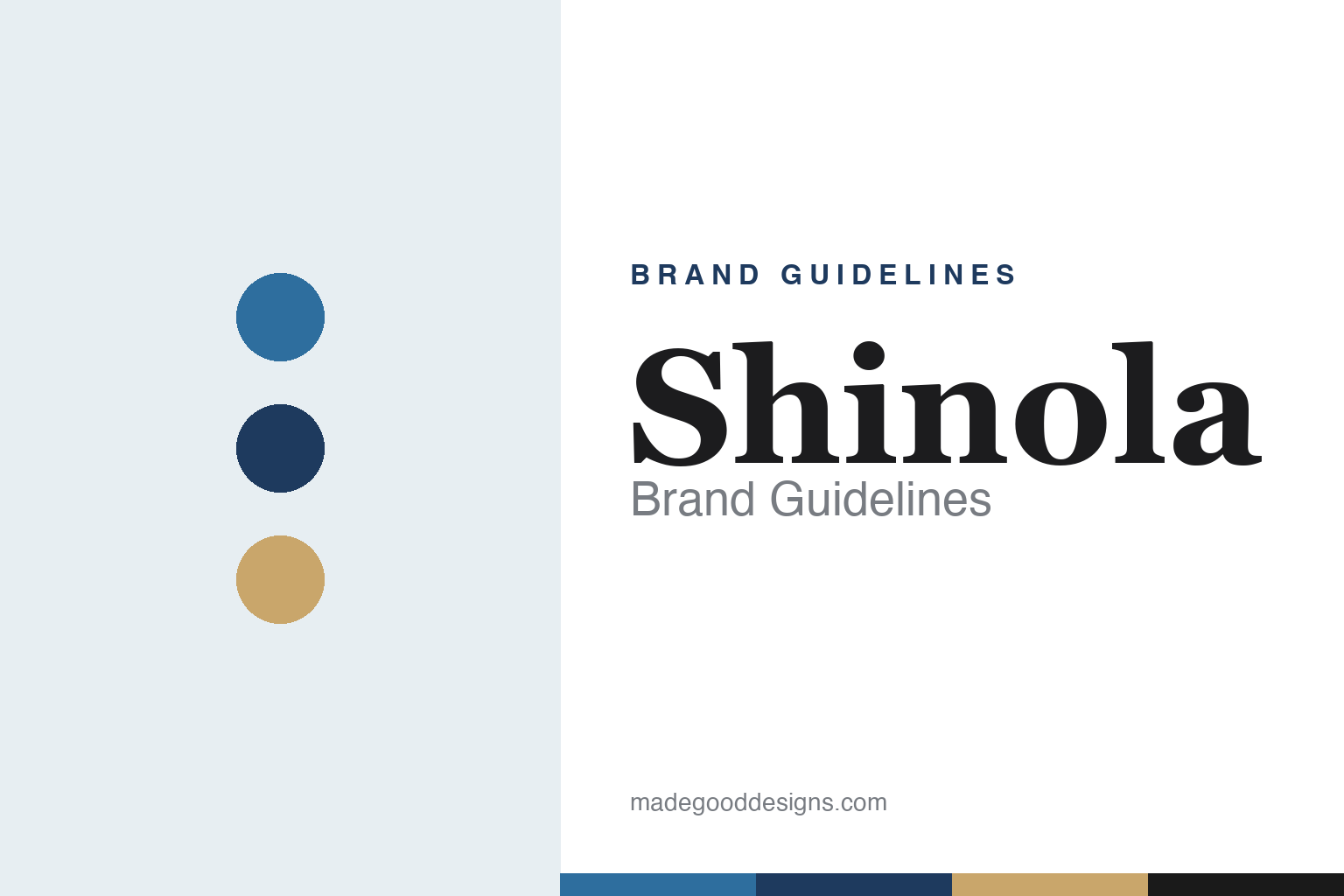
Shinola lives in Detroit blue and cream. Click a swatch to copy the hex.
Shinola’s look is warm, vintage and American: cream and black with a signature Detroit blue (and touches of tan and rust). The palette feels heritage and hand-made — the tones of old workwear, industrial signage and mid-century Americana — reinforcing the craftsmanship-and-revival story at the brand’s heart. It’s an emotional, nostalgic scheme built to make you feel the romance of “Built in Detroit.” The honest caveat: Shinola publishes no official public brand hex — the identity leans on cream, black and a blue accent — so the values here are an interpretive, abstract-homage palette rather than a confirmed spec.
The lesson is a palette that sells a place and a story. Shinola’s vintage, workwear-toned palette makes its Detroit-manufacturing narrative feel tangible and romantic. For designers, it’s a reminder that colour and styling can dramatise a brand’s story (place, craft, revival) and create real emotional pull. The takeaways: use a warm, heritage palette to make a story feel authentic and tangible; tie colour to a place and a narrative (Detroit, American manufacturing); and — as Shinola’s FTC episode shows — make sure the substance is as honest as the styling.
Typography
The voice is a vintage serif — heritage and hand-made.
Shinola’s vintage serif voice is central to its heritage feel. Classic, slightly old-fashioned serif letterforms — paired with the horizontal lightning bolt — read as craftsmanlike, American and time-worn, evoking the signage and packaging of an earlier industrial era. That deliberately nostalgic type is exactly what a brand selling revival and “Built in Detroit” craftsmanship wants: it makes a modern company (founded 2011) feel like an established heritage maker. The lettering does a lot of the storytelling, giving Shinola its warm, authentic-Americana character. (Because the wordmark’s exact face isn’t documented, the honest description is “a vintage serif,” not a named font.) The type behaves like the brand: heritage, hand-made and rooted in a story of American craft.
Aa
A vintage serif — heritage and hand-made. (Specimen set in Cinzel, a classical serif in the spirit of Shinola’s vintage wordmark; the real face is undocumented.)
A story, honestly told
Shinola shows the power — and the responsibility — of a brand story.
Shinola is a lesson in the power, and the responsibility, of a brand story. It built a compelling identity on American manufacturing and Detroit revival — a genuinely resonant narrative, backed by real assembly jobs in the city and a warm, heritage-styled identity. That story gave a brand-new company (2011) instant emotional depth and a premium position. But it also shows the responsibility that comes with a “Made in America” claim: when the FTC found the watches used Swiss and imported parts, Shinola had to qualify its language to “Built in Detroit with Swiss and imported parts.” The honest version of the story is still a good one — assembled in Detroit, reviving American manufacturing — but it needed the asterisk.
For designers and brand-builders, Shinola offers a nuanced takeaway: a place-based, craft-based story is powerful — and must be honest. The lessons: a strong narrative (American manufacturing, Detroit revival) plus a heritage identity (vintage serif, workwear palette, the lightning bolt) can give even a new brand real emotional depth; but claims like “Made in USA” carry legal and ethical responsibility, so the substance has to match the story; and reviving an authentic old name (the Shinola shoe-polish brand) can lend instant character. It’s also a reminder to keep the facts precise — Shinola was founded in 2011 by Tom Kartsotis (of Fossil) via Bedrock, reviving a defunct shoe-polish name; its watches are assembled in Detroit with Swiss (Ronda) and imported parts; the 2016 FTC action (a closing letter) required qualified claims; and it’s privately held. Shinola shows that a brand story is powerful precisely because people believe it — which is exactly why it has to be true.
Explore & save
Keep Shinola’s identity on hand — save it to a board in the Made Good inspiration library.
Shinola identity set
Pin the Detroit-blue palette and the vintage-serif spirit to your own board.