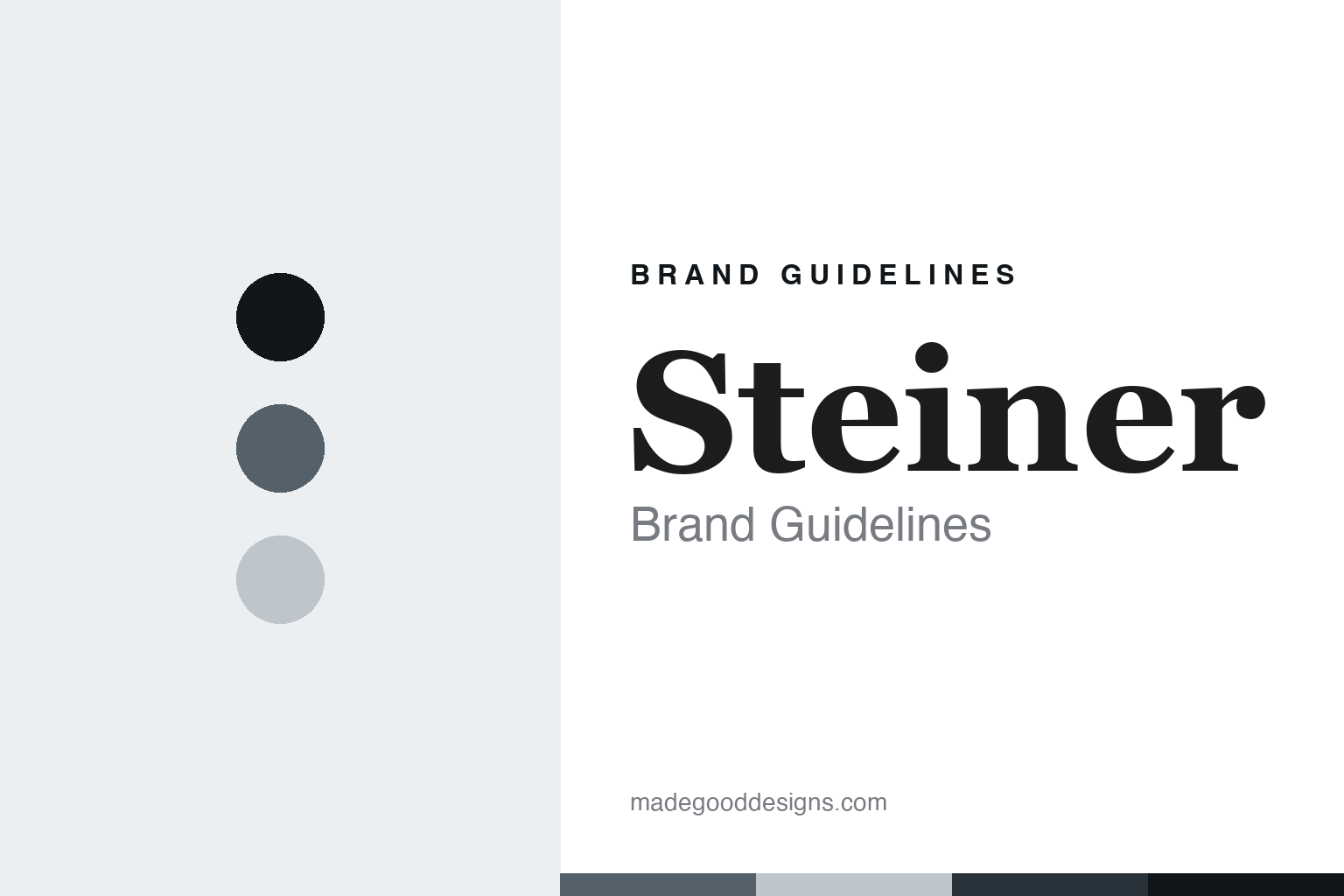
Steiner Brand Guidelines
The German-made optics house.
Aa
Two constants: a steel-graphite palette and a heritage-serif register. Abstract homage — not a Steiner product or mark; no optic or logo is reproduced.
The German-made optics house
Steiner is the German binocular maker founded in 1947 in Bayreuth — genuinely made in Germany, and owned by Italy’s Beretta Holding.
Steiner closes the sport-optic round as its German-made, conglomerate-owned node — a genuine Bayreuth binocular house that sits inside an Italian group, the counterpoint to the family firms that opened the round. It was founded in 1947 by Karl Steiner, a former Zeiss engineer, in Bayreuth, Bavaria, beginning as a one-man workshop before turning to binoculars in the mid-1950s. Steiner makes and sells the optics, and its answer to a round about where optics are made and who owns them is a two-part one: made in Germany, owned by a conglomerate.
Its identity is the German-made optics house. The genuine German manufacture, the rugged military and marine heritage and the Beretta Holding ownership are the story here. A maker, German — and conglomerate-owned. The German-made optics house.
(Honest notes, so the ownership is named and the where-made claim is scoped. Steiner sells binoculars as its heroes — its military and tactical models, its marine Navigator and Commander lines and its Predator hunting binoculars — and we report its performance language as the brand’s own. On ownership, the point that carries the round: Steiner has been owned by Beretta Holding, the Italian group, since 2008, acquired via Beretta’s optics company Burris, so it sits alongside Burris in the group rather than being independent. On where it is made, the point that carries the round: Steiner’s core binoculars are genuinely made in Germany, in Bayreuth, and marketed as handmade there, so we keep the made-in-Germany claim to the core lines and note some peripheral products may be sourced elsewhere. Because its parent is a firearms group and it makes some military optics, we keep the tone on the binoculars and the manufacturing heritage, and name the ownership factually. Its designs and marks are IP we describe but do not reproduce; there is no official brand hex; these tones are an unofficial interpretation.)
Colour
Steiner lives in a steel graphite. Click a swatch to copy the hex.
Steiner’s identity is rugged, German-made and conglomerate-owned — a steel graphite, an ink, a pale steel, a deep slate, and a paper. The palette leans steel graphite and pale steel: a rugged, mil-spec register that nods to durable German binoculars rather than a loud logo colour. It signals a German-made optics house — tough, engineered and owned by a group. The honest caveat: with no published brand hex, these values are an original, unofficial interpretation, not first-party colours.
The lesson is a steel graphite signals a rugged, made-here identity. Steiner’s world is a rubber-armoured, rugged binocular built for the field and the sea. For designers, it is a reminder that a neutral steel graphite and a soft pale steel can carry a maker brand — a rugged tone held as colour, not as a product shot or a signature colourway. Because these tones can fail as small text, keep type dark and let the colour live in the accents, palette and band. The takeaways: credit Karl Steiner; date it to 1947; name Beretta Holding and the German manufacture; and treat any single hex as unofficial.
Typography
The register is a heritage serif — rugged, engineered, storied.
Steiner’s identity carries a rugged, engineered, storied spirit — a mil-spec instrument maker, not a fashion label. A heritage serif captures the mood: solid, weighty and confident, the register of a rugged German binocular. Set in a steel-graphite palette, the heritage serif feels rugged and engineered — exactly the personality Steiner carries. It behaves like a made, hardened thing rather than a loud logo, mirroring rubber armour and machined metal. (Steiner’s real optics, the marine colourways and the logo are things we describe but do not reproduce, and the exact typeface is not ours to use.) Because it is not ours to use, the honest description is “a heritage-serif brand,” shown here in a stand-in. The type behaves like the brand: rugged, engineered and storied.
Aa
A heritage-serif brand — rugged and engineered. (Specimen set in Fraunces, a heritage-serif STAND-IN; NOT the Steiner logo or any optic.)
The sport optic
Steiner stands for the German-made optics house.
Steiner closes the sport-optic round as its German-made, conglomerate-owned node. A steel-graphite palette, a heritage serif and a 1947 founding make one thing — the German-made optics house — the whole identity: rugged, German-made and conglomerate-owned. The genuine German manufacture is the pitch, and the Beretta Holding ownership is the honest twist. The point is a real Bayreuth binocular house inside an Italian group, closing a round that opened with family firms.
Put to work, the identity is the brand told straight, ownership named and where-made scoped. A maker in this spirit would credit Karl Steiner, date it to 1947, and name Beretta Holding and the German manufacture. A reader in this spirit would keep the facts right: Steiner sells binoculars as its heroes — military, marine and hunting; it was founded in 1947 by Karl Steiner, a former Zeiss engineer, in Bayreuth; it has been owned by Beretta Holding since 2008, sitting alongside Burris; and its core binoculars are genuinely made in Germany. Steiner closes the round, after GPO, as the conglomerate counterpoint to the family houses. The honest editorial moves are to date it to 1947, to name the conglomerate owner, to keep the made-in-Germany claim to the core lines, and to keep any single hex unofficial.
For designers and brand-builders, Steiner closes the sport optic: separate a German-made craft from who owns it now — and keep a made-here claim to the core lines. The lessons: state a conglomerate owner plainly; keep a made-in-Germany claim to the lines actually made there; credit the founder; describe signature colourways rather than depict them; and never reproduce a mark. It is also a reminder to stay precise: Steiner is the German binocular maker founded in 1947 in Bayreuth, genuinely made in Germany and owned by Italy’s Beretta Holding — with the palette here an unofficial interpretation. The arc is a neat one: a former Zeiss engineer built a one-man Bayreuth workshop into a factory within six years, cemented its reputation with tens of thousands of military binoculars, and the house now sits in an Italian group’s optics stable. Read that way, Steiner is less a binocular than a German instrument house, absorbed: rugged, engineered, storied. The lesson for a brand is that in-country craft and honest ownership can coexist, and naming the conglomerate keeps the story earned. Steiner made the-German-made-optics-house the identity — proof that a made-here house can close a round even inside a group.
Explore & save
Keep Steiner’s identity on hand — save it to a board in the Made Good inspiration library.
Steiner identity set
Pin the steel-graphite palette and the heritage-serif register to your own board.