Throttleman Brand Guidelines
The 1991 Porto clothing brand taken over by its own supplier.
Aa
Two constants: a navy, sail-white and orange palette and a sturdy grotesque register. Abstract homage — not a Throttleman product or mark; no garment, label or logo is reproduced.
Boxer Shorts
Shirts, ties and underwear in Porto.
Throttleman began in 1991. In February 2014 the business daily Jornal de Negócios traced the story to Porto, where four young executives set up a company selling shirts, ties and boxer shorts to an upper-middle-class customer. The paper says the brand started out under the name Boxer Shorts before it moved into Portugal’s shopping centres as Throttleman, a name it glossed as “the man who speeds up the boats.” In December 2015 the trade journal Portugal Têxtil named three founders: Pedro Pinheiro, Eduardo Barros and Nuno Gonçalves.
The company behind the brand was Brasopi, Observador and Portugal Têxtil reported in 2015. Throttleman did not make its own clothes. Público reported in November 2015 that the textile company Crivedi, based in Trofa, north of Porto, and set up in the same month and year as the brand, supplied its collections from the start; Jornal de Negócios called Crivedi the brand’s main supplier over 25 years. Crivedi develops collections and makes prototypes in-house, and subcontracts the manufacturing to textile firms in its region, Público said. In 2015 Portugal Têxtil wrote that the links between Crivedi and Throttleman had marked the brand’s history since its foundation.
At its height, according to Portugal Têxtil, Throttleman employed about 750 people and ran 60 stores in Portugal, with further shops in the United Arab Emirates and Angola. Under Brasopi some of its stores reached 350 square metres, Público reported. In 2008 Brasopi added a second clothing label, Red Oak, which had its own network of 16 stores, according to Portugal Têxtil.
The name is the brand’s most distinctive asset. It reads as English, it carries the boating image that Jornal de Negócios spelled out, and it was the name over the doors of the brand’s shopping-centre stores in Portugal and abroad.
Colour
Insolvency, and a supplier’s rescue.
The expansion was financed largely with bank borrowing, Público reported, and the crisis that began in 2008 squeezed the business. Brasopi turned to the Processo Especial de Revitalização, Portugal’s court-supervised recovery procedure, and that was followed by a liquidation plan. Throttleman was declared insolvent in 2012. After a failed attempt to rescue the company, its stores closed in 2013, leaving only franchised shops trading, Jornal de Negócios reported in 2015. Red Oak was also insolvent, according to Público.
The supplier stepped in. In 2010 Saving Dreams, a Crivedi company, had taken over six Throttleman stores, which it ran as a franchisee. Its contract allowed it to keep using the brand in an insolvency until its stock was sold and certain investments were recovered, Portugal Têxtil said, and through the insolvency years it kept the right to run and sell the brand. Once the case was resolved, Crivedi acquired the Throttleman brand; the purchase was reported in late November 2015 by Jornal de Negócios, Público and Observador. The venture capital manager Explorer Investments held 25 per cent of the capital, Crivedi’s administrator told Portugal Têxtil.
At that point the brand had 18 stores, six of them in outlet centres, employing 92 people. Two shops in a new format opened in autumn 2015, at Mar Shopping in Leça da Palmeira, Matosinhos, and at Almada Fórum, south of Lisbon, Portugal Têxtil reported. The new stores were smaller, between 100 and 200 square metres, a choice Crivedi linked to the weight of rents and staffing, Público said. The 2015 relaunch came with a new graphic identity, a new website, a new store concept and new clothing lines, which were also applied to the existing shops, according to Jornal de Negócios.
Typography
Signs, bags and owners.
Portugal’s fashion, footwear, accessories and electronics chains range from family firms that grew out of a single shop to brands held within larger retail groups. Several of the fashion and accessories chains now trade well beyond Portugal, in markets from Spain and France to the Middle East, sometimes through franchise partners abroad.
Formats vary with the trade and the company. Fashion and accessories chains work from shopping-centre units, high-street shops and outlet stores, and electronics retailers from their own large-format stores. Parfois, for example, opened its second shop in a Sonae shopping centre in Vila Nova de Gaia, Forbes Portugal reported, while Lanidor has run its own outlet concept, LA Factory, beside its main womenswear line.
Ownership is part of each brand’s story. Some chains remain in the hands of their founders or founding families, others have changed owners through acquisitions, investments or insolvency proceedings, and some groups hold several brands at once, each with its own shop sign. Each guide in this series states owners, stakes and dates only as dated sources give them, and names collections and own brands as the companies themselves name them.
For designers, these chains show how a retail identity travels from the shop sign to the carrier bag, the label and the website. Logos, colour schemes, shop interiors and corporate pages on founders and owners are described here as the companies publish them or as the press has reported them; the palettes in each guide are our own unofficial interpretation, and no logo or product is reproduced.
Aa
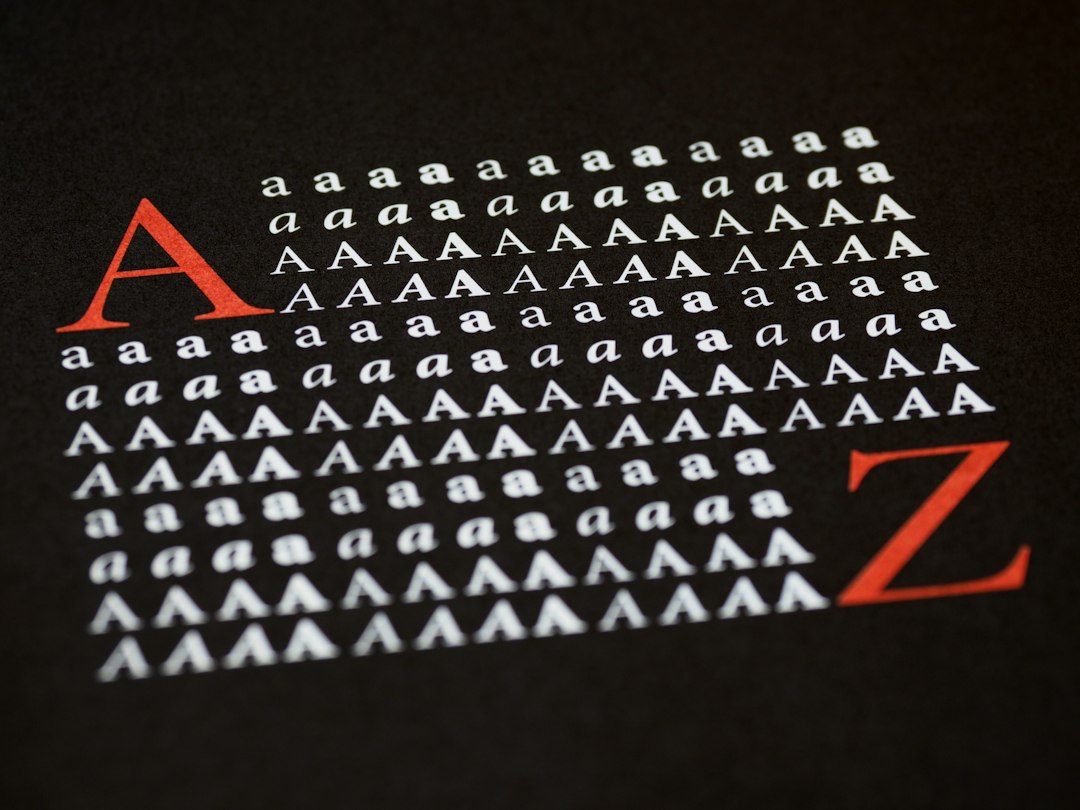
A sturdy grotesque for a name that reads as English. (Specimen set in Archivo, a sans STAND-IN; NOT the Throttleman logo.)
Throttleman
A name that outlived its first company.
The dated record of Throttleman runs from 1991 to 2015: a Porto brand that began with shirts, ties and underwear, spread through Portugal’s shopping centres and into two markets abroad, went through insolvency in 2012 and was bought out of it by the company that had made its clothes. That sequence matters for anyone studying the identity. The 2015 reports date a new graphic identity and a new store concept, so the look of the brand after 2015 belongs to its second owner, while the name and the boating image go back to 1991.
The store history also shows a change of scale. Under Brasopi some stores reached 350 square metres; under Crivedi the new units were between 100 and 200 square metres, with collections kept smaller. For a retail identity, that means signage, fixtures and graphics that have to work in a compact unit as well as in an outlet centre, where six of the 18 stores of late 2015 were.
The supplier link is the other thread. Público described Crivedi as a company that develops collections and prototypes and then has the garments made by textile firms in its region. When the brand changed hands, the people who had designed and sourced its product for more than two decades took over the name as well. Público noted that franchising was a model both Throttleman and Crivedi had already used.
For a design guide, Throttleman shows how a retail name can outlast the company that launched it when the rights pass to a partner that already knows the product. Compare Lion of Porches, a Portuguese casual-wear brand also sold through shopping-centre stores, and Sacoor Brothers, a Portuguese menswear chain. For this guide we use a deep navy, an off-white, a rope tan and a muted orange with a sans, an unofficial interpretation; no product or logo is reproduced.
Explore & save
Keep Throttleman’s identity on hand — save it to a board in the Made Good inspiration library.
Throttleman identity set
Pin the Throttleman navy, sail white and orange palette and the sturdy grotesque register to your own board.
Source & notes
Frequently Asked Questions
What font can I use to match the Throttleman look?
This guide describes Throttleman’s type as “A sturdy grotesque for a name that reads as English”. Its type specimen is set in Archivo from Google Fonts as a stand-in; Archivo is not Throttleman’s own lettering.
What colours are in the Throttleman palette?
This guide’s Throttleman palette is Harbour navy #1F2F46, Ink #141821, Sail white #F3F1EB, Rope tan #B98A57 and Buoy orange #C8622D. The tones are the guide’s own unofficial interpretation, not official Throttleman hex codes.
When was Throttleman founded?
Throttleman was founded in 1991, in Porto, Portugal.
Who founded Throttleman?
Throttleman was founded by Pedro Pinheiro, Eduardo Barros and Nuno Gonçalves (as Portugal Têxtil names them) in 1991.