Sacoor Brothers Brand Guidelines
The Lisbon menswear shop that took a greyhound abroad.
Aa
Two constants: a navy, stone and tan palette and a tailored serif register. Abstract homage — not a Sacoor Brothers product or mark; no garment, greyhound or logo is reproduced.
Modas Belize
Four brothers and a shop on Rua Pascoal de Melo.
Sacoor Brothers began as a single menswear shop in Lisbon. Portuguese Wikipedia and the company’s own timeline agree that the shop, then called Modas Belize, opened on Rua Pascoal de Melo, in the Arroios district, on 15 November 1989. Its founders were four brothers, Malik, Moez, Rahim and Salim Sacoor, and the label still takes its name from them, as Gulf News noted in 2010.
The company tells a small story about those early days: the previous owner of the shop asked the brothers to keep using the branded carrier bags he had left behind, as a way of carrying on his family business. Soon afterwards, the company says, the brothers travelled to Florence for Pitti Uomo, the menswear trade fair, and decided to build a higher-end product for men. In 1991 it introduced a loyalty card, mailed to customers’ homes, and from 1992 it worked with Portuguese television presenters, footballers and models in its advertising, the company says.
The move into shopping centres came in 1997, with a store at the Centro Colombo in Lisbon. Portuguese Wikipedia says the shop sold the stock meant to last six months in about 15 days; the company puts it more precisely, saying the shirt collection meant for the whole season sold out in that time. In 2000 the chain opened outside Lisbon for the first time, at NorteShopping near Porto, according to Portuguese Wikipedia.
The range widened after that. The company says it began designing a Sacoor Woman line in 2001, sold inside Sacoor Brothers boutiques, and opened dedicated kids’ stores in 2014. Portuguese Wikipedia adds that a younger label, Sacoor Blue, followed in 2021.
Colour
From Colombo to the Gulf.
The company dates its international expansion to 2007, beginning in Spain and the United Arab Emirates, and Portuguese Wikipedia gives the same year. In an interview with Gulf News published in August 2010, Moez Sacoor, who ran the marketing side of the business, dated the brand’s entry into the Gulf to 2003–04; the two accounts differ, and both are given here. In that interview he said the brand then had six stores in Dubai and one in Kuwait, across a network of 33 cities in nine countries, and that the company was growing in the region through corporate-owned stores, its Dubai Mall shop among them.
The same interview is one of the few dated accounts of where the clothes come from. Moez Sacoor told Gulf News in 2010 that the company sourced from several markets, naming Portugal, China, Hong Kong, Mauritius and India. The company says the three-piece suits it made as official tailor to the Portuguese national football team, a role it says it held until 2023, were made in Portugal in a half-canvas construction.
Store design has been a recurring part of the identity. In October 2017 the trade title Images RetailME reported a new flagship on the first floor of the Centro Colombo, divided into Man, Boy and Woman spaces, with a barber, an in-house tailor, a juice bar, a DJ booth, a social-media wall and an LED screen on the façade. The concept, called #SacoorNextGeneration, went with an autumn–winter 2017 collection aimed at a younger audience. In September 2018 the same title reported that the Dubai Mall flagship had reopened with a gallery of seven handmade pieces by Portuguese artists, tailors working in the shop windows and a Frutaria juice bar; guests at the launch could have tiles painted with traditional Portuguese designs.
Today the company says it trades in 16 countries, from Portugal, Romania and Georgia to the Gulf states, Malaysia, Singapore, Sri Lanka and South Africa, with more than 100 stores, and that it recently opened its 115th location; English Wikipedia also gives a figure of over 100 stores.
Typography
Shop fronts, carrier bags and own brands.
Portugal’s fashion, footwear, accessories and electronics chains range from family firms that grew out of a single shop to brands held within larger retail groups. Several of the fashion and accessories chains now trade well beyond Portugal, in markets from Spain and France to the Middle East, sometimes through franchise partners abroad.
Formats vary with the trade and the company. Fashion and accessories chains work from shopping-centre units, high-street shops and outlet stores, and electronics retailers from their own large-format stores. Parfois, for example, opened its second shop in a Sonae shopping centre in Vila Nova de Gaia, Forbes Portugal reported, while Lanidor has run its own outlet concept, LA Factory, beside its main womenswear line.
Ownership is part of each brand’s story. Some chains remain in the hands of their founders or founding families, others have changed owners through acquisitions, investments or insolvency proceedings, and some groups hold several brands at once, each with its own shop sign. Each guide in this series states owners, stakes and dates only as dated sources give them, and names collections and own brands as the companies themselves name them.
For designers, these chains show how a retail identity travels from the shop sign to the carrier bag, the label and the website. Logos, colour schemes, shop interiors and corporate pages on founders and owners are described here as the companies publish them or as the press has reported them; the palettes in each guide are our own unofficial interpretation, and no logo or product is reproduced.
Aa
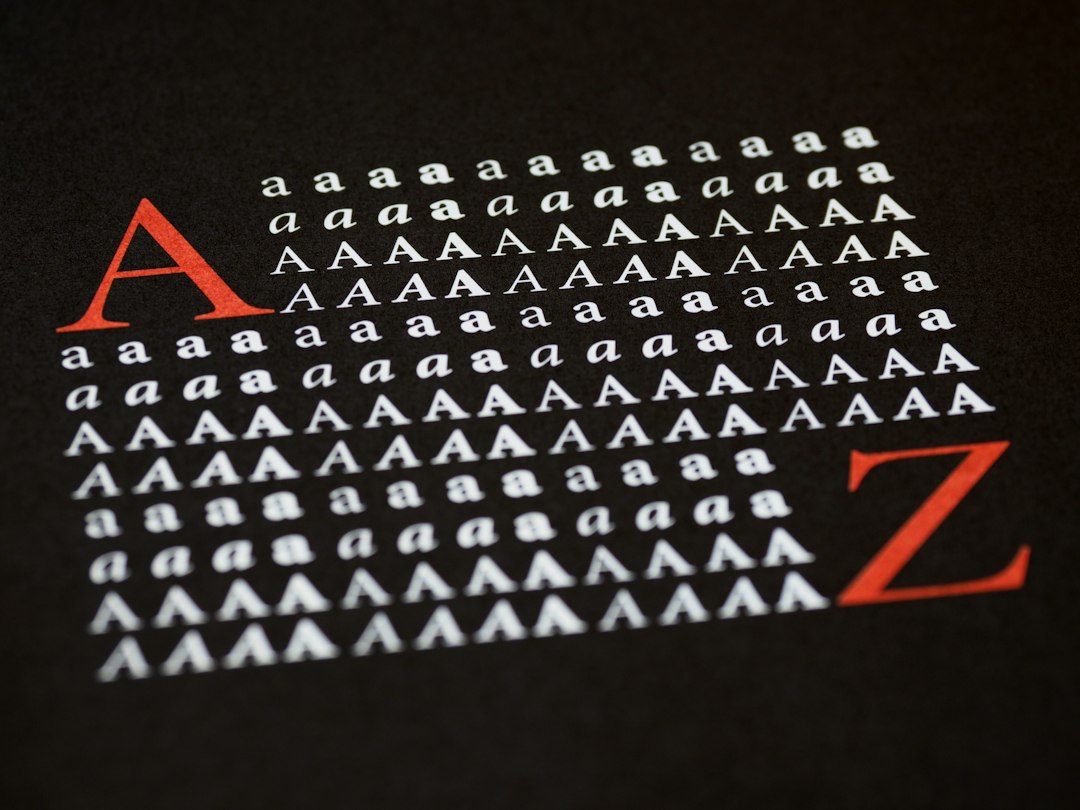
A tailored serif with a menswear register. (Specimen set in Cormorant Garamond, a serif STAND-IN; NOT the Sacoor Brothers logo.)
Sacoor Brothers
A plane tree, then a greyhound.
The mark has changed more than once. Portuguese Wikipedia says the company used a plane tree as its logo for several years before adopting a greyhound in 2006, and the dog has stayed at the centre of the identity since.
In May 2025 the Malaysian title Fathom Magazine described a rebrand timed to the label’s 35th year. The greyhound was redrawn with sleeker lines and curves, the lettering beside it became bolder and more modern, and a new tagline, “The Luxury of Being You,” was introduced. The campaign reworked the greyhound in several guises: as a tennis ball, referring to the company’s sponsorship of the Millennium Estoril Open; in Portuguese azulejo tiles; embroidered in coloured thread; floating among clouds; mapped over Lisbon; and as a leather football, referring to its sponsorships of FC Barcelona and the Portuguese Football Federation. The same article listed Sacoor Brothers boutiques in Kuala Lumpur, Putrajaya, Penang and Kota Kinabalu.
The Portuguese references run through the stores too. The company says shoppers are offered an espresso while they browse, a habit it traces to the street café atmosphere around its Lisbon shop, and the Dubai Mall reopening of 2018 put Portuguese art and tile painting into the store.
For a design guide, Sacoor Brothers shows how a single animal mark can carry a menswear name across very different markets, from Lisbon malls to the Gulf and Southeast Asia, while azulejo patterns and café rituals keep the Portuguese origin in view. Compare Decenio, another Portuguese label dressing men and women, and Lion of Porches, a Portuguese clothing label with an animal in its name. For this guide we use navy, stone and a saddle tan with a serif, an unofficial interpretation; no product or logo is reproduced.
Explore & save
Keep Sacoor Brothers’s identity on hand — save it to a board in the Made Good inspiration library.
Sacoor Brothers identity set
Pin the Sacoor Brothers navy, stone and tan palette and the tailored serif register to your own board.
Source & notes
Frequently Asked Questions
What font can I use to match the Sacoor Brothers look?
This guide describes Sacoor Brothers’ type as “A tailored serif with a menswear register”. Its type specimen is set in Cormorant Garamond from Google Fonts as a stand-in; Cormorant Garamond is not Sacoor Brothers’ own lettering.
What colours are in the Sacoor Brothers palette?
This guide’s Sacoor Brothers palette is Tailor navy #1F2A44, Night ink #141B2D, Linen stone #E9E2D4, Saddle tan #A07A4F and Shirt white #F8F6F1. The tones are the guide’s own unofficial interpretation, not official Sacoor Brothers hex codes.
When was Sacoor Brothers founded?
Sacoor Brothers was founded on 15 November 1989 (as Modas Belize), in Lisbon, Portugal.
Who founded Sacoor Brothers?
Sacoor Brothers was founded by Malik, Moez, Rahim and Salim Sacoor on 15 November 1989 (as Modas Belize).