Interdiscount Brand Guidelines
The 1970 photo-shop merger that became a Coop electronics chain.
Aa
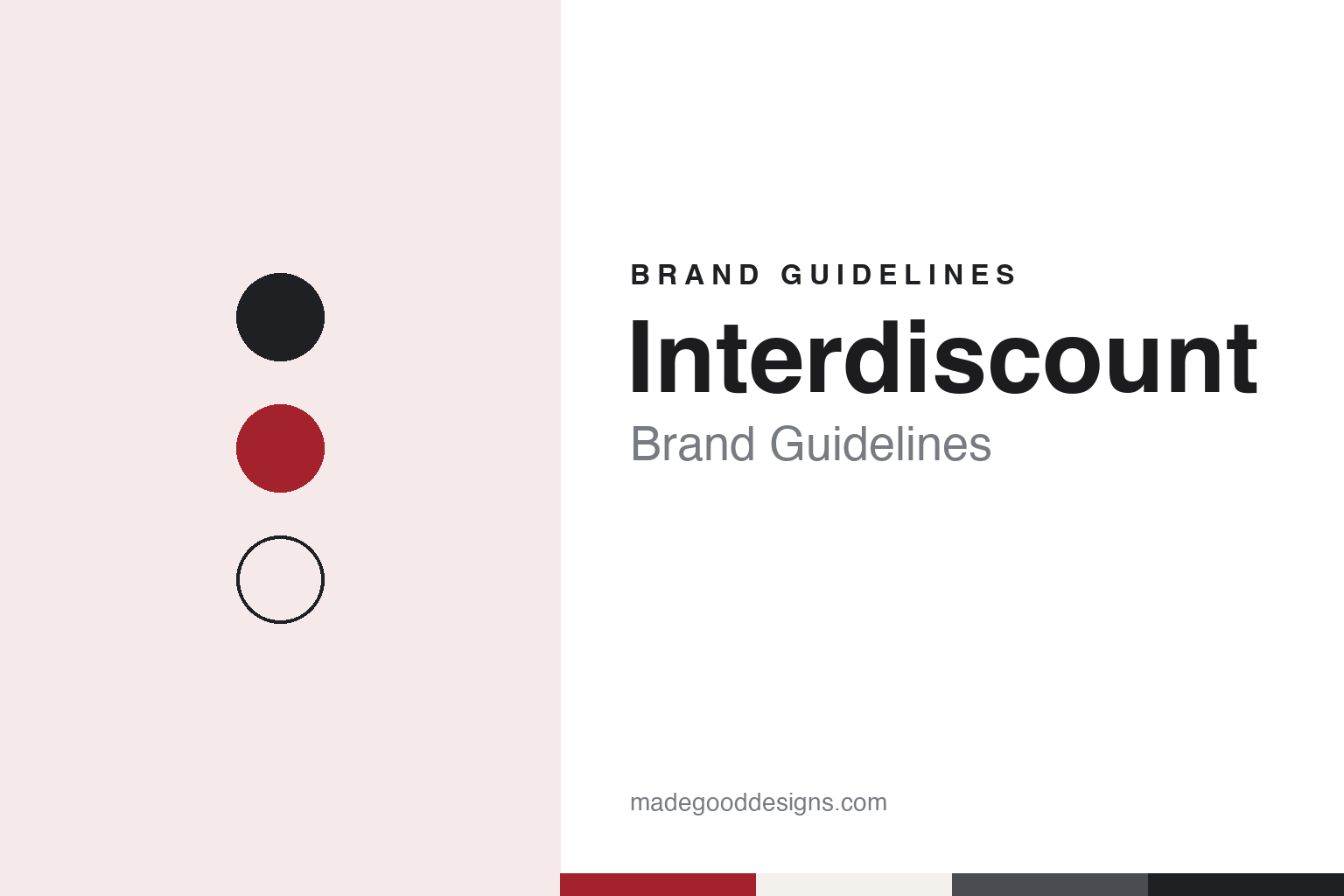
Two constants: an Interdiscount red, charcoal and warm white palette and a bold retail sans register. Abstract homage — not an Interdiscount product or mark; no shop sign, logo or packaging is reproduced.
Six photo firms
A discount name born in the camera trade.
Interdiscount began in 1970 as a merger. The Historisches Lexikon der Schweiz (HLS), in an article by Anne-Marie Dubler dated 2004 and revised in 2008, says the company was formed that year by the fusion of six firms from the photo trade, with its seat in Jegenstorf, in the canton of Bern. German Wikipedia names them as Photo Traber, Photo Max, Photo von Känel, Lichtsteiner Discount, Interdiscount AG and Color Labor, brought together under the Interdiscount Holding AG.
The driving figure was the entrepreneur Ruedi Baer. The Neue Zürcher Zeitung wrote in July 2019 that in 1970 Baer, together with investors, took over a number of photo and film-camera shops, and that the Interdiscount Holding grew out of that combination. The newspaper added that the low-price model met resistance from branded manufacturers, so the company turned to grey-market imports and added its own brands to the range. Baer was also involved in founding the mobile-phone retailer Mobilezone, the NZZ noted.
One of those own brands came from the camera trade. German Wikipedia says Interdiscount bought the Carena name in the 1970s and has sold photo and film cameras under it since. Carena had been a camera maker in Mauren, Liechtenstein, which went bankrupt in the early 1970s; under Interdiscount the name went on cameras bought in the Far East, the German article on Carena says. The same article lists a run of purchases and stakes in the following years: Radio Iseli, with five shops, in 1974; Musique et Vision of Geneva; a 20 per cent holding in Grammo Studio of Zurich; a stake in Photo Ruckli, with nine shops; and a majority of the German photo retailer Photo Porst in 1982.
Colour
From cameras to computers.
The 1980s turned a photo chain into an electronics chain. The HLS says Interdiscount expanded in that decade by buying firms from the computer and radio and television trades, so that its shop count rose from 60 in 1983 to more than 150 in 1990. German Wikipedia dates the takeover of the Burkhard-Strittmatter group, with 24 branches and seven service workshops, to 1985, and a cooperation agreement with Radio TV Steiner to 1992.
The company also went abroad. The HLS records new companies outside Switzerland, with Germany as the focus, and joint ventures in the Far East. German Wikipedia adds a stake in the Viennese retailer H. Niedermeyer in 1989 and the takeover of 85 shops in France in 1991, run as Interdiscount France from Paris.
In 1996 Coop, the Swiss retail cooperative, took over the Swiss Interdiscount business. The HLS says the purchase of Interdiscount Holding AG came under a newly founded Simeco Holding AG, which also held Radio TV Steiner AG and, until 1999, Color Labor AG, and that the chain then concentrated on the Swiss market.
Computers moved to the centre of the range. The HLS dates a merger of Interdiscount AG with Microspot AG to 2000, which strengthened the home-computer business, while German Wikipedia says all Microspot branches became Interdiscount branches in 1999. By 2006, according to the HLS, the company had 1,650 employees and about 200 shops, selling household appliances, telecoms, photo equipment, consumer electronics, consoles and games, and above all home computers with printers, scanners and drives.
Typography
Signs, owners and formats.
Swiss retailers present themselves to a country with several official languages, and many of them publish the same name, shop sign and carrier bag across German-, French- and Italian-speaking regions. Manor, for example, runs its website in German, French and Italian under one name, and uses it for department stores, supermarkets and restaurants alike. Where a company publishes its own colours, logo or typeface, this guide says so; where it does not, the palette shown is an unofficial interpretation of our own.
The formats vary widely. This group of guides runs from city department stores with roots in Zurich, Bern and Lucerne to village shops, farm-and-garden stores, electronics and household-appliance chains, online shops and marketplaces, and menswear stores. Some trace their origins to the 19th century; the Historisches Lexikon der Schweiz, for instance, dates Jelmoli’s Zurich business to 1833.
Ownership is set out plainly in each guide. Some chains belong to cooperatives, some to founding families, and some to larger retail or property groups; a brand can also outlive its store, as Jelmoli’s name did when its owner, the property company Swiss Prime Site, closed the department store in February 2025. Acquisitions, closures and changes of owner are given with their dates and sources.
Each guide also notes the own brands, store formats and services a company names on its own pages, and what its corporate pages say about founders and owners, marked as the company’s own account. Independent dated sources, such as the Historisches Lexikon der Schweiz, SRF, swissinfo.ch and the Swiss business press, are named alongside them.
Aa
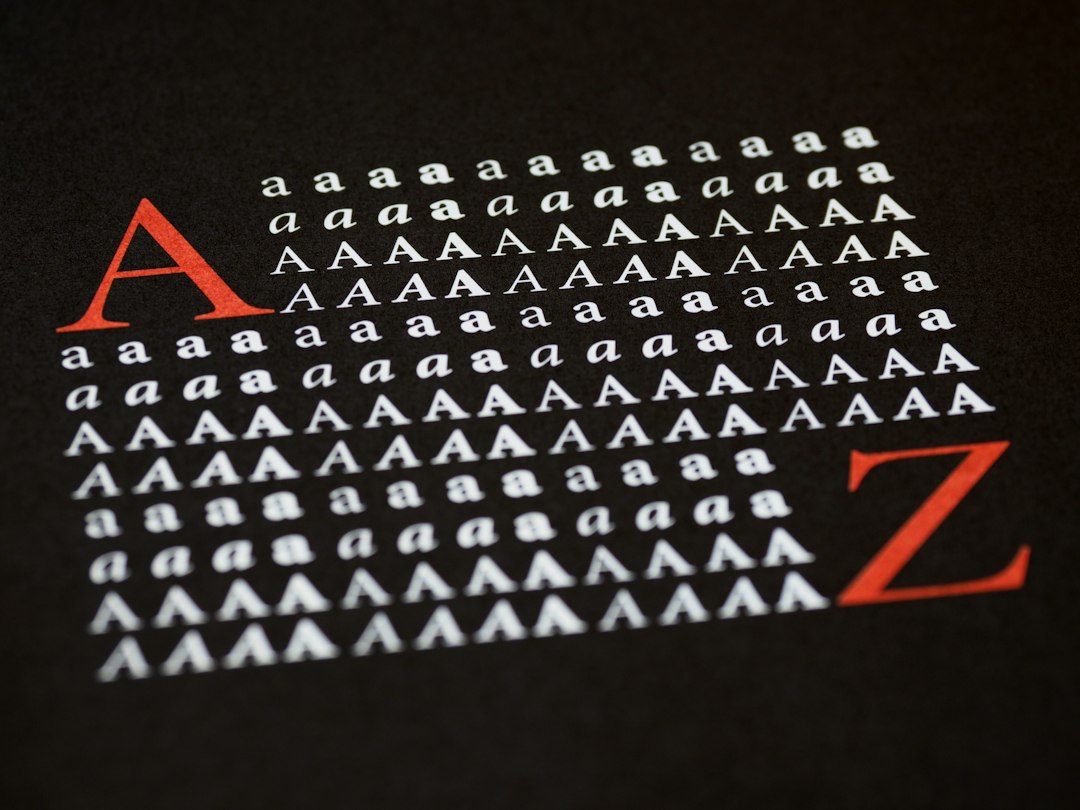
A bold retail sans for a chain that grew out of the photo trade. (Specimen set in Archivo, a sans STAND-IN; NOT the Interdiscount logo.)
Interdiscount
A Coop brand without a company of its own.
Interdiscount today is a trading name rather than a separate company. German Wikipedia says that in mid-2002 the activities of Interdiscount AG were transferred to Coop and the company was liquidated; Coop has since used the protected name for the electronics chain, which still appears to shoppers under its own brand, and nearly all branches were refitted in 2003. The chain’s base remains Jegenstorf, where, according to the same article, an automated small-parts warehouse opened in May 2018, shared with the sister online shop Microspot.
Microspot had its own history inside the group. German Wikipedia says Microspot AG was founded in 1980 as a shop-based retailer, came into Coop’s Simeco holding in 1996, and returned in May 2007 as an online shop for home electronics, run from Jegenstorf; at the end of 2018 the online marketplace siroop.ch, a joint venture of Coop and Swisscom, went offline and was folded into microspot.ch.
That second name has since gone. SRF reported on 11 October 2023 that Coop was dropping the Microspot brand and folding Microspot.ch into the online shop of Interdiscount, which took over Microspot’s open orders and its guarantee and repair obligations; Microspot staff were offered new posts, the broadcaster said, citing a Coop statement. SRF also noted the new store concept that Interdiscount had presented in 2022 at its branch on Löwenstrasse in Zurich, and the shared logistics centre in Jegenstorf.
German Wikipedia adds that Interdiscount joined the European buying group Euronics International in 2024 and, citing Coop’s own figures, gives 165 branches at the end of 2025. Alongside branded goods, the chain sells home electronics, entertainment electronics and gadgets under its own name Intertronic, and the Carena name from its camera years.
For a design guide, Interdiscount shows how a retail name can outlast the company that created it: a 1970 merger of photo shops became a computer and electronics chain, and then a brand inside a cooperative group. Compare Fust, another Coop-owned appliance and electronics chain, and Coop, its owner. For this guide we use a signal red, charcoal and warm white with a bold sans, an unofficial interpretation; no product or logo is reproduced.
Explore & save
Keep Interdiscount’s identity on hand — save it to a board in the Made Good inspiration library.
Interdiscount identity set
Pin the Interdiscount red, charcoal and warm white palette and the bold retail sans register to your own board.
Source & notes
Frequently Asked Questions
What font can I use to match the Interdiscount look?
This guide describes Interdiscount’s type as “A bold retail sans for a chain that grew out of the photo trade”. Its type specimen is set in Archivo from Google Fonts as a stand-in; Archivo is not Interdiscount’s own lettering.
What colours are in the Interdiscount palette?
This guide’s Interdiscount palette is Signal red #A3222B, Charcoal #1F2023, Graphite #4A4C52, Warm white #F4F1EC and Paper #FAF8F5. The tones are the guide’s own unofficial interpretation, not official Interdiscount hex codes.
When was Interdiscount founded?
Interdiscount was founded in 1970 (merger of six photo firms), in Jegenstorf, Switzerland.
Who founded Interdiscount?
Interdiscount was founded in 1970 (merger of six photo firms) by Ruedi Baer, with investors.