Urban Bar Brand Guidelines
The London barware.
Aa
Two constants: a green-and-brass palette and a heritage serif register. Abstract homage — not the Urban Bar products or packaging.
The London barware
Urban Bar designs the professional bar’s kit.
Urban Bar is a lesson in the trade insider turned design house. Established in 1980 by Richard Andrews — formerly a buyer for the London stores Liberty and Heal’s — it grew from supplying branded glassware into a specialist that develops its own barware and glass.
Its identity is design-led barware and glassware. Urban Bar designs shakers, strainers, jiggers, bar spoons, mixing glasses, ice tools and tiki mugs alongside an extensive glassware range, working “from design to production” — and supplying bars and spirits brands with bespoke, branded kit. Own collections like Calabrese (with bartender Salvatore Calabrese), 1890 Design and Classico carry the look, in gold, silver, rose-gold and copper finishes. A London bar sensibility, designed and made real.
(Honest notes: the brand’s domain is urbanbar.com, and while it carries a London founder story, the registered company is based in Hertfordshire — so “London” is heritage framing, not the current HQ. It both designs its own lines and stocks other brands (the Cocktail Kingdom range it sells is a separate US brand, not an Urban Bar line). The “1890/1910/1920” names are vintage-styling collections, not founding dates. There’s no official brand hex, so these tones are an unofficial interpretation. This is design commentary and does not promote any product.)
Colour
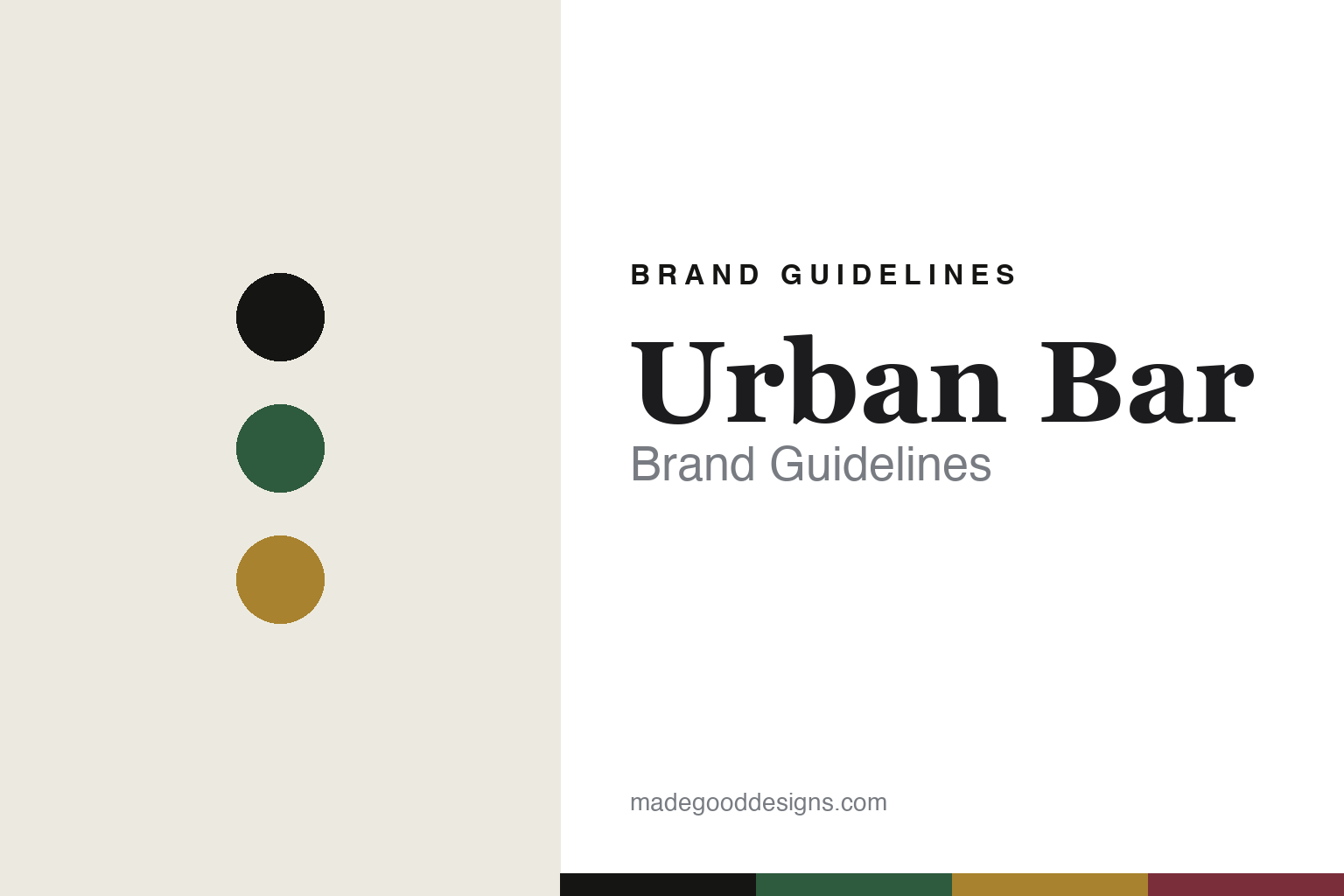
Urban Bar lives in a green-and-brass palette. Click a swatch to copy the hex.
Urban Bar’s identity is classic, professional and London — a bottle green, an ink, a brass, a burgundy, and a cream. The palette pairs a green with a brass — the register of a heritage bar. It signals craft and trade pedigree rather than novelty. The honest caveat: with no published brand hex, these tones are an original, unofficial interpretation, not first-party values.
The lesson is a green with a brass signals a heritage barware house. Urban Bar’s world is a professional bar, kitted and styled. For designers, it is a reminder that trade insight — knowing what bartenders actually need — can become a design identity. The takeaways: design from trade knowledge; keep a signature finish palette; name collections with intent; and treat any single hex as unofficial.
Typography
The register is a heritage serif — classic, professional, London.
Urban Bar’s identity carries a classic, professional, London spirit — a heritage bar, kitted and styled. A traditional book serif captures the mood: it is dignified and grounded, the register of an English trade house. Set in a green-and-brass palette, the heritage serif feels classic and professional — exactly the personality Urban Bar carries. It is established rather than flashy, mirroring a bar’s hardware and glass. (Urban Bar’s real barware and wordmark are works we describe but do not reproduce, and the exact typeface is not ours to use.) Because it is not ours to use, the honest description is “a heritage serif spirit,” shown here in a stand-in. The type behaves like the brand: classic, professional and London.
Aa
A heritage serif spirit — classic and professional. (Specimen set in Libre Baskerville, a traditional book serif STAND-IN; NOT the Urban Bar packaging.)
Trade insider, design house
Urban Bar stands for design-led professional barware.
Urban Bar is a lesson in turning trade knowledge into a design identity. A green-and-brass palette, a heritage serif and a professional, kitted bar make design-led barware the whole brand — classic, professional, London. The trade pedigree is the differentiator. The differentiator is barware designed by people who supply the bars.
For designers and brand-builders, Urban Bar offers a clear takeaway: design from real trade insight. The lessons: design from trade knowledge; keep a signature finish palette; name collections with intent; and be honest about the story. It is also a reminder to stay accurate: it was established in 1980 by Richard Andrews (a former Liberty and Heal’s buyer), it’s a design-led maker and a trade supplier both, its London story sits alongside a Hertfordshire HQ, and the palette here is an unofficial interpretation. Urban Bar made trade insight the brand — proof that knowing the bar can be the difference.
Explore & save
Keep Urban Bar’s identity on hand — save it to a board in the Made Good inspiration library.
Urban Bar identity set
Pin the green-and-brass palette and the heritage-serif register to your own board.