Steelite Brand Guidelines
A Potteries hotelware maker that grew by buying its neighbours.
Aa
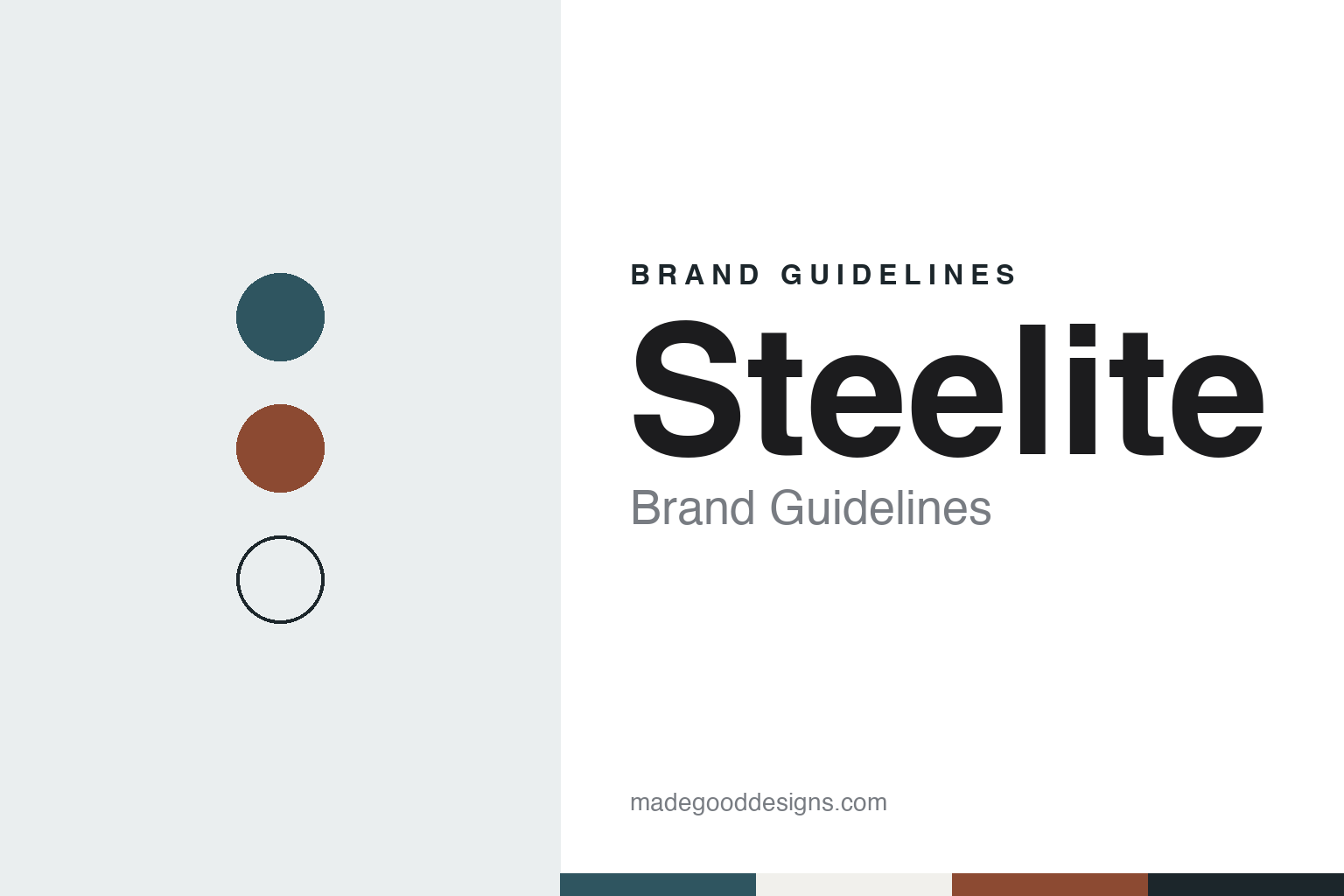
Two constants: a Steelite white, teal and brick palette and a grotesque sans register. Abstract homage — not a Steelite product or mark; no plate, backstamp or logo is reproduced.
Royal Doulton hotelware, 1983
A buyout in the Potteries.
Steelite International was formed in 1983, when David Johnson bought the hotelware division of Royal Doulton, English Wikipedia says, and established it as Steelite International plc in Stoke-on-Trent, Staffordshire. The company was built around one market from the start. English Wikipedia describes it as a specialist in alumina-strengthened vitreous tableware for the hospitality industry: plates, bowls and cups made for hotels, restaurants and caterers rather than for the home table.
The works it occupies are far older than the company. Steelite operates from Dalehall Works and the neighbouring Albany Works, English Wikipedia says. Dalehall Works was founded in 1790; from about 1937 to about 1998 it was run by Dunn Bennett & Co, a firm set up in Hanley in 1876, and after that by Steelite. In its reports since 2023 the Stoke Sentinel has described Steelite as a Middleport-based company, naming the Stoke-on-Trent district where its factory stands.
The founder did not stay. The company’s chief executive told staff in July 2024, in remarks reported by the Stoke Sentinel, that Johnson sold the business in 2003, and that a year later the factory and warehouse sites were sold and leased back to the company. The same report said Steelite had now bought both sites back, so that for the first time in twenty years it again owned its UK factory land and warehouse land outright. The chief executive presented the purchase as a sign of how much the company valued what it makes in Stoke-on-Trent.
Colour
Three factories and a widening catalogue.
Steelite has grown largely by acquisition, much of it in North America. In March 2020 it acquired the foodservice divisions of the Homer Laughlin China Company of Newell, West Virginia, and its sister company the Hall China Company, English Wikipedia says. The same article says the former Homer Laughlin and Hall manufacturing operations were later renamed The Fiesta Tableware Company, and that Homer Laughlin’s Fiesta retail line was not part of the sale and stayed at the Newell plant.
In July 2023 Steelite announced the purchase of Delfin, an American maker of display and tabletop pieces for retail and foodservice, founded in 1991 and running a plant in Mexico. The release described Delfin as handling every stage from design to manufacturing in-house and exploring new materials. Steelite said in its release that the deal would widen the melamine products it offers to hospitality customers and that it intended to invest in the Mexican operation to add capacity; the Stoke Sentinel reported the deal the same month. In 2023 Steelite also became the exclusive United States distributor for Utopia, Pasabahce and Nude products, the company said a year later, a tie to the Turkish glassware brand in our Paşabahçe guide.
On 27 June 2024 Steelite announced that it had acquired Utopia Tableware Ltd, founded in 2000 and based in Chesterfield, which supplies tableware, glassware and accessories to the hospitality and branded-glass markets. Steelite bought it from its founder and his family, the release said. Steelite said Utopia brought product lines, a central distribution centre and a decorating facility, and called it the seventh acquisition under its current owner; terms were not disclosed, and the Stoke Sentinel reported the deal as completed in July 2024. In the same release Steelite said it made products at three facilities, in Stoke-on-Trent, Manlius, New York, and Tijuana, Mexico, sourced products from 17 countries and sold into 140 countries.
Typography
Tableware makers and their pages.
Tableware and glassware makers mostly present themselves through the table rather than the logo. Their catalogues and websites lean on collection photography: a single glass against a plain ground, a stack of plates, or a full place setting with cutlery, napkins and food. The setting does much of the work, signalling whether a range is meant for a family kitchen, a formal dinner or a busy restaurant, and the same pieces are often shown in more than one of those roles.
Names carry a large share of the identity. Ceramic makers mark the underside of a plate with a backstamp that gives the maker’s name, often with a pattern name and a place, and collectors and buyers use that mark to identify a piece. Patterns and shapes are usually given their own names, so that a single company may sell dozens of named ranges, each with its own photography and description, while the company name stays small.
Many makers also split their identity between home and trade. Arc, for example, keeps separate brand names for consumer tableware and for bars, hotels and restaurants, according to French Wikipedia. Hospitality catalogues tend to be practical documents, organised by shape, capacity and use, with product codes and packing details, while the consumer side is closer to a lifestyle magazine. Some makers add their own shops: Paşabahçe, the Turkish glassware brand, runs a chain of stores under its own name.
Behind the products sits a corporate layer. Company pages describe factories, founding dates and owners, and in this sector those stories often involve old works, family control, takeovers and court-supervised restructurings, as the profiles in this guide show. For a designer, the useful lesson is how these makers keep a recognisable voice across a long range of named collections, a trade catalogue and a corporate history at once.
Aa
A plain grotesque for a hospitality catalogue. (Specimen set in Work Sans, a sans STAND-IN; NOT the Steelite logo.)
Steelite
A Stoke works with an American head office.
The current owner is Arbor Investments, a private equity firm that invests in food, beverage and related companies; founded in 1999, it has offices in Palm Beach, Chicago and New York, according to the 2023 release. Arbor acquired Steelite in December 2019, the company said in its 2023 and 2024 releases, the second of which described Arbor as its majority owner. The Stoke Sentinel also reported in 2023 that the American firm had bought Steelite in 2019, and the company has said that Arbor has invested in growing the business both organically and through acquisitions.
Where the company is based depends on the source. English Wikipedia describes Steelite International as a British manufacturer headquartered in Stoke-on-Trent, with an American arm, Steelite International America, in Youngstown, Ohio. The company’s own release of June 2024 gives its headquarters as Youngstown, Ohio, with Stoke-on-Trent as one of its three manufacturing sites, and the Stoke Sentinel called it a US-based company in July 2024. Both accounts agree that the Stoke works remain its English factory and that its market is hospitality.
Steelite describes itself as a designer, marketer, manufacturer and supplier of tabletop, buffet and lighting products for the global hospitality industry. Its purchases since 2020 match that description: American foodservice lines from Homer Laughlin and Hall, melamine display ware from Delfin, and glassware and accessories from Utopia, alongside the vitreous tableware still fired at the Stoke works.
For a design guide, Steelite shows how a hospitality tableware maker presents itself through a works with roots in 1790, an origin inside Royal Doulton and a run of acquisitions, rather than through a household pattern archive. Compare Churchill China, another Stoke-on-Trent maker, and Royal Doulton, whose hotelware division it began as. For this guide we use hotel white, a glaze teal and potbank brick with a sans, an unofficial interpretation; no product or logo is reproduced.
Explore & save
Keep Steelite’s identity on hand — save it to a board in the Made Good inspiration library.
Steelite identity set
Save the Steelite white, teal and brick palette and the grotesque sans register to your own board.