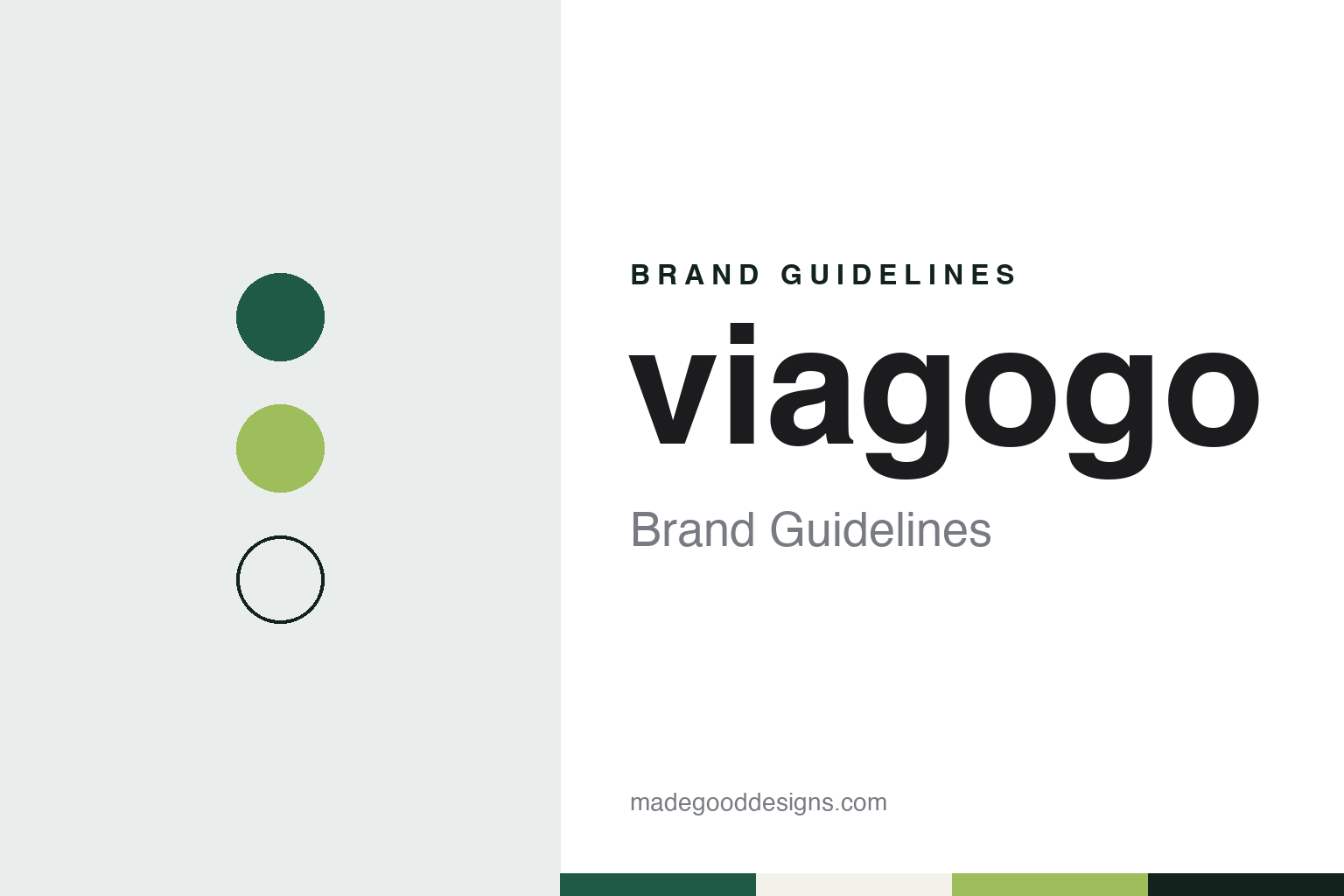
viagogo Brand Guidelines
A 2006 London resale start, a Swiss base and StubHub.
Aa
Two constants: an exchange green, ink and lime palette and a lowercase sans register. Abstract homage — not a viagogo product or mark; no logo, ticket or screen is reproduced.
A European resale market
A StubHub co-founder starts again in London.
viagogo is an online marketplace where people resell tickets for concerts, sport and theatre, and the company takes commission on each order. English Wikipedia says it was founded in 2006 by Eric Baker, who had co-founded the American resale site StubHub in San Francisco in 2000 and later left it. Baker moved to London, and viagogo officially launched there on 18 August 2006. Its early listings leaned towards sports tickets, with concerts, theatre and arts events alongside.
The pitch in those first years was partnership. English Wikipedia lists football clubs, tennis and rugby bodies, and touring musicians that named viagogo as their official resale outlet, with ticket fees shared between the partners. By 2008, it adds, the company had offices in the United Kingdom, the Netherlands and Germany. It also records that the Manchester United partnership ended in 2011, and that the England and Wales Cricket Board and the All England Club criticised the site’s prices in 2009.
Parliament looked at the model early. English Wikipedia says a 2008 report by the Culture, Media and Sport Committee found that marketplaces such as viagogo offered a valuable service but should adopt further safeguards, including not selling seats that were not yet available. In a separate dispute, the Rugby Football Union went to court to obtain the identities of people reselling its tickets on the site; the Supreme Court of the United Kingdom ruled in the union’s favour in 2012. The company also grew outside Europe, launching in Australia in 2013 with two Australian football clubs as partners, English Wikipedia says.
The name is written in lower case, as a single word, and English Wikipedia gives the stylised form as “viagogo.” This guide keeps the lower case even at the start of a sentence. No colour code or typeface name for the wordmark appears in the sources used here, so the tones and fonts in this guide are our own choices.
Colour
A move to Switzerland, then years of regulator cases.
English Wikipedia says viagogo moved its offices from the United Kingdom to Switzerland in 2012. In 2018, it adds, much of its staff moved to New York and sellers began to be paid through its American office. Radio New Zealand described viagogo in October 2025 as a Switzerland-based resale website, and its terms at that time pointed customer disputes to the courts of Geneva.
In the United Kingdom the Competition and Markets Authority (CMA) launched court action in August 2018. On 27 November 2018 the CMA announced a legally binding court order: viagogo had to tell buyers if they risked being turned away at the door, say which seat they would get, identify who was selling the ticket, show face value, stop giving misleading information about availability and popularity, and stop selling tickets a seller did not own. The order was agreed without a trial. In July 2019 the CMA moved towards contempt action; on 5 September 2019 it said viagogo had addressed its outstanding concerns and suspended those preparations.
New Zealand’s Commerce Commission brought proceedings in 2018. Radio New Zealand reported on 1 May 2024 that the High Court had found viagogo repeatedly misled customers over its status as an official outlet, ordered it to correct its website, and ruled that a clause sending disputes to Swiss courts was an unfair contract term. viagogo appealed; the Court of Appeal heard the case in October 2025 and reserved its decision, Radio New Zealand reported. English Wikipedia adds that an Australian Competition and Consumer Commission case over “official” advertising ended with a penalty ordered by the Federal Court of Australia in 2020.
Typography
Ticketing and event platforms.
Ticketing and event platforms sit between the people who put on events and the people who go to them, and their design has to serve both sides at once. Some are primary agents that sell on behalf of promoters, venues and festivals; others run resale marketplaces where fans and traders list tickets they already hold. Each kind presents itself differently, and each is worth reading on its own terms rather than as a single category.
The interface is where most of the brand lives. Event pages, seat maps, ticket wallets and checkout screens carry the name more often than any advertisement does, and the companies publish these flows in their own apps and help pages. In the United Kingdom, a 2018 court order secured by the Competition and Markets Authority required one resale site to show seat details, face value and the identity of the seller, so for resale brands some page elements are set by regulators as well as by designers.
Around the interface sit the smaller marks: app icons, short wordmarks and the photography used on event listings. Much of that photography belongs to artists, promoters and venues rather than to the platform, which means the platform’s own colours and type often act as a frame around other people’s posters, line-ups and stage shots.
Corporate pages tell a further story about owners and markets. Ticketing brands are often bought and sold, merged into larger live-entertainment groups or kept as separate names inside one company, and their about pages, trade-press announcements and regulator filings are the plainest record of who owns what, and where each name trades. The guides in this group read those records alongside each brand’s public identity; every palette shown is our own unofficial interpretation.
Aa
A rounded lowercase sans for a lowercase name. (Specimen set in Manrope, a sans STAND-IN; NOT the viagogo logo.)
viagogo and StubHub
The founder buys back the company he left.
In November 2019 viagogo agreed to buy StubHub from eBay, and the purchase completed in February 2020, according to English Wikipedia and the CMA. The CMA opened a merger inquiry in December 2019 and, in its final report of 2 February 2021, found that the deal would substantially reduce competition in UK secondary ticketing, where it said the two companies were the two main platforms, with a combined share of more than 90 per cent. Rather than unwind the whole deal, it required viagogo to sell StubHub’s business outside North America.
That sale went to Digital Fuel. The CMA approved the buyer, and the purchase of the StubHub international business completed on 3 September 2021; the CMA closed its case five days later. English Wikipedia says viagogo and StubHub were then placed under a new parent, StubHub Holdings, with Baker as chief executive, and that StubHub Holdings became a public company through an initial public offering in September 2025. In June 2025 the CMA consented to viagogo reacquiring the right to use certain StubHub brands and domain names in several countries outside the UK and Europe.
The result is two resale brands under one listed parent, after a merger that a competition regulator reshaped. For a design guide, viagogo shows how a resale marketplace presents itself through a lowercase name, dense listing pages and checkout screens that regulators have read line by line: seat details, face value and seller identity all became required parts of the page in the UK. Compare its former rival and now sister brand StubHub and the primary seller Ticketmaster. For this guide we use exchange green, ink, lime and paper with a sans, an unofficial interpretation; no product or logo is reproduced.
Explore & save
Keep viagogo’s identity on hand — save it to a board in the Made Good inspiration library.
viagogo identity set
Save the viagogo exchange green, ink and lime palette and the lowercase sans register to your own board.