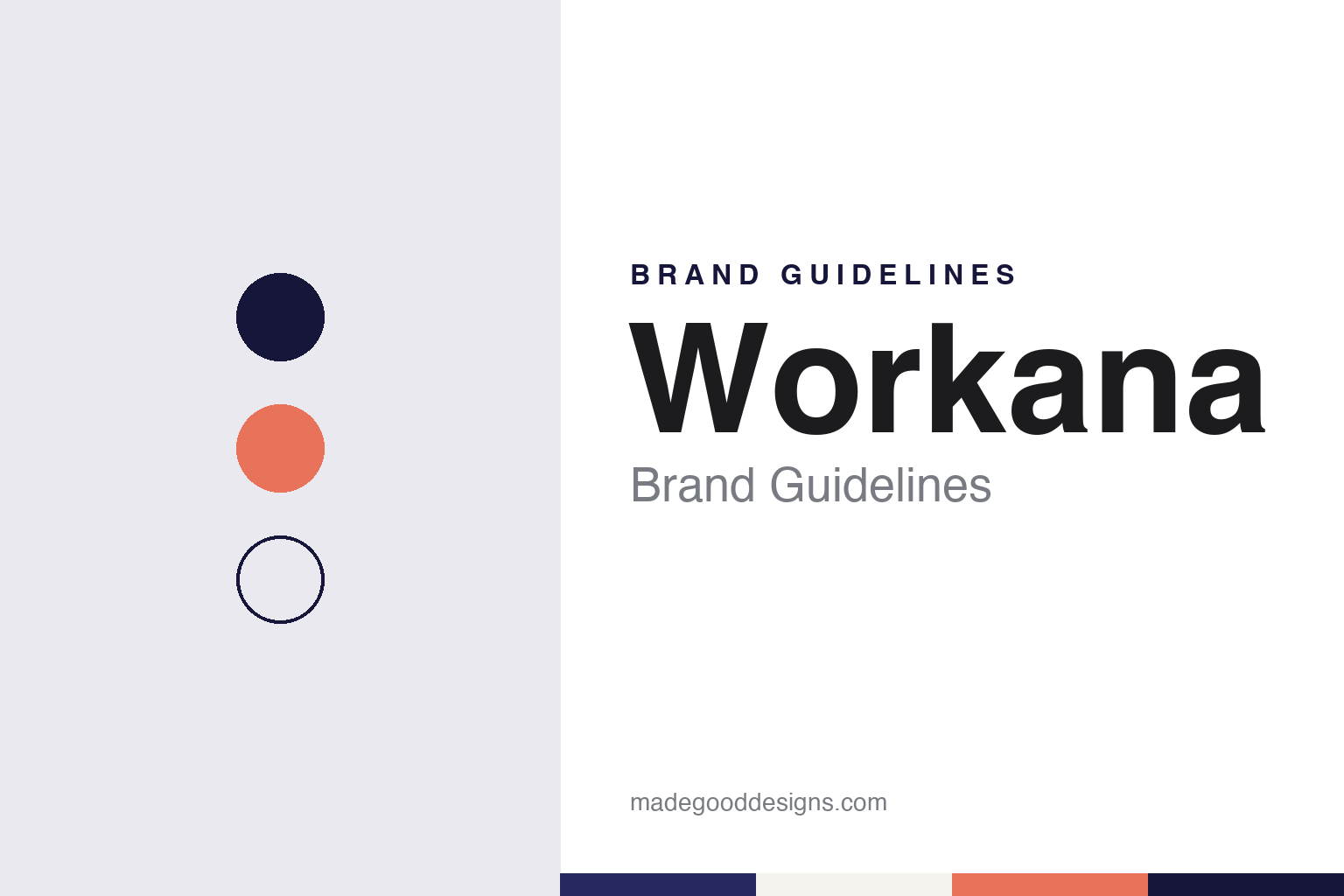
Workana Brand Guidelines
A Buenos Aires freelance marketplace built for Latin America.
Aa
Two constants: a Workana indigo and coral palette and a rounded sans register. Abstract homage — not a Workana product or mark; no interface, logo or profile is reproduced.
Buenos Aires, 2012
A marketplace planned for one region.
Workana is a freelance marketplace that began in Buenos Aires in April 2012. The Next Web reported in November 2012 that the site had launched that April and was based in the Argentine capital, and Portuguese Wikipedia names four co-founders: Tomás O’Farrell, Fernando Fornales, Guillermo Bracciaforte and Mariano Iglesias. The Malaysian business paper The Edge described it in 2019 as co-founded in 2012 by O’Farrell “and three other partners,” which matches that count.
The idea, as Portuguese Wikipedia puts it, was that remote work would matter more and more, and that Latin America wanted a platform built specifically for the region. The Next Web framed it the same way in August 2012, calling the Argentine startup “an oDesk for Latin America” and noting that it had just launched a Portuguese version for Brazil. In November that year the same publication said Workana focused on Latin America and the US Hispanic market, and that it was available in Spanish, Portuguese and English.
The company came out of an accelerator. Workana took part in the programme of NXTP Labs, an Argentine accelerator, and graduated in June 2012, The Next Web reported. In August 2012 it won the startup battle at TNW Conference Latin America, where the finalists were drawn from accelerator alumni across the region. By November 2012, the same publication said, the site had attracted more than 600 projects and 20,000 workers.
Colour
Projects, proposals and ranked profiles.
Workana works on a project-and-proposal model. Portuguese Wikipedia describes two roles that a single account can hold. A client posts a project describing what is needed, the kind of professional wanted, the budget and whether pay is hourly or per job; freelancers send proposals that match their skills, and can ask questions before they bid. The client reviews proposals and profiles, messages candidates and chooses one.
Payment sits in the middle. Once the client chooses a freelancer, the money is deposited and held until the client judges the work finished, after which both sides rate each other, according to Portuguese Wikipedia. Workana described the same arrangement to The Edge in 2019, saying it holds funds from the employer “in escrow until a project is successfully completed.” Signing up is free for both sides, the encyclopedia adds.
The categories are broad. Portuguese Wikipedia lists IT and programming, design and multimedia, translation and content, and marketing and sales among the main areas, along with administrative support, legal work, finance and engineering. In its 2019 statement Workana said it connects businesses with programmers, designers and online marketers.
Ratings shape the profile. Users rate each other on a five-star scale, and the platform ranks freelancers overall, by project area and by country; profiles also move through levels named iron, bronze, silver, gold, platinum and finally “hero,” Portuguese Wikipedia says. Since 2018 a Pro category has picked out more experienced, well-rated professionals automatically, and since 2019 clients have been able to hire several specialists for the same project.
Around the marketplace sits a layer of community and media. Portuguese Wikipedia lists a help centre, a user forum called the Workana Community, a blog, a YouTube channel named WorkanaTV, social accounts and a mobile app, which together carry the brand beyond the project pages themselves.
Typography
The category.
Freelance and creative-talent marketplaces describe themselves in a small set of words. DesignCrowd’s about page calls it an online creative marketplace that connects businesses with a global network of designers; English Wikipedia describes Crowdspring as a marketplace for crowdsourced creative services. Category names on these sites are practical rather than poetic: logo and identity, web, print, product and merchandise, art and illustration, with designer directories sorted by type, country and city.
The client’s first screen is usually a brief. When Slate tested Crowdspring in May 2011, posting a job meant filling in a “creative brief” form with set questions about what a logo should communicate. Contest sites then add their own rules on top of the brief. DesignCrowd’s how-it-works page lets a client choose a three-, five- or ten-day deadline, keeps designers from seeing one another’s entries and passes full copyright in the winning files to the client.
Showcase work is presented plainly, as entries and finished projects rather than as campaigns. Slate found that anyone could browse other people’s projects and, in many cases, their submissions, and that the site prompted clients to rate entries on a five-star scale and send feedback. Forbes reported in 2009 that Crowdspring offered larger buyers a Pro option that hid submissions from public view, and that its own logo came through its marketplace.
Corporate pages fill in the rest. DesignCrowd’s about section names its founder and chief executive and has a separate board and investors page listing its venture backers, while dated press releases record new country sites and new brands. This guide sets out what can be checked about each marketplace — who founded it, who owns it and how its interface works — and marks clearly what rests only on the company’s own word.
Aa
A rounded sans for a friendly marketplace register. (Specimen set in Nunito, a sans STAND-IN; NOT the Workana logo.)
Workana
Evenbase, SEEK and a move into Asia.
Workana grew with outside investors from early on. In November 2012 The Next Web reported a round led by Evenbase, the employment division of the British publisher Daily Mail and General Trust (DMGT), with Latin American angel investors taking part; O’Farrell told the publication that talks began after a presentation at NXTP Labs. Evenbase’s portfolio at the time included the job sites Jobsite and Jobrapido.
The Australian employment group SEEK followed. In April 2018 the Argentine business site iProfesional reported that Workana had received the biggest investment since its founding, from SEEK, its third from the group since a first round in 2016; the article named SEEK as a shareholder in Brazil Online Holdings, parent of Catho, and in Mexico’s OCC. Workana then said it had more than one million registered independent professionals and operations across Latin America, and co-founder Guillermo Bracciaforte said the company also planned to expand into Southeast Asia.
That move came the next year. In April 2019 The Edge reported that Workana was entering Southeast Asia with Malaysia first, opening the platform to Malaysian freelancers and, eventually, to the rest of the region. Portuguese Wikipedia describes the company as headquartered in Argentina, with offices in Brazil, Colombia and Mexico, and the platform in Spanish, English and Portuguese. It also lists two early honours: the TNW Latin America startup battle in 2012 and a place in Google’s Launchpad Accelerator in 2017. Since 2015, the encyclopedia adds, Workana has been a partner and founding member of a Latin American internet association alongside companies including Despegar, MercadoLibre and Google.
For a design guide, Workana shows how a regional marketplace can build its identity around language and place: a Spanish- and Portuguese-first service whose profiles turn ratings into named ranks. Compare Freelancer.com and Upwork, two global marketplaces in the same category. For this guide we use a deep indigo, a warm coral and a soft off-white with a rounded sans, an unofficial interpretation; no product or logo is reproduced.
Explore & save
Keep Workana’s identity on hand — save it to a board in the Made Good inspiration library.
Workana identity set
Pin the Workana indigo and coral palette and the rounded sans register to your own board.