Zizzi Brand Guidelines
The Chiswick Italian that redesigned itself around local artwork.
Aa
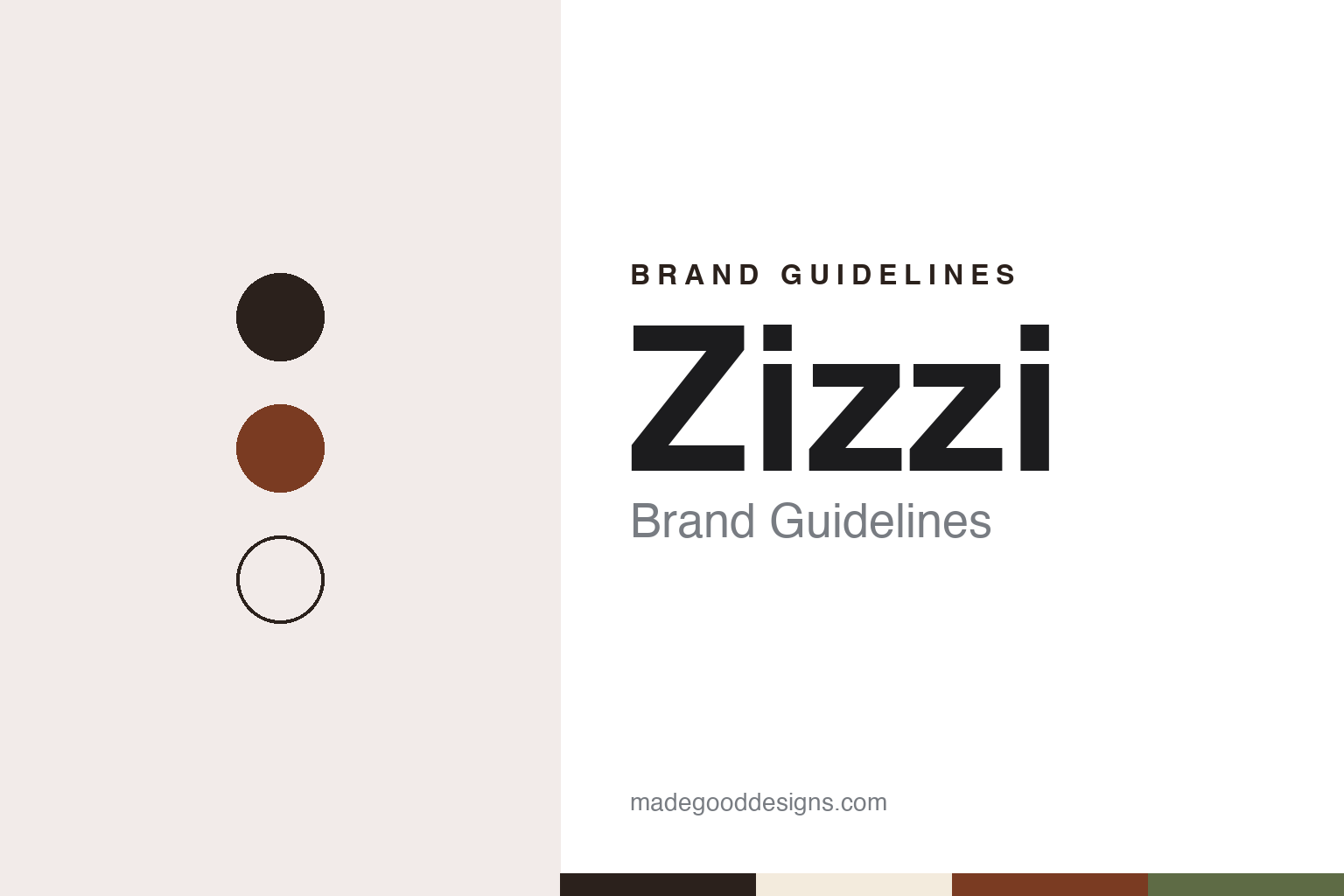
Two constants: a brown, terracotta and olive palette and a warm display serif register. Abstract homage — not a Zizzi asset; no logo, menu or artwork is reproduced.
A Chiswick neighbourhood Italian
The Kaye brothers’ second chain.
Zizzi began in 1999 with one restaurant in Chiswick, in west London. English Wikipedia says the opening restaurant was in Chiswick, and the company’s own website tells the same story today: a neighbourhood Italian with one pizza oven and a few glasses of wine, as it puts it. The chain was set up by the brothers Adam and Sam Kaye, who had founded ASK six years earlier; Restaurant magazine, in a 2011 business profile, called Zizzi ASK’s “literal twin sister,” since both came from the same two founders.
The two chains did not stay with their founders. Restaurant magazine reported in June 2011 that Zizzi was established by the Kayes in 1999 and sold to Gondola in late 2006. Gondola Holdings, a private equity-backed group, also owned PizzaExpress and ASK, and later the burger chain Byron; Restaurant described it in 2011 as a group of around 600 sites, with Zizzi one of its three Italian chains.
Inside Gondola the Italian brands were run as separate businesses. Zizzi’s managing director at the time, Helen Jones, who joined in 2009 after fifteen years at Ben & Jerry’s, told Restaurant that the three chains were encouraged to work independently and to compare their results with one another. Zizzi had 114 restaurants in June 2011, according to the magazine, and its menu ran beyond pizza to pasta, risotto, meat and fish dishes, with ice cream made for it by the London maker Kitty Travers in six Italian flavours.
Colour
From “excessively orange” to local art.
The look of Zizzi changed sharply from 2009. Restaurant magazine reported in 2011 that the company had decided roughly two and a half years earlier that the Italian sector was becoming more crowded, with newer chains arriving, and that it needed a refresh. Its head of design, Pia Fairhurst, told the magazine that some of the older restaurants were “excessively orange,” with floors, furniture and walls finished in dark, earthy tones that looked out of date, and that the aim was to bring in contemporary colours and a fresher, more modern look.
By June 2011, 33 restaurants had been rebranded, with about ten more planned each year, according to the same profile. Research for the relaunch showed that Zizzi’s core customers were aged roughly 20 to 30, younger than the company had assumed, and Jones said the redesign was partly about speaking to them. A new restaurant in the Central St Giles development, near Covent Garden, was one of the showcases for the new look.
The template became more defined as the chain grew. When Restaurant magazine reported new openings in February 2016, it said every new restaurant would have Zizzi’s open kitchen and wood-stone ovens, along with rustic log walls, trees and bespoke artwork. That mix of kitchen theatre and decoration made for each site is still how the company describes itself: its website says every Zizzi has “its own personality,” shaped by its neighbourhood and by local artwork, and it names restaurants such as Paddington in London, Belfast Odyssey in Northern Ireland and Suffolk Street in Dublin.
On the menu, the company calls its Rustica pizzas “kind of our signature,” describing them as stretched further than a classic base for a bigger, crisper pizza with more toppings. It also lists fresh mafaldine pasta made with free-range eggs and British flour. The chain’s loyalty scheme, the Zillionaires, had grown to more than 1.25 million members, Azzurri Group reported in November 2025, according to Restaurant.
Typography
British Italian dining.
Britain’s Italian restaurant chains tend to tell their stories through a room and an oven. Pizza Express traces itself to a single pizzeria on Wardour Street in Soho, opened in 1965 with an oven brought from Italy, according to accounts in MCA and Restaurant Online in 2018. Franco Manca, which began in Brixton Market in 2008, says its founders built their own oven there before opening anywhere else.
Menus and naming are usually plain. Dishes are listed by ingredient and region rather than by invented brand names, and some chains publish where those ingredients come from: Franco Manca’s pages run through its flour, tomatoes, cheeses and coffee one by one. Restaurant names lean on a founder, a place or a simple description; Franco Manca, the company says, means “Franco is missing,” after the man who ran the market pizzeria before it.
The corporate pages tell a second story, about owners. Many of these chains have passed between founders, stock-market listings and investment firms. In 2014 City A.M. noted that the private equity firm Cinven’s Gondola group ran Pizza Express alongside Zizzi and ASK Italian; Franco Manca was bought by the listed group Fulham Shore in 2015, and Fulham Shore by the Tokyo-listed Toridoll in 2023.
Restructurings are part of that record too. Company voluntary arrangements, which let a business close restaurants and reset its leases with creditors’ approval, were used by Pizza Express in 2020 and announced by Franco Manca’s owner in 2026, according to trade press reports. Each guide in this series sets out what can be checked about a chain, who founded it, who owns it and what has changed, and marks what rests on the company’s own word.
Aa
A warm display serif for a neighbourhood Italian. (Specimen set in Fraunces, a serif STAND-IN; NOT the Zizzi logo.)
Zizzi
Gondola, Bridgepoint, then TowerBrook.
In December 2014 Gondola sold Zizzi and ASK Italian together to the private equity firm Bridgepoint, The Caterer and Restaurant magazine reported; at the time Zizzi had 136 restaurants and ASK 109. The sale was the last step in the break-up of Gondola, after Byron in November 2013 and PizzaExpress in August 2014. Restaurant said the deal was expected to complete by January, and English Wikipedia dates completion to February 2015. Steve Holmes, who already ran both chains, stayed on as chief executive. The new owner took the name Azzurri Group, and in July 2015 it agreed to buy the London pasta-and-coffee chain Coco di Mama, The Caterer reported.
Under Azzurri, Zizzi kept growing. In February 2016 Restaurant reported four openings in a month, at Bradford, Birstall near Leeds, Newport and Birmingham’s Brindleyplace, taking the estate to 143, with a 90-cover restaurant at Dundrum Town Centre in Dublin to follow in April as its debut in Ireland. In September 2015 Azzurri said it would stop taking an 8 per cent administration fee from tips paid by card from that November, so that all tips went to staff, The Caterer reported.
The business was restructured in 2020. On 17 July that year KPMG was appointed as administrator of Azzurri Group, and the next day the group was sold in a pre-pack deal to TowerBrook Capital Partners, The Caterer reported; 75 restaurants across Zizzi and ASK Italian closed, and 225 venues continued under the new owner. Azzurri has since added brands: it bought the Belfast burrito chain Boojum in June 2023, The Caterer reported, and by November 2025 it also ran the US chain Dave’s Hot Chicken in Britain and had opened a Zizzi Model Store in Paddington Basin with an expanded food and drink offer, according to Restaurant. English Wikipedia counts 138 Zizzi restaurants as of October 2025; the company’s website says more than 130 across the UK and Ireland.
For a design guide, Zizzi shows how a chain can stay recognisable while making each restaurant look different, with the open kitchen and oven as the constant and the artwork as the variable. Compare its sister chain ASK Italian, founded by the same brothers, and Pizza Express, a former stablemate in Gondola. For this guide we use wood-smoke brown, fired terracotta and olive with a warm serif, an unofficial interpretation; no product or logo is reproduced.
Explore & save
Keep Zizzi’s identity on hand — save it to a board in the Made Good inspiration library.
Zizzi identity set
Pin the Zizzi brown, terracotta and olive palette and the warm display serif register to your own board.