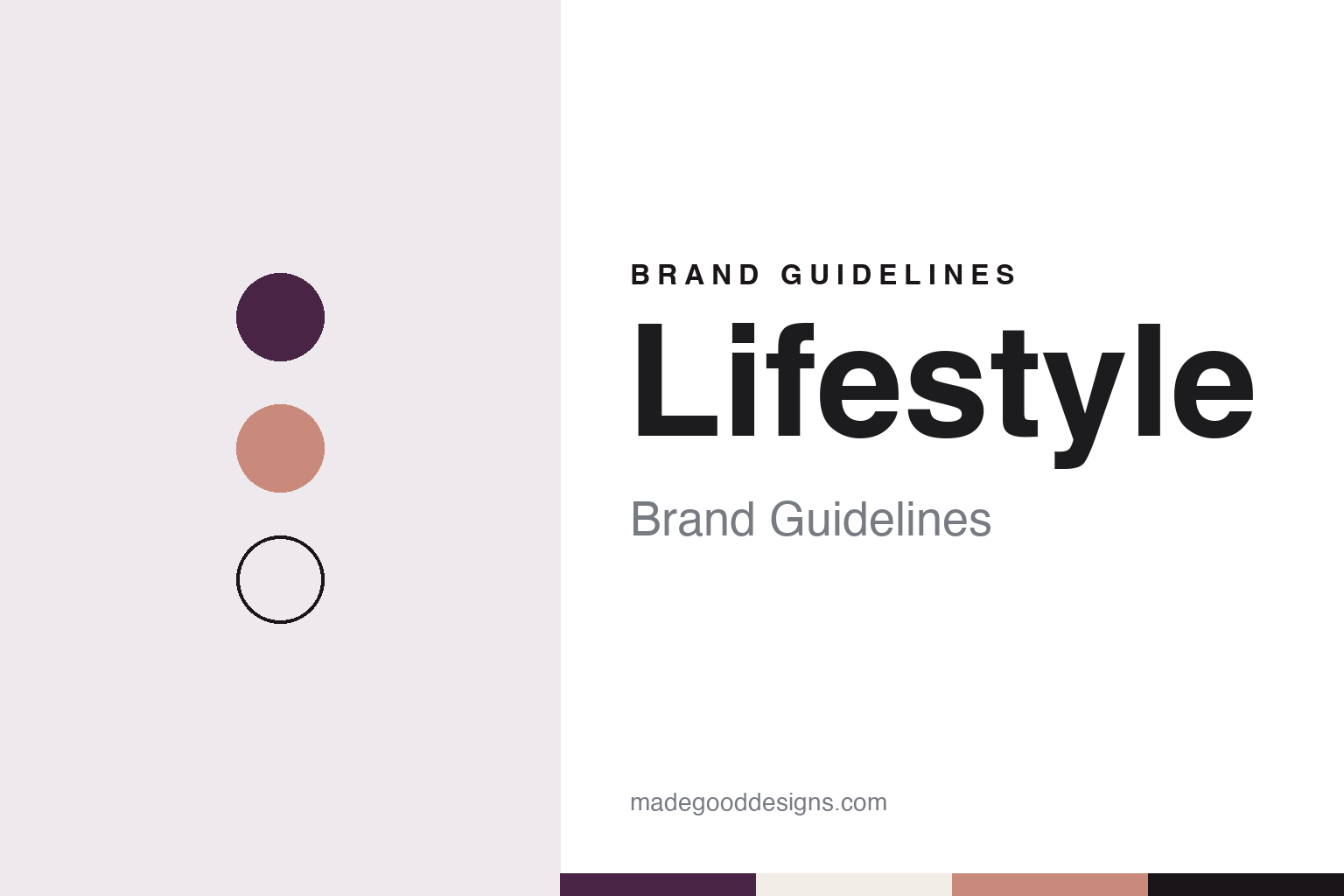
Lifestyle Brand Guidelines
Landmark Group’s Indian department store, opened in Chennai in 1999.
Aa
Two constants: a plum, shell and rose clay palette and a geometric sans register. Abstract homage — not a Lifestyle product or mark; no store, logo or label is reproduced.
One roof in Chennai
A Gulf retailer’s first Indian store.
Lifestyle is the department-store chain of the Landmark Group, the Dubai-based retail company founded by Micky Jagtiani. The group began in 1973 with Babyshop, a single store in Bahrain selling products for infants, Outlook Business reported in August 2016. English Wikipedia gives the same founding year and place and describes the group today as a retail and hospitality holding company headquartered in Dubai, with interests that later spread to leisure, food and mall management.
India came later. The group’s Indian business began in 1999 with the launch of Lifestyle, and about fifteen months of groundwork preceded the opening of the first store, in Chennai, according to Outlook Business. Ramanathan Hariharan, the first chief executive of the Indian company, told the magazine that the group had tried hard to find property in Mumbai and Delhi but found it too expensive, and that in hindsight Chennai offered the right mix of tradition and modernity.
The format was a deliberate change from the Middle East, where Landmark ran large stores in many separate formats. In India, Hariharan told the magazine, “it was clear that India was not ready for stores in different formats,” so the group put everything under one roof. The Chennai store measured 25,000 square feet, which the magazine said was the average size of a single format abroad. Its early team was small: one store manager and four category heads, with the project head based in Dubai and visiting only when needed.
The Indian company trades as Lifestyle International, with its main office in Bengaluru, the magazine reported. English Wikipedia says the business that started with Lifestyle stores has grown to include the Home Centre, Max and Easybuy formats.
Colour
Brands, own labels and late orders.
A Lifestyle store sells clothing, footwear, handbags, beauty products and accessories for men, women and children, across Indian and western styles, English Wikipedia says. It describes stores spread over two or three floors and laid out with a square line of sight, so shoppers can take in the product sections at a glance.
The mix leans on outside labels. In 2016 Outlook Business reported that Lifestyle stocked more than 250 brands, and that from the start the chain chose names that fitted an image the company described as “fashionable, aspirational and youthful.” Within the world of labels such as Levi Strauss, Van Heusen and Louis Philippe, Hariharan said, it stocked skinny jeans and slim-fit shirts rather than only the regular fits.
Alongside those brands, Lifestyle has built its own labels. The magazine named Melange, which offers traditional clothing for modern women and had eight stores of its own in 2016, and Ginger, which that season launched cold-shoulder tops cut in crisp cotton and stripes for Indian summers. A 40-member in-house design team handled details such as armhole size and neckline depth without outside consultants, managing director Kabir Lumba told the magazine. The same report described designers from the group travelling to London and Dubai to watch trends and then adapting them for Indian shoppers.
Buying is part of the story. Lifestyle placed its orders closer to the season than other players — in September for a spring-summer range starting in February — a vendor told Outlook Business. When the chain arrived in India, the magazine reported, few local suppliers worked for the parent group, so it set up sourcing and design in the country from scratch, a decision Lumba called difficult but, in retrospect, correct.
Typography
Department stores and value chains.
India’s large store chains present themselves in quite different ways, and the differences start with where the stores stand. Department-store groups have long followed the shopping mall: afaqs! reported in 2019 that Shoppers Stop had opened a 50,000-square-foot store in Gurugram stocked with premium labels. DMart took the opposite route, Outlook Business reported in 2022, owning the land under its standalone supermarkets rather than leasing space in malls.
The festival calendar shapes the year for these retailers. Shoppers Stop’s first general manager writes in his memoir that the team hurried to name and open the original Andheri store in 1991 so that it could trade before Diwali. Advertising matters as much as the calendar: when Shoppers Stop changed its logo in 2008, afaqs! reported, the new identity arrived with seven commercials, a press campaign and outdoor posters, with creative work by Contract Advertising.
Own labels are a second thread. In August 2025 Indian Retailer reported that Shoppers Stop’s private brands and its value-fashion format, Intune, were growing alongside the third-party brands in its department stores; Forbes India wrote in 2017 that DMart meant to work harder on private labels of its own. Names are often simple phrases: Shoppers Stop’s, the same memoir says, was suggested by a supermarket name seen in Boston.
Most of the larger chains also keep corporate pages that set out their founders, parent groups and stock-exchange listings, since several trade on the BSE and NSE in Mumbai. This guide uses those pages alongside dated press, and marks clearly where a fact rests on the company’s own word.
Aa
A clean geometric sans for a fashion department store. (Specimen set in Jost, a sans STAND-IN; NOT the Lifestyle logo.)
Lifestyle
From one store to a group of formats.
The group widened its Indian business around the department store. Home Centre, which sells furniture, furnishings and home décor, opened its first Indian store in 2006, and the value-fashion chain Max opened its first Indian store in Indore the same year, two years after Landmark launched the format in Sharjah, Outlook Business reported. In 2016 the magazine said about four in five Home Centre outlets in India sat alongside a Lifestyle store, sharing back-end operations and a loyalty programme. Easybuy, a franchise format priced below Max, opened its first store in late 2014 in Karimnagar, in Telangana.
Online selling followed. English Wikipedia says the group’s first Indian web store, Landmarkshops.in, launched in January 2016 and was replaced in January 2017 by separate sites and apps for Lifestyle, Home Centre and Max. The stores remain the core of the business: in August 2016 Outlook Business counted 54 Lifestyle stores, and English Wikipedia records the 55th opening on 6 September 2016 at Phoenix Marketcity in Whitefield, Bengaluru. It also notes the chain’s spread beyond the major metros to places such as Nagpur, Jaipur, Visakhapatnam and Nashik.
As of November 2025, Lifestyle operated 125 stores across India, DFU Publications reported. Chief executive Devarajan Iyer told the publication that the chain prefers large spaces of more than 40,000 square feet in top-tier malls, and that the group’s combined formats — Lifestyle, Max and Home Centre among them — can take up to 100,000 square feet in a single development.
For a design guide, Lifestyle shows how a Gulf retailer turned a multi-format model into a single Indian department store built around outside brands and its own labels. Compare Shoppers Stop, another Indian department-store chain, and Westside, the own-label fashion chain of the Tata group’s Trent. For this guide we use plum, shell and a rose clay with a geometric sans, an unofficial interpretation; no product or logo is reproduced.
Explore & save
Keep Lifestyle’s identity on hand — save it to a board in the Made Good inspiration library.
Lifestyle identity set
Pin the Lifestyle plum, shell and rose clay palette and the geometric sans register to your own board.