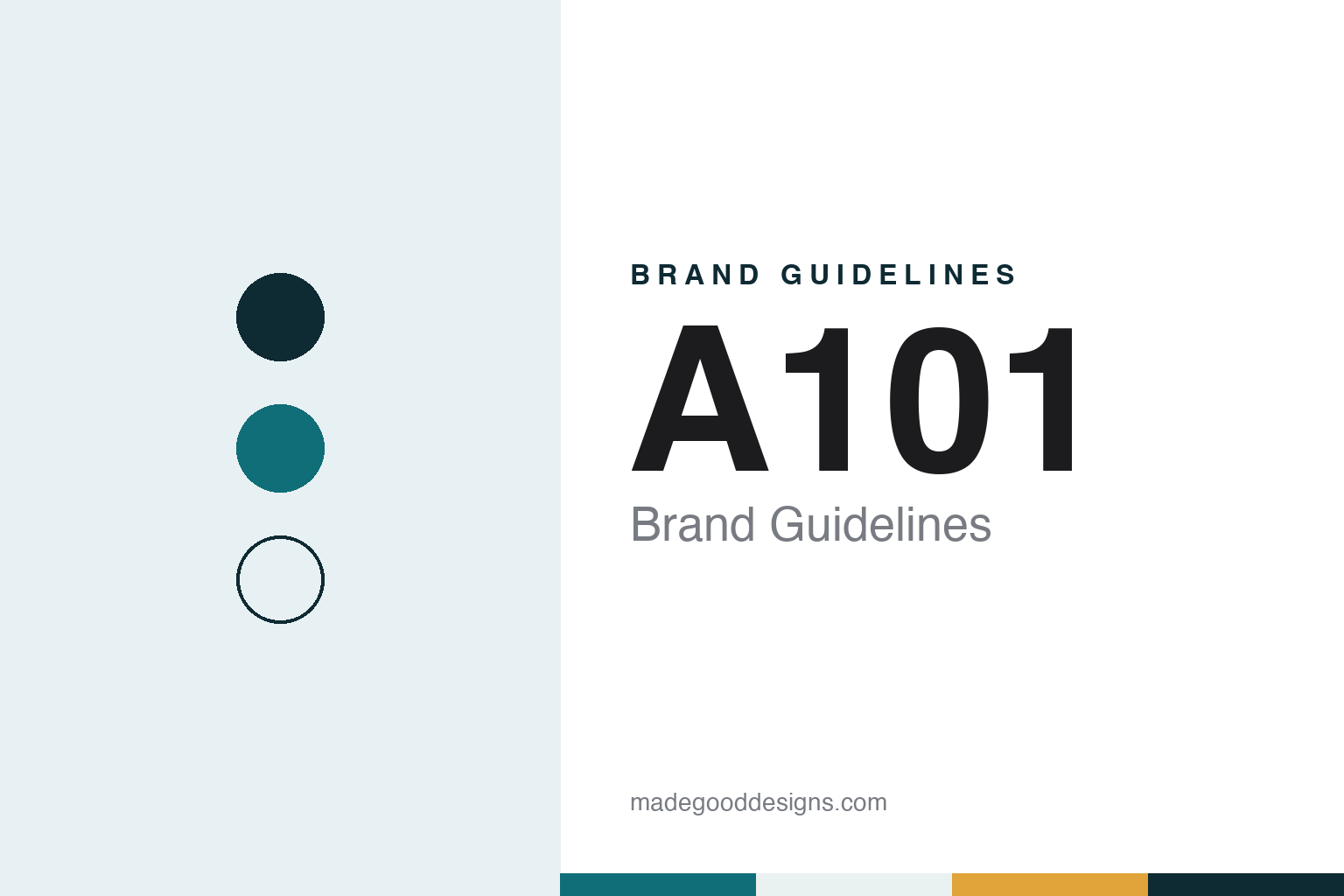
A101 Brand Guidelines
The 2008 Istanbul discount chain of the Aydın family and CarrefourSA.
Aa
Two constants: a deep teal, ink and amber palette and a Rounded grotesque sans register. Abstract homage — not an A101 product or mark; no logo, fascia or pack is reproduced.
Yeni Mağazacılık
A family company that opened with 121 stores.
A101 is the discount grocery chain of A101 Yeni Mağazacılık A.Ş., whose name translates roughly as “New Retailing.” English Wikipedia says it was founded on 28 March 2008 in Istanbul by Turgut Aydın, and that its head office is in Üsküdar, on the Asian side of the city. Turkish Wikipedia adds that the chain entered the discount market on that day with 121 stores already trading.
The company is a family business. Both English and Turkish Wikipedia say that 79.21 percent of A101 is held by Turgut Aydın Holding, the Aydın family’s holding company. Hürriyet Daily News described Yeni Mağazacılık in August 2026 as “the Aydın Group company that operates discount retailer A101.” Because the chain is privately owned, it does not publish detailed financial results, ESM Magazine noted in July 2026, which sets it apart from its listed rivals BİM and ŞOK.
That private status shapes what can be said about A101 from the outside. There is no listing prospectus and no annual report on a stock exchange, so the record is built from press reports, encyclopaedia entries and the company’s own statements at moments such as the CarrefourSA purchase. Store counts in particular are given by the press at particular dates rather than in regular filings.
Those counts show a fast climb. English Wikipedia says A101 opened its 10,001st store on 30 December 2020. In October 2021 the Istanbul newspaper Türkiye counted 10,150 A101 branches in its survey of the national chains, against 9,274 for BİM and 8,145 for ŞOK. Turkish Wikipedia gives more than 13,000 stores in all 81 provinces and 923 districts at the end of 2023, and ESM Magazine put the network at around 13,600 outlets in July 2026.
Colour
Own trucks, own labels, a weekly catalogue.
A101 is run on the hard-discount concept, Turkish Wikipedia says, in the same model as its rival BİM, according to English Wikipedia. English Wikipedia calls BİM its main competitor and places the two, with ŞOK, as the three discount chains present in every one of Türkiye’s 81 provinces. Goods move from the company’s warehouses to the stores on A101’s own trucks, English Wikipedia says, and Turkish Wikipedia counts 16 regional directorates running the network. The third of those chains, ŞOK, operated more than 11,000 stores, 51 distribution centres and a staff of more than 51,000 across all 81 provinces, ESM Magazine reported in July 2026.
Own labels are a large part of the shelf. English Wikipedia lists 63 A101 own-label brands. They run from Birşah yoghurt, milk and ayran and Wawa tinned tuna to Wind laundry detergent and Hi-Level televisions, so the same store can sell breakfast staples next to a flat-screen set. Other labels listed there include Bendo pasta, Karadem tea, Soffio nappies and Vera cooking oil, spread across the dairy, pantry, cleaning and household aisles.
The other public face of A101 is its weekly catalogue. Turkish Wikipedia says the company prints its discount catalogues on paper as leaflets each week and publishes them online on its website as well. The catalogue sits beside the fixed own-label range as a second, changing layer of the offer.
A101 has moved online in stages. Turkish Wikipedia says it began work on online sales in 2018, alongside its stores, and English Wikipedia says it launched A101 Kapıda, a grocery-delivery app whose name means “at the door,” in April 2020. Turkish Wikipedia describes the chain today as trading both online and through its stores.
Typography
Turkish retail and its public faces.
Türkiye’s grocery trade includes three neighbourhood discount chains with stores in all 81 provinces, BİM, A101 and ŞOK, according to English Wikipedia. In October 2021 the newspaper Türkiye counted about 10,150 A101 branches, 9,274 BİM stores and 8,145 ŞOK markets, and ESM Magazine reported in July 2026 that A101 alone ran around 13,600 outlets. Alongside them sit multi-format grocers: Migros, whose formats include Macrocenter stores, and CarrefourSA, with a multi-format network of around 1,237 stores at the end of 2025, according to the same magazine.
The discount chains publish their identity mainly through range and print. BİM says it keeps its store interiors deliberately modest, and its website gives separate sections to its own labels and its special buys; A101 prints a weekly discount catalogue and publishes it online, Turkish Wikipedia says. Own labels are a large part of that picture: English Wikipedia lists more than 150 for BİM and more than 60 for A101, from dairy and pantry lines to small electronics.
The screens follow the shelf. Migros fulfilled online orders from 2,103 stores at the end of 2025, ESM Magazine reported, and A101 launched its A101 Kapıda delivery app in April 2020, according to English Wikipedia. Electronics retailers, home-improvement chains and online marketplaces add showrooms, apps and product pages of their own, and the guides in this group look at each company’s fascia, app screens and naming as the company publishes them.
Ownership is part of the public face too. BİM has been listed on Borsa İstanbul since 2005; A101 is privately owned by the Aydın family and, ESM Magazine noted, does not publish detailed financial results; ŞOK and Migros report full-year results. Each guide sets out who founded the company, who owns it and where it is listed, and marks what rests on the company’s own word.
Aa
A rounded grotesque sans for leaflets and app tiles. (Specimen set in Rubik, a sans STAND-IN; NOT the A101 logo.)
CarrefourSA
A discount chain buys a hypermarket brand.
In 2026 the Aydın family moved beyond discount stores. ESM Magazine reported that in April 2026 Carrefour agreed to sell its combined 89 percent stake in CarrefourSA, its Turkish business, to the Aydın family. Hürriyet Daily News reported that the share purchase agreement was signed on 17 April 2026 and that Yeni Mağazacılık completed the purchase of an 89.28 percent controlling stake on 31 July 2026, a day after Türkiye’s Competition Board gave conditional approval, according to a CarrefourSA filing with the Public Disclosure Platform.
The stake combined Sabancı Holding’s 57.12 percent and the 32.16 percent held by Carrefour Nederland B.V., and both sellers left CarrefourSA entirely, the newspaper said. CarrefourSA ran a multi-format network of around 1,237 stores across Türkiye at the end of 2025, ESM Magazine reported; the newspaper Türkiye had counted 720 CarrefourSA markets in October 2021. Under the new owner the chain is led by its chief executive, Hatice Evren, Hürriyet Daily News reported. According to a company statement quoted by Hürriyet Daily News, CarrefourSA and A101 continue to operate independently within the Aydın Group, keeping their own brand identities and separate management, and focusing on different market segments.
Carrefour itself had entered the Turkish market in 1993, ESM Magazine noted. With the closing, the Aydın Group holds two grocery names: A101, the hard-discount chain, and CarrefourSA, with its mix of store formats. At the closing, Aydın Group board member Erhan Bostan said the group would focus on improving the shopping experience and on its relations with suppliers, business partners and employees, Hürriyet Daily News reported.
For a design guide, A101 shows how a privately held discount chain builds recognition through its own-label names and a weekly catalogue printed on paper and published on its website. Compare BİM, the listed discount chain founded in 1995, and ŞOK. For this guide we use a deep teal, a dark ink and a warm amber with a sans, an unofficial interpretation; no product or logo is reproduced.
Explore & save
Keep A101’s identity on hand — save it to a board in the Made Good inspiration library.
A101 identity set
Pin the deep teal, ink and amber palette and the Rounded grotesque sans register to your own board.
Source & notes
Frequently Asked Questions
What font can I use to match the A101 look?
This guide describes A101’s type as “A rounded grotesque sans for leaflets and app tiles”. Its type specimen is set in Rubik from Google Fonts as a stand-in; Rubik is not A101’s own lettering.
What colours are in the A101 palette?
This guide’s A101 palette is Deep teal #0F6E78, Harbour ink #0E2A33, Mint wash #EAF2F1, Catalogue amber #E0A43A and Paper #F8FAF9. The tones are the guide’s own unofficial interpretation, not official A101 hex codes.
When was A101 founded?
A101 was founded on 28 March 2008 (121 stores), in Istanbul, Türkiye.
Who founded A101?
A101 was founded by Turgut Aydın on 28 March 2008 (121 stores).