Savers Brand Guidelines
A Mission District thrift store that became a four-banner chain.
Aa
Two constants: a brick red, tag yellow and warm ink palette and a warehouse sans register. Abstract homage — not a Savers product or mark; no sign, logo or store fascia is reproduced.
A Mission District theatre
Six stores, several names, one Bellevue office.
Savers began in 1954, when Bill Ellison opened a thrift store in a former movie theatre in the Mission District of San Francisco, English Wikipedia says. By 1970 the business had six thrift stores across California, Oregon and Washington, trading under several names, among them Value Village and Thrift Village. That same year it moved its headquarters north to Bellevue, Washington, where the company is still based.
Expansion beyond the United States followed. The first store in Canada opened in Vancouver in 1980, and in October 1997 the first Australian Savers opened in Brunswick, Victoria, according to English Wikipedia, which adds that Ellison remained chairman until 2000.
The several names stayed. The listed company is called Savers Value Village, Inc., and its shops carry different banners by region: Value Village in the Pacific Northwest, the Baltimore area and most of Canada; Village des Valeurs in Quebec; Unique in Chicago and at some stores around Washington, DC; and Savers elsewhere in the United States and in Australia, English Wikipedia says. In Washington State court records the operating company appears as TVI, Inc., doing business as Value Village, InvestigateWest reported in 2023.
The company is a for-profit retailer, not a charity. English Wikipedia says it pays non-profit organisations for donated clothing and household goods, which those organisations collect and deliver to the stores. InvestigateWest described the same arrangement in May 2023: almost all of the stock is bought from what the company calls its “charity partners,” who receive the goods through drop-off and pick-up programmes, donation bins in car parks and on-site Community Donation Centers at the stores, and the goods are then sold in the company’s own thrift stores.
Colour
Thrift superstores, a boutique and Sydney.
In Australia the chain has made its large-store format part of the shop name. When Savers opened its first Sydney store in May 2024, Time Out Sydney reported, it traded as the Savers Thrift Superstore and filled a 1,590-square-metre unit at Hoxton Park Central in Prestons, in the city’s west, stocking second-hand clothes, books, lamps and chairs, with new stock arriving every week.
The company then tried a smaller, inner-city format. In September 2024 Time Out Sydney reported plans for a Savers Thrift Boutique on Oxford Street in Darlinghurst, a shop for pre-loved clothes, jewellery, accessories and books on the Darlinghurst and Surry Hills border, with thousands of items added each week, and noted that Savers had by then been trading in Australia for 25 years and had 13 Australian stores. In August 2025 the magazine reported that the Darlinghurst boutique and a further store in Auburn had opened, and that a three-floor, 2,000-square-metre store in Camperdown, a short walk from Newtown and the University of Sydney, had opened in July 2025 as the company’s first three-level site in Australia. Larger shops, it explained, qualify for the company’s “thrift superstore” label.
The vocabulary matters to the brand. Time Out Sydney explained in 2025 that the shops call themselves thrift stores rather than “op shops,” the Australian term for charity shops, because their profits do not go to charity. In the United States, the same line between a business and a charity was argued in court for years, as the ownership and legal record below shows.
Typography
Signs, counters and owners.
Second-hand and resale chains present themselves in two broad ways. Some, such as Savers and its Value Village banner in North America, run large thrift stores stocked with donated goods that the company buys from charity partners; in Australia, Savers signs its larger shops as “thrift superstores” and has added a smaller inner-city “thrift boutique.” Others run buy-and-sell counters, where shoppers bring in their own clothes, games or equipment and are paid on the spot, as Plato’s Closet describes its stores.
Ownership shapes how these names look. Franchise systems such as Winmark’s resale brands, among them Plato’s Closet and Once Upon A Child, keep one name, one buying routine and one website across hundreds of shops that are each independently owned, as Plato’s Closet’s own pages state. Company-run chains can instead carry several regional names under one owner: Savers trades as Savers, Value Village, Village des Valeurs and Unique in different markets.
The companies in this group, in North America, the United Kingdom, Australia and Japan, range from family-founded businesses to franchisors and listed groups with private-equity owners. Their corporate pages usually tell a founding story, name the current owner and explain how the buy or donation counter works; logos, shop signs and colour schemes are shown as the companies publish them on their own sites and storefronts.
These guides set out what can be checked about each chain — who founded it, who owns it now, how its stores and counters are described, and which of those descriptions rest only on the company’s own word — and suggest an unofficial palette and a stand-in typeface for designers studying the category.
Aa
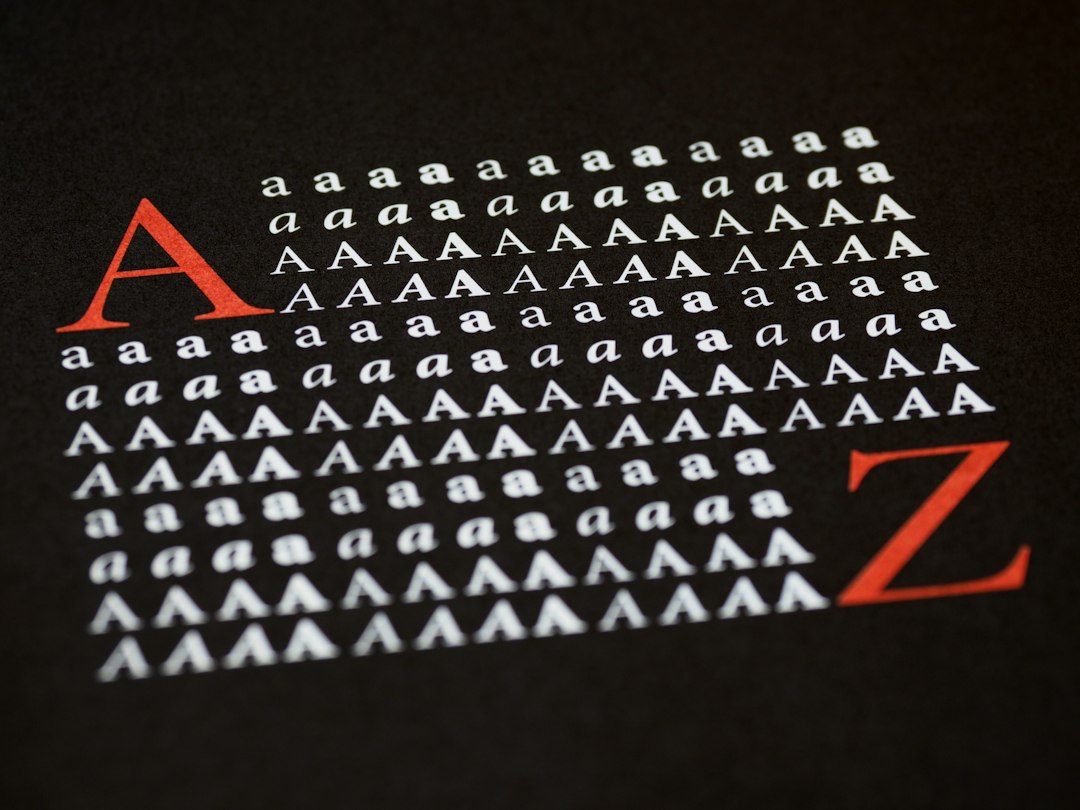
A broad, plain sans for shop signs and aisle markers. (Specimen set in Archivo, a sans STAND-IN; NOT the Savers logo.)
Savers Value Village
Private equity, a listing and a court ruling.
Ownership has changed several times. Berkshire Partners bought a half share in 2000, Freeman Spogli & Co. became the majority owner in 2006, and Leonard Green & Partners and TPG Capital bought out Freeman Spogli’s shares in 2012, English Wikipedia says. In March 2019 a restructuring agreement handed ownership to Ares Management and Crescent Capital Group, and Ares acquired Crescent’s stake in 2021. InvestigateWest reported in May 2023 that the chain was preparing to list on the New York Stock Exchange; English Wikipedia says the initial public offering took place on 29 June 2023, with Ares keeping a large majority stake.
Its relationship with charities has been tested by state officials. In May 2015 the Minnesota Attorney General sued Savers over how it presented its payments to partner charities; the company settled in June 2015 and agreed to greater transparency, English Wikipedia says. In Washington State, the Attorney General’s office filed a consumer-law case in 2017, alleging that the company’s marketing gave the impression that Value Village itself was a non-profit or charity. A King County court ruled against the company in 2019 and an appeals court overturned that ruling in 2021. On 23 February 2023 the Washington Supreme Court held that the state’s claims infringed the company’s First Amendment right to engage in charitable solicitation as a commercial fundraiser, InvestigateWest reported, ending a legal dispute of about eight years. The consumer group Truth in Advertising criticised the decision, the outlet reported, while the company welcomed it. English Wikipedia adds that a trial court later ordered the state to pay the company’s legal expenses.
For a design guide, Savers shows how one thrift business can trade under four regional names while keeping a single model behind them: donated goods bought from charity partners and sold in large stores that call themselves thrift stores. Compare Goodwill, the thrift network that began as a Boston mission in 1902, and Cash Converters, another second-hand chain with stores in Australia. For this guide we use a brick red, a warm ink and a tag yellow with a sans, an unofficial interpretation; no product or logo is reproduced.
Explore & save
Keep Savers’s identity on hand — save it to a board in the Made Good inspiration library.
Savers identity set
Pin the Savers brick red, tag yellow and warm ink palette and the warehouse sans register to your own board.
Source & notes
Frequently Asked Questions
What font can I use to match the Savers look?
This guide describes Savers’ type as “A broad, plain sans for shop signs and aisle markers”. Its type specimen is set in Archivo from Google Fonts as a stand-in; Archivo is not Savers’ own lettering.
What colours are in the Savers palette?
This guide’s Savers palette is Brick red #9E3B2E, Warm ink #231F1C, Tag yellow #E6B84F, Warehouse grey #D8D3CB and Receipt paper #F7F4EE. The tones are the guide’s own unofficial interpretation, not official Savers hex codes.
When was Savers founded?
Savers was founded in 1954, in San Francisco, California.
Who founded Savers?
Savers was founded by Bill Ellison in 1954.