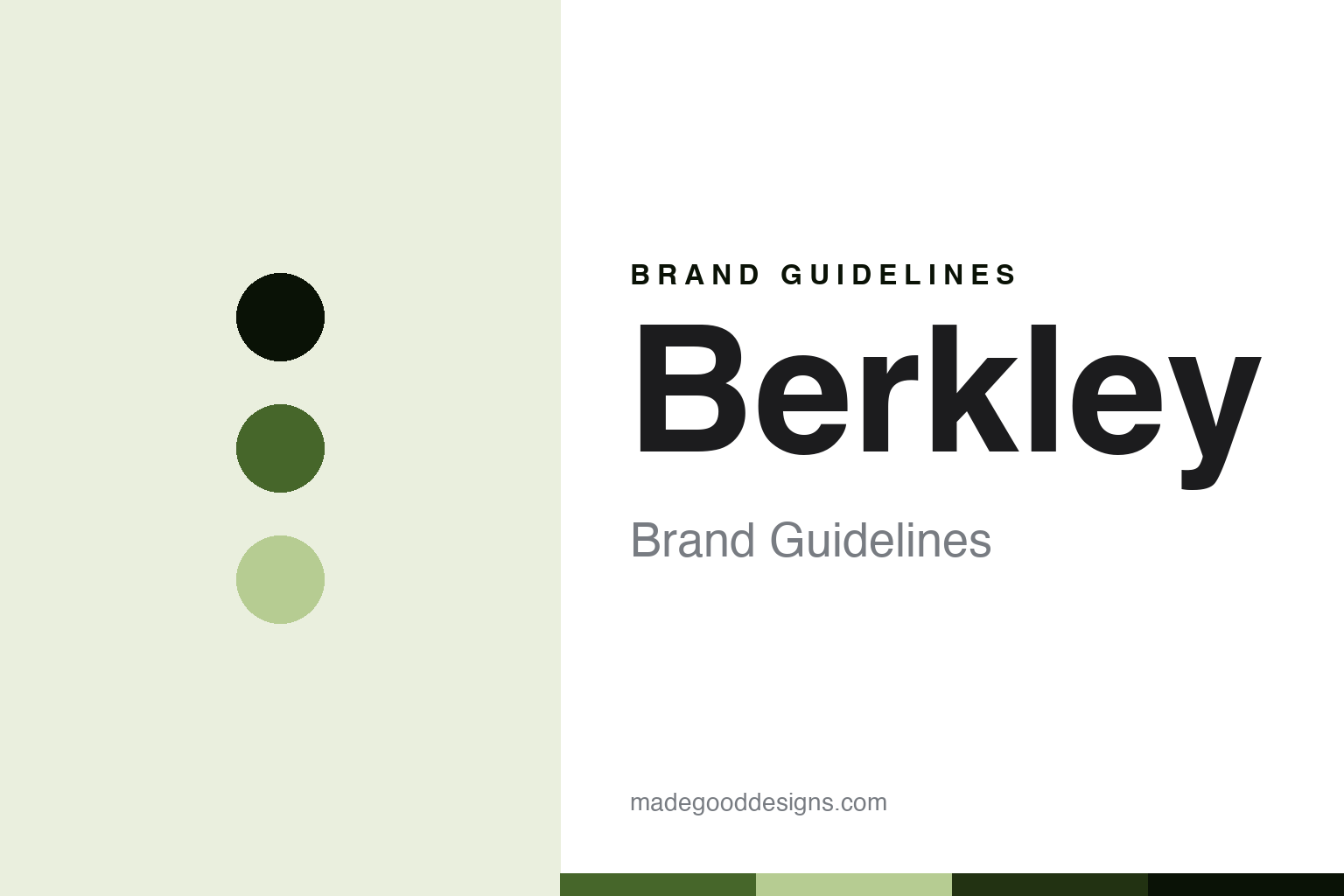
Berkley Brand Guidelines
The line and bait, American-owned.
Aa
Two constants: a leaf-green palette and a tackle-sans register. Abstract homage — not a Berkley product or mark.
The line and bait, American-owned
Berkley is the American line and soft-bait maker of 1937 — Trilene and PowerBait from Spirit Lake, Iowa, now a Pure Fishing brand.
Berkley follows the reel makers as the consumables house — the line and soft-bait name that started with a teenager tying flies in Iowa and became the spool most anglers have used without thinking about who owns it. Berkley makes fishing line and soft baits, and its answer to who owns your tackle is a small-town origin story now anchoring a private-equity portfolio. A spool, from Iowa.
Its identity is the line and bait, American-owned. Berkley’s Trilene line, its PowerBait scent and its place under Pure Fishing are what this round is about. A spool and a bait, from Spirit Lake. The line and bait, American-owned.
(Honest notes, so the story stays precise. Berkley — at berkley-fishing.com — makes fishing line and soft baits: Trilene monofilament (introduced 1959) is the icon, alongside PowerBait and Gulp! scented baits and FireLine braid. It was founded in 1937 in Spirit Lake, Iowa by Berkley Bedell, who began at sixteen tying flies; Bedell later became a United States Congressman before handing the company to his son. On where it is made — a theme of this round — Spirit Lake is the origin, and Pure Fishing retains operations there, but current per-product manufacturing is not publicly specified, so we do not claim any specific line is made in the USA. On ownership — the heart of this round — Berkley is a Pure Fishing brand, sister to Abu Garcia, Penn and Fenwick, and Pure Fishing has been owned by Sycamore Partners since January 2019; its corporate home has since moved from Spirit Lake to Columbia, South Carolina, so we treat Spirit Lake as origin rather than current headquarters. Its marks are IP we describe but do not reproduce, and there is no official brand hex; these tones are an unofficial interpretation. This is design commentary and does not promote any product.)
Colour
Berkley lives in a leaf green. Click a swatch to copy the hex.
Berkley’s identity is practical, made and owned — a leaf green, an ink, a meadow, a deep green, and a paper. The palette leans leaf green and meadow: a freshwater register that nods to the lake and reed world of line and bait. It signals a workaday tackle maker with an Iowa origin. The honest caveat: with no published brand hex, these values are an original, unofficial interpretation, not first-party colours.
The lesson is a leaf green signals a practical, freshwater identity. Berkley’s world is a practical, everyday object with a corporate present. For designers, it is a reminder that a leaf green and a soft meadow can carry a tackle maker — the tone of the shoreline. Because these tones can fail as small text, keep type dark and let the colour live in the accents, palette and band. The takeaways: honour the origin town; keep where-made honest; name the owner; and treat any single hex as unofficial.
Typography
The register is a tackle sans — plain, practical, owned.
Berkley’s identity carries a plain, practical, owned spirit — a working consumable, not a fashion. A tackle sans captures the mood: clear, honest and unpretentious, the register of a spool of line and a jar of bait. Set in a leaf-green palette, the tackle sans feels plain and practical — exactly the personality Berkley carries. It is utility rather than a logo, mirroring monofilament and scent-soaked plastic. (Berkley’s real wordmark, and Trilene and PowerBait, are things we describe but do not reproduce, and the exact typeface is not ours to use.) Because it is not ours to use, the honest description is “a tackle-sans spirit,” shown here in a stand-in. The type behaves like the product: plain, practical and owned.
Aa
A tackle-sans spirit — plain and practical. (Specimen set in Work Sans, a tackle-sans STAND-IN; NOT the Berkley logo.)
Who owns your tackle
Berkley stands for the line and bait, American-owned.
Berkley sits in the round as the consumables house. A leaf-green palette, a tackle sans and a spool of line make one thing — the line and bait, American-owned — the whole identity: practical, made and owned. The Spirit Lake origin is the differentiator, and the Pure Fishing parentage is the meaning. The point is a teenager’s fly-tying business from 1937 that became the line on countless reels and now anchors a private-equity portfolio.
Put to work, the identity is a small-town origin told straight, as design. A maker in this spirit would keep the founder’s story while a portfolio owner runs the plant — a spool American by birth. A reader in this spirit would keep the facts right: it was founded by Berkley Bedell in Spirit Lake, Iowa in 1937; Trilene arrived in 1959; Bedell went on to Congress; Spirit Lake is the origin, but current per-product making is unstated and the corporate home has moved to South Carolina; and the owner is Pure Fishing, held by Sycamore Partners since 2019. Berkley sits in the round’s parent thread at the Pure-Fishing end with Abu Garcia, Penn and Fenwick, and it stands as the round’s clearest small-town-to-portfolio arc. The honest editorial moves are to credit Berkley Bedell, to keep where-made unclaimed, and to name the owner. The lesson Berkley teaches is that even the most homespun origin can end up inside a private-equity stable — and the founder’s story does not change who signs the cheques now.
For designers and brand-builders, Berkley continues who owns your tackle: keep the founder’s story — but name the owner. The lessons: honour an origin without overclaiming the making; separate origin town from current headquarters; name the parent; never reproduce a logo; and treat any single hex as unofficial. It is also a reminder to stay precise: Berkley is the American line and soft-bait maker of 1937, Trilene and PowerBait from Spirit Lake, Iowa, now a Pure Fishing brand — with the palette here an unofficial interpretation. Read that way, Berkley is less a spool than a lesson: a boy’s fly business became a household name and then a portfolio asset, and all three are true at once. The lesson for a brand is that a warm founding story and a corporate present coexist, and a reader trusts the brand that tells both over the one that hides the second. Berkley made the-line-and-bait-American-owned the identity — proof that the friendliest origin can still end in a stable of brands.
Explore & save
Keep Berkley’s identity on hand — save it to a board in the Made Good inspiration library.
Berkley identity set
Pin the leaf-green palette and the tackle-sans register to your own board.