Lacnor Brand Guidelines
The 1978 juice and milk brand of Dubai’s NFPC.
Aa
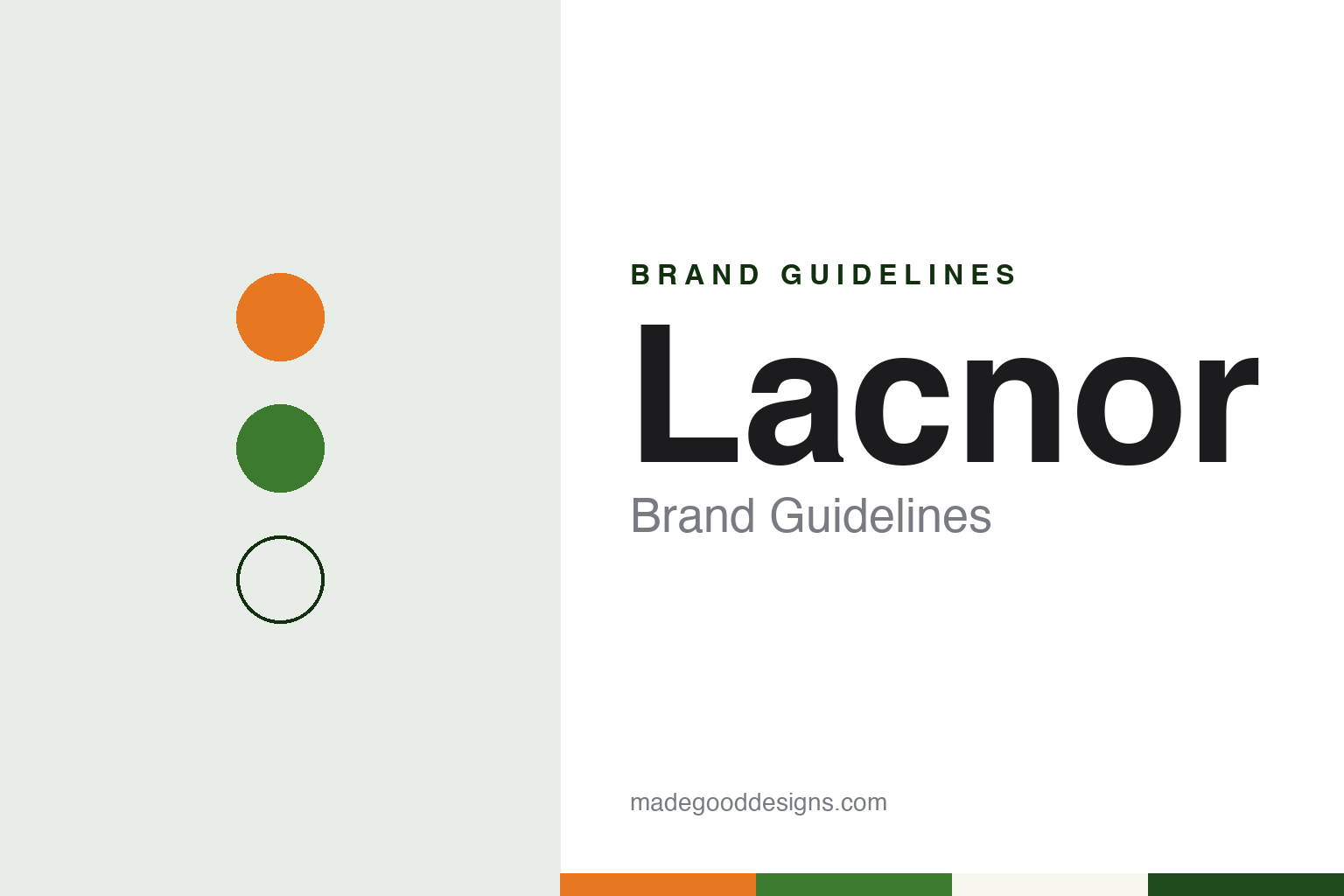
Two constants: a Lacnor orange, green and milk white palette and a rounded friendly sans register. Abstract homage — not a Lacnor product or mark; no pack, logo or label is reproduced.
Since 1978
A milk plant outside Abu Dhabi, then a brand.
Lacnor is the juice and milk brand of National Food Products Company, known as NFPC. The brand’s own website says Lacnor was established in 1978 and has since become “a staple in millions of homes,” and it carries the NFPC logo with a link to the group’s site. NFPC’s brand page puts it the same way, describing Lacnor as a name that has spent some 40 years “dedicated to enter the homes of millions across the region.”
The group behind it is older than the brand. NFPC says it was founded in 1971, and its published timeline starts that year with the first MILCO plant, set up “on the outskirts of Abu Dhabi.” In 1976 it added a trading division for European dairy products, and in 1977 MILCO began making its own plastic cups. The timeline’s next entry, for 1978, is Lacnor.
Today NFPC describes itself as headquartered in Dubai, with more than 4,500 staff in locations across the UAE and the region and exports to more than 40 countries in the Middle East, Africa and Asia. Its brand list runs to nine names: Oasis, Lacnor, Blu, Laban Up, Gulf & Safa, Melco, Milco, Royal Bakers and Aqua Fresh. Lacnor sits in that list as the group’s juice and milk label, alongside the water, bakery and dairy names that grew up around it over the following decades.
Lacnor therefore arrived seven years after NFPC’s first plant and two years after the group began trading European dairy products, and it has stayed on the group’s brand list ever since.
Colour
Juices, milk and a desert dairy.
Lacnor’s website divides its range into three families: juices, dairy and condiments. In its own words it offers “the UAE’s favorite Lacnor juices and milk,” and it says its juices are “selectively sourced from where these fruit trees naturally thrive.” Within the juice family it names a 100% Juice range, and within dairy it lists a flavoured-milk line alongside its plain milk. The brand describes the whole range as “suitable for the whole family.”
On where the products are made, NFPC is brief. Its about page says the group runs “a dairy production facility in the middle of the Arabian Desert,” without naming the site. The timeline records that in 2015 Lacnor’s production capacity rose by 20% after new processing equipment was installed.
The larger manufacturing story is the group’s Megaplant. NFPC says construction began in 2016, and its Megaplant page places the project in the Khalifa Industrial Zone Abu Dhabi (KIZAD), on a site of 752,000 square metres. The page describes it as a relocation that brings the manufacturing units of Lacnor, Milco, Gulf & Safa and Oasis together in one cluster, with fully automated production and storage. NFPC presents the Megaplant as the place where Lacnor is to be made alongside its sister brands.
Lacnor also sits next to a second juice name inside the group. NFPC’s timeline says it launched Melco juice drinks in 2011, in the same year as its Royal Bakers bakery line, so the group runs two juice labels side by side.
Typography
Design and documentation.
The seven brands in this group all make food and drink, and they come from the United Arab Emirates, Saudi Arabia and Oman: Al Kabeer, Sunbulah, Al Rawabi, Mazoon, Lacnor, Al Ain and Rani. Gulf food and drink brands in general sit at many different points in the trade, from family firms that still carry a founder’s name to names that now belong to much larger food groups, and a single brand can be sold everywhere from a corner grocery to a hypermarket aisle.
A food or drink brand’s identity is usually carried less by a single product than by a pack, a name and the meal or refreshment it promises, because the company behind the name may have changed hands, moved its factory or grown far beyond the town where it started. That makes the questions behind each name worth asking plainly: who started it, who owns it now, and where its products are actually made and packed.
Each guide separates what independent sources record from what the company says about itself — its founding story, its owners over time, where its products are made and how its packaging has changed — and marks plainly what rests only on the company’s own word.
Aa
A rounded friendly sans for a family juice and milk brand. (Specimen set in Nunito, a sans STAND-IN; NOT the Lacnor logo.)
Lacnor
One brand inside a Gulf food group.
Lacnor’s siblings explain much of its place in the market. NFPC says it opened the UAE’s first bottled-water plant, Oasis, in Abu Dhabi in 1984; that claim is the company’s. In 1993 it created NFPC Oman to trade Arla and Milco products and to make Oasis water there, and in 1998 it opened a second water plant in Jebel Ali. It launched the still-water brand Aqua Fresh in 2001, began producing its own PET bottles in 2002 and, in 2006, launched Blu, which it calls the UAE’s first locally made sparkling water. In 2012 it bought Gulf & Safa and Mehdi Foods Oman. The group’s homepage now also highlights what it calls the region’s first boxed drinking water, sold under the Oasis name.
Online, Lacnor presents itself in English and Arabic. Its website’s style sheets load Co Headline in bold for display text, Acumin for body copy and a Kufi-style Arabic face in regular and bold, a web pairing rather than a documented logo specification. The site’s menus also point to community events and to “initiatives for the planet,” and the brand says its purpose includes caring for animal welfare and supporting education from an early age.
One name trap is worth knowing. The Lacnor Mine, which appears in English Wikipedia’s lists of Canadian mines, was a uranium mine near Elliot Lake, Ontario, run by Rio Algom between 1956 and 1960. It has no connection with the Emirati juice and milk brand.
For a design guide, Lacnor shows how a single juice and milk name can hold its place for more than four decades inside a wider family of water, bakery and dairy brands. Compare Al Rawabi, another Emirati dairy and juice brand, and Almarai, the Saudi dairy and juice company. For this guide we use a juice orange, a leaf green and a milk white with a rounded sans, an unofficial interpretation; no product or logo is reproduced.
Explore & save
Keep Lacnor’s identity on hand — save it to a board in the Made Good inspiration library.
Lacnor identity set
Pin the Lacnor orange, green and milk white palette and the rounded friendly sans register to your own board.