Ledo Brand Guidelines
The Zagreb ice cream maker and its Ledo Medo bear.
Aa
Two constants: a frost blue, cherry red and vanilla cream palette and a rounded friendly sans register. Abstract homage — not a Ledo product or mark; no pack, logo, mascot or ice cream is reproduced.
An ice-cream machine at the dairy
A city dairy, a stick ice cream and a new factory.
Ledo began in Zagreb in 1958, not as a company of its own but as a department of the city dairy, Zagrebačka mljekara. The Hrvatska tehnička enciklopedija, the technical encyclopedia of the Miroslav Krleža Institute of Lexicography, says the dairy had been looking at ice cream since the early 1950s, and that its purchase of a semi-automatic ice-cream machine in 1958 started the first industrial ice-cream production in Yugoslavia. Ledo’s own history says the dairy is the business now known as Dukat.
The first products were ice creams on a stick. The encyclopedia names five — Snjeguljica (“Snow White”), Lado, Tongo, Eskimo and Moka — and puts output at about two million pieces a year. Snjeguljica is the one the company still calls a cult product, and Croatian Wikipedia describes it as the first industrial ice cream introduced to the Croatian market.
The brand name came with a building. As demand grew, a new factory called Ledo went into operation; the company dates it to 25 September 1965 and says the day is still marked as “Ledo day.” Annual output rose to about 40 million stick ice creams, the encyclopedia says, and the range spread to ice cream in cups and cones, frozen cakes, frozen fruit and vegetables, puff pastry and whipped cream. The encyclopedia’s illustrations include 1960s packaging for two early lines, Punč and Lado, and a 1966 production line for šlag u čašici, whipped cream in a cup.
Independence came in stages. In 1972 Ledo became a separate unit within the dairy, and in 1976 it split off as a work organisation in its own right, by then leaving the Dukat group, the encyclopedia says. Two years later it received the City of Zagreb Award for its business, with about 500 employees.
Colour
A cartoonist’s bear and a growing freezer cabinet.
The best-known piece of Ledo’s identity is not a pack but a bear. Ledo Medo — “medo” is a familiar Croatian word for a bear — was drawn by the cartoonist Slavko Marjanec. The encyclopedia dates the character to 1964 and calls it the company’s symbol and trademark; the company places its creation around the opening of the 1965 factory. Ledo says the bear has changed its look somewhat over the years but remains the company’s trademark, and it describes Ledo Medo as a legendary Croatian brand in its own right.
The factory grew through the 1980s. With its head office in Zagreb, Ledo opened branches across Yugoslavia, and in 1983 a new factory opened in the Zagreb district of Žitnjak, the encyclopedia says. By then the business rested on four product groups — ice cream, frozen dough products, whipped cream and chestnut purée — with 785 employees. At the end of the decade, four major floods caused the company heavy damage, according to both the encyclopedia and the company.
Today Ledo’s website lists ice-cream lines including King, Macho, Quattro and Plazma, alongside frozen cakes and a “Ledo Legende” range. Beyond ice cream, the company sells frozen vegetables and fruit, fish, pastry, ready meals and meat. It calls itself the largest domestic maker of ice cream in Croatia and the largest distributor of frozen food there, with more than 1,000 employees. The company also says its products reach shops through more than 500 refrigerated trucks and more than 100,000 freezer cabinets across the region, and that it is investing in new capacity in Zagreb for premium ice cream.
Typography
Design and documentation.
The seven brands in this group all make food or drink, and all of them come from Croatia: Dukat, Vindija, Zvečevo, Franck, Cedevita, Jamnica and Ledo. Croatian food and drink brands in general sit at many different points in the trade, from firms that still carry the name of the town or region where they started to names that now belong to much larger food groups, and a single brand can be sold everywhere from a corner kiosk to a supermarket shelf.
A food or drink brand’s identity is usually carried less by a single product than by a pack, a name and the everyday moment it promises, because the company behind the name may have changed hands, moved its production or grown far beyond the town where it started. That makes the questions behind each name worth asking plainly: who started it, who owns it now, and where its products are actually made and packed.
Each guide separates what independent sources record from what the company says about itself — its founding story, its owners over time, where its products are made and how its packaging has changed — and marks plainly what rests only on the company’s own word.
Aa
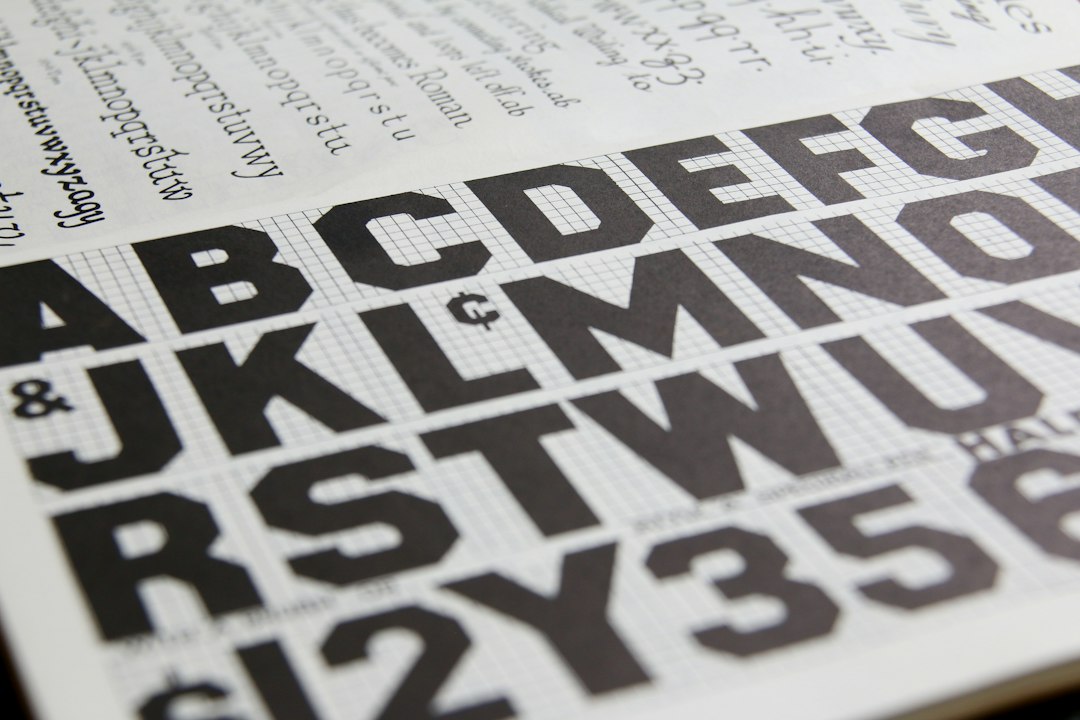
A rounded friendly sans for an ice-cream brand fronted by a cartoon bear. (Specimen set in Baloo 2, a sans STAND-IN; NOT the Ledo logo.)
Ledo
Privatisation, Agrokor, Fortenova and Nomad Foods.
After the break-up of Yugoslavia, Ledo went through privatisation like most formerly socially owned companies. It became a joint-stock company in 1992, and two years later Agrokor became its majority shareholder, both the encyclopedia and the company say. Under Agrokor, Ledo expanded across the region. In 2000 it bought an ice-cream factory in Čitluk, in Bosnia and Herzegovina, and set up Ledo Čitluk; in 2002 it bought the fish processor Irida in Daruvar; in 2004 it bought the Hungarian ice-cream maker Baldauf, now Ledo Kft; and in 2006 it took over the Sun brand in Montenegro, the encyclopedia says. In 2012 it acquired a majority of the Belgrade ice-cream and frozen-food maker Frikom and all of Ledo Podgorica from Agrokor; Croatian Wikipedia records that the Frikom share purchase was reported to the market in January 2013.
In 2017 Agrokor went into crisis, which the company says was resolved through a special law passed that year, after which Ledo became part of the restructured group, Fortenova, and was renamed Ledo plus. On 29 March 2021 Fortenova agreed to sell its frozen-food business — Ledo plus, Ledo Čitluk and Frikom — to the UK-based Nomad Foods, Croatian Wikipedia says, and Nomad Foods announced on 30 September 2021 that it had completed the acquisition. Its release named Ledo and Frikom as the business’s two anchor brands, sold in markets new to Nomad Foods including Croatia, Serbia, Bosnia and Herzegovina, Hungary, Slovenia, Kosovo, North Macedonia and Montenegro.
Ledo now sits in what the company calls Nomad Foods’ Adriatic cluster, alongside Frikom in Serbia and North Macedonia and Ledo businesses in Bosnia and Herzegovina, Hungary, Slovenia, Montenegro and Kosovo; its head office remains in Zagreb. Its brands share a portfolio with names such as Birds Eye, Findus, Iglo and Aunt Bessie’s.
For a design guide, Ledo shows how a cartoon bear and a first stick ice cream can carry a regional brand through privatisation, three owners and more than six decades. Compare Birds Eye and Aunt Bessie’s, two other Nomad Foods brands. For this guide we use a frost blue, a cherry red and a vanilla cream with a rounded sans, an unofficial interpretation; no product or logo is reproduced.
Explore & save
Keep Ledo’s identity on hand — save it to a board in the Made Good inspiration library.
Ledo identity set
Pin the Ledo frost blue, cherry red and vanilla cream palette and the rounded friendly sans register to your own board.