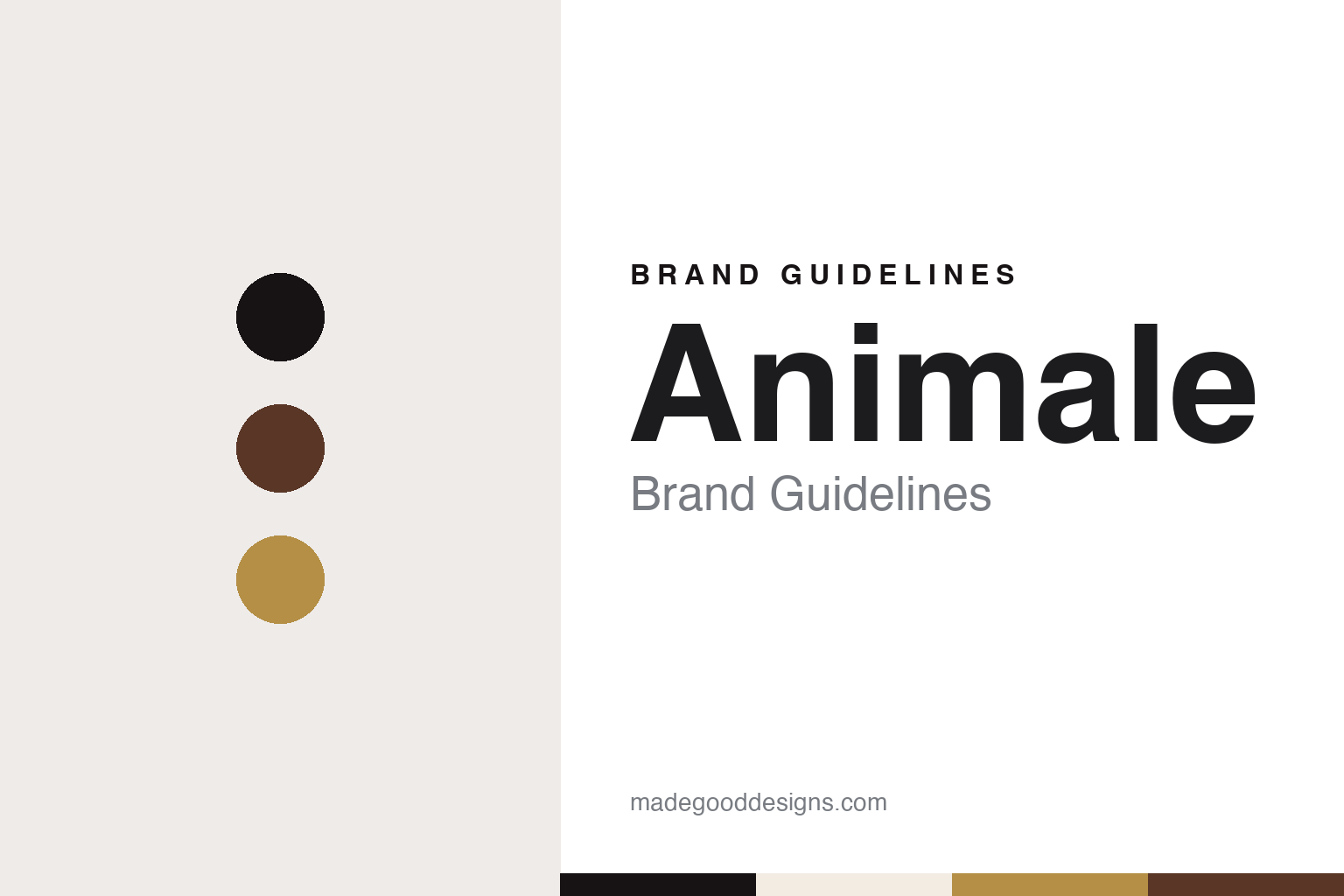
Animale Brand Guidelines
A Leblon label of silk, leather and runway shows.
Aa
Two constants: a silk black, leather and gold palette and a high-contrast serif register. Abstract homage — not an Animale product or mark; no garment, print, logo or campaign image is reproduced.
A shop in Leblon
Siblings, a knitwear boutique and a new name.
Animale is a Rio de Janeiro womenswear label founded in 1991 by the siblings Claudia and Roberto Jatahy, later joined by their sister Gisella, according to a 2016 profile in Vogue Brasil. Before Animale, Claudia had opened a knitwear boutique in 1989 in Itaipava, the mountain resort district above Rio, and brought her brother in as a partner. In 1991 the siblings opened a shop in Leblon, already under the Animale name, to move away from a business that depended on holiday and weekend trade, the magazine reported.
The label began with knitwear and jersey, then made silk and leather its mainstays and built a full wardrobe around them, adding lingerie, resort, evening and jewellery lines, Vogue Brasil says. The founders were in their early twenties and hired experienced people from Rio’s fashion trade to grow with the brand, according to the profile. Claudia Jatahy became vice-president of style, and Roberto Jatahy went on to run the group that grew around the label.
Growth came through the company’s own stores rather than franchises. Three opened in São Paulo in 2000 alone, and by April 2016 Vogue Brasil counted 74 Animale stores across Brazil; Repórter Brasil put the figure at more than 80 in April 2019. Gisella Jatahy later stepped back from day-to-day management and remained a shareholder, according to the 2016 profile.
Colour
Runways, designers and a jewellery line.
Animale has used the runway to set its image. From 2005 it showed its collections at Fashion Rio and later at São Paulo Fashion Week, with models including Karlie Kloss, Joan Smalls and Raquel Zimmermann, who was the face of the label for seven years, Vogue Brasil reported in 2016. The Bahian designer Vitorino Campos took charge of the runway collections from July 2014, working with the creative director Beth Nabuco. In March 2016 the label added an activewear line, Move.
Campos left in April 2019 after five years, Vogue Brasil reported. Claudia Jatahy, who had been concentrating on the brand’s jewellery label, returned to lead a creative team that again included Beth Nabuco and Luis Fiod, with the style coordinator Bel Yunes heading the collections alongside her. The jewellery label is Animale Oro, which ELLE Brasil described in 2021 as the brand’s jewellery arm, with Claudia Jatahy as its creative director.
For its thirtieth anniversary in 2021 Animale released “Memórias,” a collection that reissued popular designs from past seasons, ELLE Brasil reported. It brought back prints co-created with the artist Antonio Bokel, a long-time collaborator whose work had first appeared in a winter 2010 collection, and revisited two seasons: summer 2015, inspired by the fauna and flora of the Amazon, and winter 2015, “Rota da Seda,” named after the silk route. Claudia Jatahy told the magazine the label was known for silk pieces in vibrant colours and prints. The anniversary also introduced Animale Vintage, in which customers traded in pieces from past collections for credit towards new ones.
Bel Yunes, at Animale since 2003, is now its style director. In March 2025 O Globo reported on her winter 2025 collection, Urban Flora, which set lace against twill and gave a strong place to the leather line.
Typography
Brazilian fashion and footwear.
Brazil’s fashion and footwear brands cover a wide range: rubber flip-flops and plastic jelly shoes, women’s shoes and handbags, beachwear and printed dresses, and men’s basics and denim. Many of them sit inside a small number of listed groups, and their corporate pages set out founders, owners and stock-market listings alongside the product ranges.
Footwear is led by large manufacturers. Alpargatas, founded in São Paulo in 1907, has made Havaianas since 1962, and Portuguese Wikipedia describes it as an Itaúsa company since its 2017 change of ownership. Grendene, founded in Farroupilha in 1971 and listed on the São Paulo stock exchange since 2004, makes Melissa, Ipanema and Rider, with plants in the north-eastern states of Ceará and Bahia, according to Portuguese Wikipedia.
Clothing and women’s shoes have consolidated too. Portuguese Wikipedia says Azzas 2154 was formed in 2024 from the merger of Arezzo&Co, the Belo Horizonte shoe group behind Arezzo and Schutz, and Grupo Soma, the Rio de Janeiro group built on Animale and Farm, which had bought Cia. Hering in 2021. Ownership in the sector changes often, so each guide in this series states its brand’s owner as a dated fact.
These brands present themselves through campaigns with well-known faces, collaborations with foreign labels and their own stores and brand spaces, from Galeria Melissa in São Paulo to Casa Ipanema in Rio de Janeiro. This guide sets out what can be checked about each brand — who founded it, who owns it and where it says its products are made — and marks clearly what rests only on the company’s own word.
Aa
A high-contrast serif for a label of silk and evening wear. (Specimen set in Cormorant Garamond, a serif STAND-IN; NOT the Animale logo.)
Grupo Soma
The label that started a group, and its labour record.
Animale became the base of a fashion group. In 2010 it joined with Farm, the Rio label founded in 1997, to form Grupo Soma, according to the company history published by Azzas 2154 and Portuguese Wikipedia. By 2016 the group also held A.Brand, which began in 2009 as an Animale label, FYI and Fábula, and had bought Foxton and Vitorino Campos, Vogue Brasil reported. Soma listed on B3 in July 2020 and took control of Cia. Hering in 2021, Portuguese Wikipedia says. It then combined with Arezzo&Co, and the merger took effect on 31 July 2024 as Azzas 2154, the Diário do Comércio of Belo Horizonte reported.
The label also has a labour record. In December 2017 the investigative outlet Repórter Brasil reported that labour inspectors from the São Paulo regional labour superintendency, after inspecting three subcontracted sewing workshops in greater São Paulo in September 2017, had held Animale and A.Brand responsible for work in conditions analogous to slavery, citing exhausting hours and degrading conditions; ten immigrant workers were involved. Grupo Soma said it had not known of the conditions, was cooperating with the authorities and was tightening checks on its supply chain. On 3 April 2019 Animale was added to the federal government’s register of employers found using such labour, known as the “lista suja,” Repórter Brasil reported. Animale said a supplier had subcontracted the sewing without its consent and that it had since made supervision of its production chain stricter.
Ownership is changing again. On 2 September 2026 Azzas 2154 announced a binding agreement between its two main shareholder blocs to split into two listed companies, Mercado & Consumo reported, with Animale going to Soma, led by the Jatahy bloc, alongside labels including NV, Maria Filó, Cris Barros and Reserva, while Arezzo and Hering would go to Arezzo&Co and Farm Rio would sit in a company owned by both. Brazil’s competition authority, CADE, cleared the reorganisation without restrictions in October 2026, the Diário do Comércio reported, while board and shareholder approvals were still required. The split was agreed in September 2026 and was not completed at the time of writing.
For a design guide, Animale shows how a label can hold its identity through materials, runway casting and recurring artist collaborations rather than through a logo alone. Compare Farm Rio, its partner in forming Grupo Soma, and Arezzo, the shoe brand it merged with in 2024. For this guide we use silk black, a saddle-leather brown and an antique gold with a high-contrast serif, an unofficial interpretation; no product or logo is reproduced.
Explore & save
Keep Animale’s identity on hand — save it to a board in the Made Good inspiration library.
Animale identity set
Pin the Animale silk black, leather and gold palette and the high-contrast serif register to your own board.
Source & notes
Frequently Asked Questions
What font can I use to match the Animale look?
This guide describes Animale’s type as “A high-contrast serif for a label of silk and evening wear”. Its type specimen is set in Cormorant Garamond from Google Fonts as a stand-in; Cormorant Garamond is not Animale’s own lettering.
What colours are in the Animale palette?
This guide’s Animale palette is Silk black #171314, Saddle leather #5A3626, Antique gold #B48F45, Ivory #F2ECE3 and Paper #FBF9F6. The tones are the guide’s own unofficial interpretation, not official Animale hex codes.
When was Animale founded?
Animale was founded in 1991, in Rio de Janeiro, Brazil.
Who founded Animale?
On who started Animale, this guide’s facts panel reads: Claudia and Roberto Jatahy, joined by Gisella Jatahy.