At-Sunrice Brand Guidelines
The Singapore culinary academy founded in 2001.
Aa
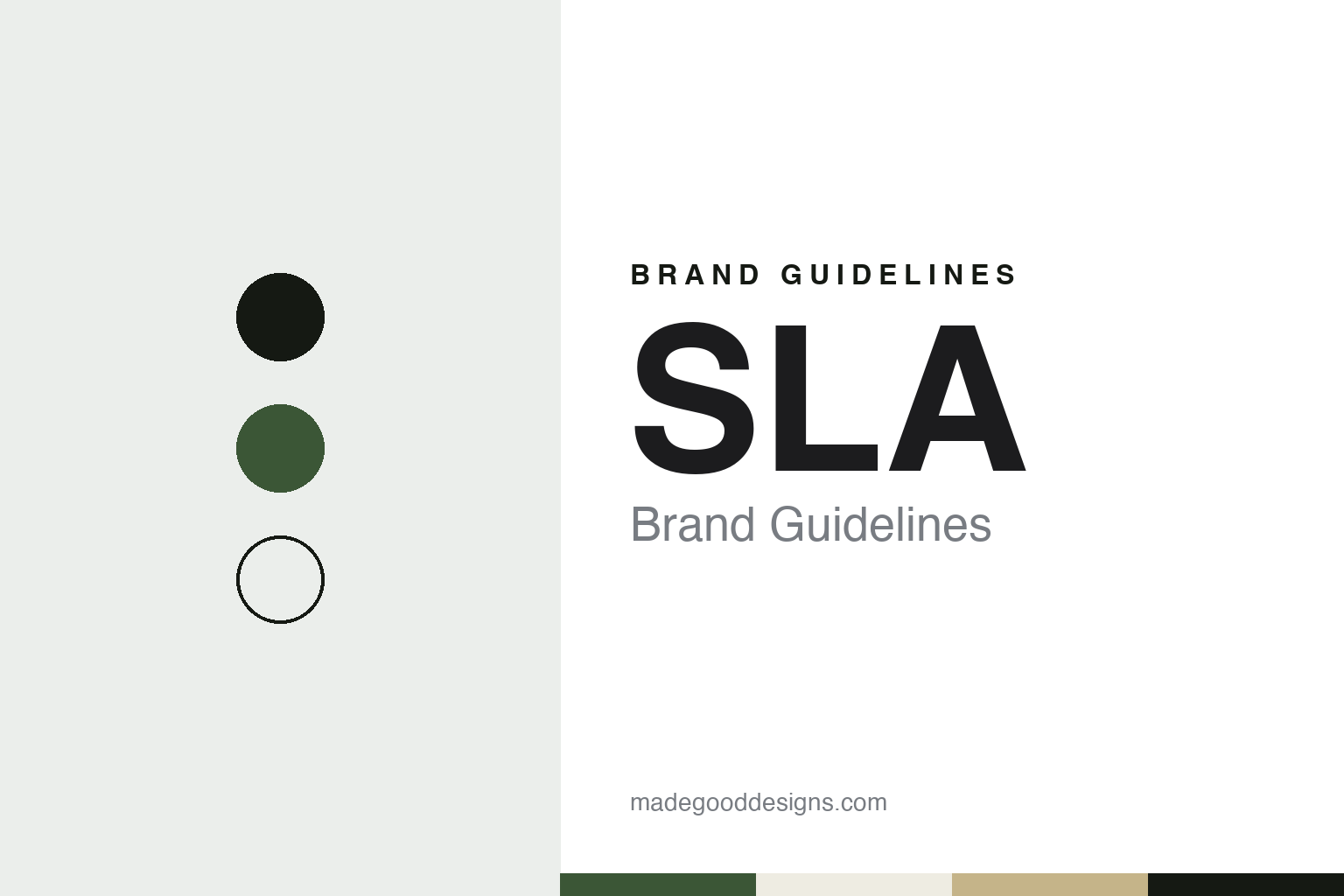
Two constants: an At-Sunrice leaf green, turmeric and cream palette and a Rounded sans register. Abstract homage — not an At-Sunrice product or mark; no crest, logo or nameplate is reproduced.
Fort Canning, 2001
A culinary academy in a Singapore park.
At-Sunrice GlobalChef Academy is a private culinary school in Singapore. Its website says it was established in 2001, and The Jakarta Post, reporting from the academy in July 2008, also gave 2001 as the year it was set up. The academy names Tan Kwan Siu as its founder and director; the founder also chairs its academic board, according to the governance list on its website, which names two further directors.
The school began at Fort Canning Park, the hill park in central Singapore. The Jakarta Post described the academy there in 2008, taught by 12 teachers from countries including Japan, Switzerland, India, China, Malaysia, France and Thailand as well as Singapore. Its head at the time, Mizuho Hara, told the paper that the academy had some 200 students from 25 countries, among them the United States, the United Kingdom, Turkey, Mexico and Indonesia.
The teaching mixed cuisines. The 2008 article described students from Bali cooking an Indian dish, and listed Italian, Malaysian, Thai and Singaporean dishes, along with Indonesian ones such as rendang and soto ayam, among those taught. Today the academy describes its teaching in pairs: “East and West, Old World and New World cuisines, herbs and spices, innovation and technology.” Hara said the school taught Western and Eastern cooking and kept the original components of each recipe unchanged, so that students learned traditional cookery from both. She listed four programmes: diplomas in culinary crafts and service excellence, in pastry and baking and in advanced culinary placement, and a two-week short course for visitors from abroad.
Students also worked in restaurants while they studied. One told the paper that he left class at midday to work in a French restaurant in Singapore, and that the teachers did not stop students working outside.
Colour
From the park to Tai Seng.
In 2011 At-Sunrice opened a new academy in Tai Seng, built around the national Workforce Skills Qualifications (WSQ) system, its website says. It offered diplomas in culinary arts, pastry and bakery, food and beverage management and beverage service, as well as WSQ continuing-education modules for people already working in the trade. The website describes the building’s rooms: a multi-purpose hall used for lectures and demonstrations, a training restaurant with banquet and buffet service and its own production kitchen, a coffee and tea lab run with Nespresso, a wine lab with a bar for beverage and mixology training, and separate pastry, bakery, Western and Asian kitchen labs, most of them laid out for about 24 trainees.
The school works within Singapore’s continuing-education framework. Its website says it has been recognised since 2007 as a Continuing Education and Training (CET) Institute for culinary and food and beverage management, a status originally conferred by the Workforce Development Agency, continued under SkillsFuture Singapore and now administered by the Skills and Workforce Development Agency. The academy also describes itself as EduTrust-certified, a certification it says is given to private education institutions that meet seven sets of standards, and lists its link with Worldchefs, the World Association of Chefs’ Societies.
Its teaching model is what the academy calls a “synchronised study-apprenticeship rotation”, alternating classroom study with work placements. It has signed degree articulation agreements with Johnson & Wales University in the United States, the Technological and Higher Education Institute of Hong Kong and the University of West London, the website says, and it lists degree-pathway programmes with partners in London and the United States alongside its own diplomas, career diplomas, certificates and short courses, including traditional Chinese and Malay hawker-fare classes and a gelato programme.
Typography
Design and documentation.
Culinary and pastry schools present themselves through a small set of public signs: a school name, a crest or logo, a colour scheme and a short descriptive line. Some names carry a symbol. Le Cordon Bleu takes its name from the blue ribbon of a French royal order, English Wikipedia says, and guests cut a blue ribbon when its new Paris campus opened in 2016, So Good magazine reported. Others come from a place: Ferrandi Paris is linked to the Paris street where its workshop school was installed in 1958, French Wikipedia says.
Ownership shapes how a school describes itself. Ferrandi belongs to the Paris Île-de-France chamber of commerce and industry, a public body, while Le Cordon Bleu was bought by Élisabeth Brassart in 1945, English Wikipedia says, and by André J. Cointreau in 1984, the Los Angeles Times reported, before growing into an international group. Other schools are run by education groups, families or universities; this guide reads their own pages on founders and history alongside dated press sources.
The buildings are part of the image. Schools publish their campuses, teaching kitchens, laboratories and training restaurants, where students cook and serve real guests. Press visits describe the same spaces from outside: in 2014 Le Figaro watched student chefs in whites with their names embroidered on the chest, and in 2016 So Good described a glass Paris building with a vegetable garden on its roof.
Programmes and diplomas appear under the names the schools give them, from vocational certificates to bachelor and master’s degrees, and official recognition is cited as the schools or dated sources state it. This guide sets out what can be checked about each school — who founded it, who owns it and where it teaches — and marks clearly what rests only on the school’s own word.
Aa
A rounded sans for a school that mixes East and West. (Specimen set in DM Sans, a sans STAND-IN; NOT the At-Sunrice logo.)
At-Sunrice
Spices, a hyphen and a global chef.
The academy’s own signature is spice. Since 2001, its website says, it has run SpiceOdyssey, a guided experience of the herbs and spices used in world cuisines, organised into ten themed “kingdoms” with names such as Aromatics, Spiritual, Rainbow, Survival & Preservation, History & Commerce and Craft, each built around one way in which herbs and spices are used. The programme has traditionally served as a capstone project for graduating cohorts, and is now also offered to the public as ticketed afternoon sessions.
Recent dates come from the academy’s own press releases. In July 2021 it launched an online shop selling takeaway meals prepared with students, as practice for food-delivery work. In September 2021 Worldchefs announced DigiChef Academy, an online learning platform designed by At-Sunrice, offering six-month online diplomas in culinary arts, pastry and bakery and food and beverage service. In October 2022 the academy launched five short “High-speed Diplomas” of up to six months, either fully online or as an accelerated programme taught at the academy over a five-day study week, and said it had partnered with Singapore food and beverage businesses to offer scholarships with work placements. Its website is published under At-Sunrice (Holdings) Pte Ltd.
The academy writes its name with a hyphen and a capital S, At-Sunrice, and runs “GlobalChef” together as one word in its full name, At-Sunrice GlobalChef Academy.
For a design guide, At-Sunrice shows how a school can build an identity around one family of ingredients, herbs and spices, as well as around its programmes. Compare Tsuji Culinary Institute, an Osaka culinary school founded in 1960, and Le Cordon Bleu, a Paris-founded network of culinary schools. For this guide we use a leaf green, a turmeric and a warm cream with a sans, an unofficial interpretation; no product or logo is reproduced.
Explore & save
Keep At-Sunrice’s identity on hand — save it to a board in the Made Good inspiration library.
At-Sunrice identity set
Pin the At-Sunrice leaf green, turmeric and cream palette and the Rounded sans register to your own board.
Source & notes
Frequently Asked Questions
What font can I use to match the At-Sunrice look?
This guide describes At-Sunrice’s type as “A rounded sans for a school that mixes East and West”. Its type specimen is set in DM Sans from Google Fonts as a stand-in; DM Sans is not At-Sunrice’s own lettering.
What colours are in the At-Sunrice palette?
This guide’s At-Sunrice palette is Leaf green #2E5A3A, Deep curry leaf #1C3624, Turmeric #C9921F, Rice cream #F4ECDA and Paper #FAF7F0. The tones are the guide’s own unofficial interpretation, not official At-Sunrice hex codes.
When was At-Sunrice founded?
At-Sunrice was founded in 2001, in Fort Canning Park, Singapore.
Who founded At-Sunrice?
At-Sunrice was founded by Tan Kwan Siu in 2001. At-Sunrice is known for Culinary, pastry and F and B diplomas; SpiceOdyssey.