Beaverbrooks Brand Guidelines
A Belfast family jeweller that kept its name in the family for over a century.
Aa
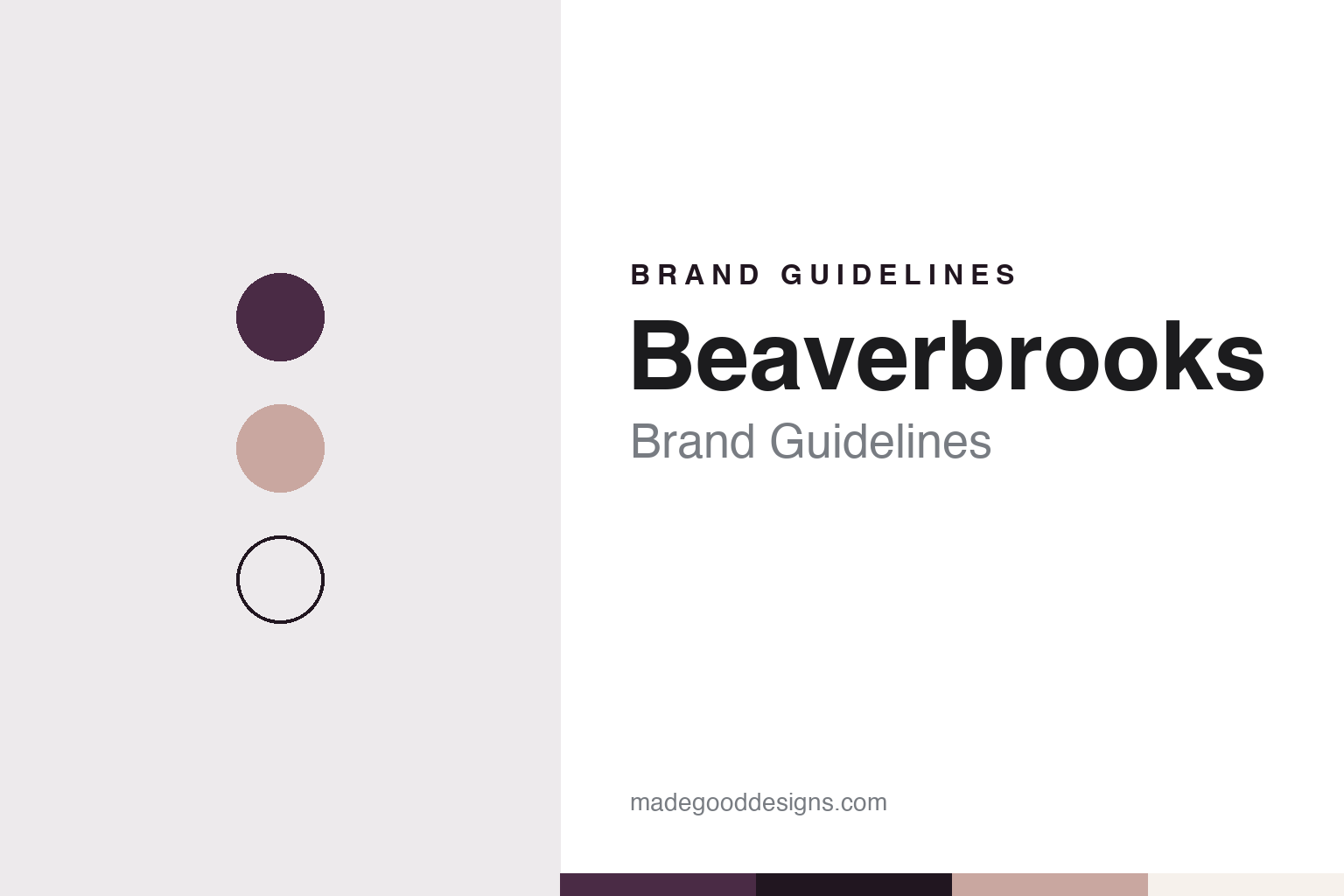
Two constants: a plum, rose and pearl palette and a high-contrast serif register. Abstract homage — not a Beaverbrooks product or mark; no logo, fascia or packaging is reproduced.
Adlestones
Three brothers, a Belfast start and a family name.
Beaverbrooks began in Belfast in 1919, according to English Wikipedia, which says the business was established with the opening of its first shop in the city. The company tells the same story in more detail: it says three brothers, Isaac, Harry and Maurice Adlestone, moved to Belfast that year to sell fine jewellery and gifts.
The official register fills in part of that timeline. Companies House lists the company as Beaverbrooks the Jewellers Ltd, an active private limited company incorporated on 11 December 1936 and classed as a specialist retailer of watches and jewellery, and records its previous name as Adlestones (Jewellers) Limited, used from 1936 until January 1999. So the Adlestone family name stayed on the legal entity for more than six decades, even as Beaverbrooks became the name over the shop door.
The business is now run from the Lancashire coast. In October 2019, the year of its centenary, TheBusinessDesk.com described Beaverbrooks as a family-owned business headquartered in Lytham St Annes, with 71 stores across the UK and Mark Adlestone as chairman. The company says he is the grandson of Isaac Adlestone, one of the three founding brothers. In September 2026 Retail Gazette again described Beaverbrooks as a family-owned jeweller and named Anna Blackburn as managing director.
Both TheBusinessDesk.com in 2019 and Retail Gazette in 2026 called it family-owned. The register shows no change of company since the 1936 incorporation, only the change of name in 1999.
Colour
Loupe, watch boutiques and a smaller core estate.
The most visible change in recent years has been a second name. In June 2021 TheBusinessDesk.com reported that Beaverbrooks had unveiled a new luxury concept called Loupe, with two boutiques opening that summer selling Rolex watches alongside diamond and fine jewellery. The report listed other Swiss watch brands for the new stores, including Omega, Hublot, Zenith and Breitling, and named the Japanese pearl house Mikimoto among the partner jewellery brands. A loupe is the small magnifying lens that jewellers use to inspect stones.
Loupe grew one store at a time. By September 2026 Retail Gazette reported that the company had recently opened its fourth Loupe boutique, in Sheffield.
The core estate has moved the other way. In March 2025 Time Out reported that Beaverbrooks, then with 89 branches, was closing seven stores, five in England and two in Scotland, between mid-March and early April that year; the list included East Kilbride, Dundee, Huddersfield and Croydon.
As of September 2026, Retail Gazette reported that Beaverbrooks operated 56 stores under its core name, alongside four Loupe boutiques and 22 branded outlets for watchmakers including Omega, Breitling, Tudor and TAG Heuer. The company’s own website, as of November 2026, gives a rounder picture of about 80 stores nationwide and more than 1,200 colleagues.
Typography
Showrooms, trays and parent groups.
High-street jewellery chains sell from small, bright shops in town centres and shopping centres, and much of their identity work happens at close range. The fascia over the door, the window display, the ring tray on the counter, the gift box and the carrier bag carry the name more often than any advertisement does, and several chains are run side by side by one parent group, each with its own sign, colours and tone of voice.
The windows do much of the talking. Rings, watches and gifts are usually grouped in themed displays that change with the retail calendar, from engagement season to Christmas, while counter trays, pouches and boxes repeat the same colours and lettering at hand scale. Catalogues, once printed and now mostly online, follow a similar structure: collections set out in grids, with plain product descriptions of metal, stone and size.
Naming tends to be literal. Collections are often named for a material, a cut, an occasion or a designer, and stores for the town or shopping centre they stand in, so the house name does most of the brand work. Where a chain stocks other makers’ watches and jewellery, its own mark sits beside theirs, and the shop has to frame those names without competing with them.
Corporate pages tell a second story. Many chains publish heritage timelines naming founders and first shops, then explain which parent group owns them today, from family companies to listed groups. Reading a chain’s identity therefore means reading two layers: the shopfront a customer walks past, and the ownership history that decides how many names a group keeps, merges or retires.
Aa
A high-contrast serif for a family jeweller. (Specimen set in Playfair Display, a serif STAND-IN; NOT the Beaverbrooks logo.)
Beaverbrooks
Three fascias under one family.
For a designer, the interesting thing about Beaverbrooks is how many names it now runs at once. There is the core Beaverbrooks store, which the company itself describes as a family jeweller since 1919. There is Loupe, a separate name created in 2021 for luxury watches and fine jewellery, with Rolex at its centre, according to TheBusinessDesk.com. And there are the single-brand watch boutiques, which by September 2026 numbered 22, Retail Gazette reported, and which carry the watchmakers’ own names on the door.
Each layer speaks differently. The core stores sell engagement rings, wedding rings, jewellery, watches and gifts, as the company’s website groups them. Loupe takes the name of a jeweller’s tool rather than the family’s. The branded boutiques follow the identity of the watch company rather than the retailer.
The company’s own history is told through the founders rather than through a logo or a building. Its website opens its story with the three Adlestone brothers and Belfast, and the register still shows the Adlestone name on the company until 1999. That pairing of an old family story with newer, separately named luxury stores is the main design lesson here.
The store count has moved up and down over the past few years. In July 2021 Retail Gazette reported that the company’s 72 stores had reopened in mid-April that year. In October 2022 TheIndustry.fashion reported that Beaverbrooks had opened an upsized store at Merry Hill shopping centre in the West Midlands: a 2,740 sq ft unit with a standalone TAG Heuer boutique, other watch brands including Omega, Breitling and Tudor, and a separate “diamond room” for consultations.
In November 2025 City A.M. reviewed the chain’s accounts for the year to 1 March 2025, filed with Companies House in September. The paper described Beaverbrooks as a family-owned chain headquartered in Lytham St Annes and established in 1919, and reported that the year’s results had been hit by an IT project that was abandoned and later restarted.
For a design guide, Beaverbrooks shows how a family retailer can keep one name for its everyday stores and open a second, separately named format for luxury watches without changing owner. Compare Goldsmiths, a jeweller that has sold Rolex since 1919 under a series of owners, and H. Samuel, another long-running British high-street jeweller. For this guide we use a deep plum, rose clay and pearl with a serif, an unofficial interpretation; no product or logo is reproduced.
Explore & save
Keep Beaverbrooks’s identity on hand — save it to a board in the Made Good inspiration library.
Beaverbrooks identity set
Pin the Beaverbrooks plum, rose and pearl palette and the high-contrast serif register to your own board.