Catit Brand Guidelines
The Hagen Group’s cat brand, launched in 1999.
Aa
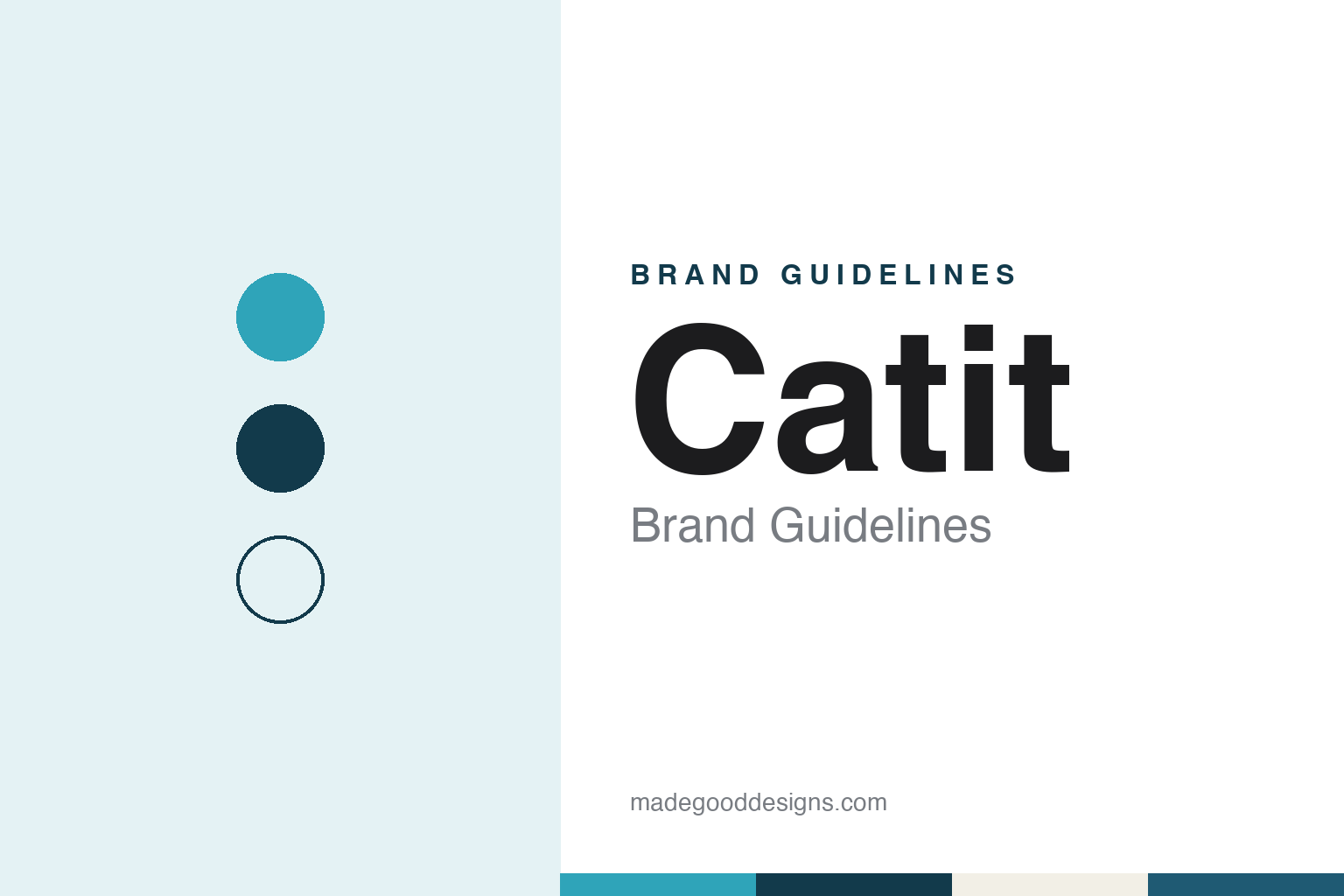
Two constants: a fountain teal, harbour navy and pea-husk palette and a rounded sans register. Abstract homage — not a Catit product or mark; no package, logo or litter box is reproduced.
A Montreal pet-supply family
From imported bird seed and aquariums to a brand for cats.
Catit is the cat-care brand of the Hagen Group, the family-owned pet-products company also known as Rolf C. Hagen Inc. English Wikipedia describes the group as a pet supplies company headquartered in Montreal, Quebec, and dates its founding to 1955. The company’s own timeline says its founder, Rolf C. Hagen, was a German immigrant who registered the business shortly after arriving in Canada.
The timeline describes a family firm built in stages. The company says Rolf’s brother Dieter Hagen joined in Montreal as head of sales in 1959, the same year the business opened its first office in Germany, and that a second brother, Horst Hagen, joined as head of purchasing in 1963. Hagen Industries began making wire cages and glass aquariums in 1974, the company says, and offices followed in the United Kingdom in 1982 and in France in 1989.
Aquarium and pet-food brands came before the cat range. The company dates the Fluval filter to 1975 and the launch of its Nutrience pet food in Canada to 1988; Exo Terra followed in 2000. Catit sits between them. The company’s timeline gives 1999 as the year Catit launched, and Catit’s own 25th-anniversary page, published in 2024, opens with the line “Founded in 1999, Catit has been around for a quarter century.”
The family has stayed in charge since. The company says Rolf Hagen Jr. took the lead in 2004 together with his brothers Tom and Mark, that the Hagen Family Foundation was set up in 2005, and that a new head office opened in Baie-D’Urfé, Quebec, in 2006. Offices in Malaysia in 2002 and Argentina in 2015 extended the group’s reach, according to the same timeline.
Colour
Pea husks, play circuits and a fountain shaped like a flower.
Litter is one strand of a much wider range. The Catit website sorts its products into dry and wet food, treats, drinking fountains, feeders and dishes, toys, furniture, grooming, carriers, cameras, cat litter, and litter boxes and accessories. The same name appears on a bag of litter, a water fountain and a piece of cat furniture.
In litter, the line is Go Natural, a clumping litter made from pea husks. Catit says it uses pea husks “that would otherwise be discarded,” mixes the fibres with starch, corn powder and guar gum as clumping agents, and compresses the result into pellets about 1.5 millimetres across. The company sells the pea-husk litter in vanilla and lavender scents and in an unscented version, alongside a multi-cat clumping variety.
The boxes that hold the litter belong to the same system. The Catit site lists the PIXI litter box and a matching PIXI scoop, the SmartSift litter box, and litter boxes fitted with what it calls the Airsift filter system. Two of the brand’s lines are also grouped on the site as design series, the Senses Design Series and the PIXI Design Series.
Catit’s anniversary page talks about design more directly than many pet-supply brands do. It describes the products as “hip and sleek,” sets the coordinated, uniform style of the PIXI range against what it calls the “mishmash of contrasting colors” found elsewhere in pet shops, and singles out the Vesper cat furniture and the PIXI litter box as examples. Two older product families carry much of the brand’s history. The Senses play circuits, the page says, “have appeared in countless households.” The Flower Fountain, a drinking fountain, is described by the company as having inspired numerous imitations.
Typography
Design and documentation.
The seven brands in this group are all cat-litter names: World’s Best Cat Litter, Tidy Cats, Fresh Step, Cat’s Best, Catit, PrettyLitter and Dr. Elsey’s. Cat-litter brands in general sit at many different points in the pet trade, from names that still carry a founder’s story to labels that now belong to much larger consumer-goods or pet-care groups, and a single brand can be sold everywhere from a supermarket aisle to a pet shop or an online subscription.
A litter brand’s identity is usually carried less by the product itself than by a bag or box, a name and the material it promises, because the company behind the name may have changed hands, moved its production or grown far beyond the place where it started. That makes the questions behind each name worth asking plainly: who started it, who owns it now, and where its litter is actually made.
Each guide separates what independent sources record from what the company says about itself — its founding story, its owners over time, where its litter is made and how its packaging has changed — and marks plainly what rests only on the company’s own word.
Aa
A rounded sans for a friendly, lower-key consumer register. (Specimen set in Nunito, a rounded sans-serif STAND-IN; NOT the Catit logo.)
Catit
Twenty-five years inside a family pet-products group.
Catit reached its 25th year in 2024. The company’s timeline pairs that anniversary with 50 years of Hagen Industries, the manufacturing side of the business that began with wire cages and glass aquariums, and a year later the group marked 70 years since its founding in 1955.
Inside the group, Catit is one name among several. The Hagen website lists Fluval, Nutrience, HARI, Zeus & Zoe, Exo Terra, Laguna, BIONIC and Living World alongside it. Of these, Catit is the name the group uses for cats, from food and toys to litter and the box it sits in.
The group’s reach runs through retail. English Wikipedia, citing a 2003 profile in LogisticsToday, says the company sells both to small independent pet shops and to chains such as PetSmart and Petco. Its name has also travelled into science: a freshwater crab species, Geosesarma hagen, is named after the group in recognition of its support for the researchers who described it, English Wikipedia notes, citing the Raffles Bulletin of Zoology.
Online, the brand’s own site is catit.com, with regional pages in English, French, German, Spanish, Dutch, Portuguese, Polish and Italian; the parent company is at hagen.com.
For a design guide, Catit shows how a family-owned supplier from Quebec can hold a whole cat range — pea-husk litter, PIXI boxes, Senses circuits and the Flower Fountain — together under one coordinated look. Compare Cat’s Best, the plant-fibre litter from Germany, and Frisco, Chewy’s own-label range of crates, beds and toys. For this guide we use fountain teal, harbour navy and pea husk with a rounded sans, an unofficial interpretation; no product or logo is reproduced.
Explore & save
Keep Catit’s identity on hand — save it to a board in the Made Good inspiration library.
Catit identity set
Pin the Catit fountain teal, harbour navy and pea-husk palette and the rounded sans register to your own board.