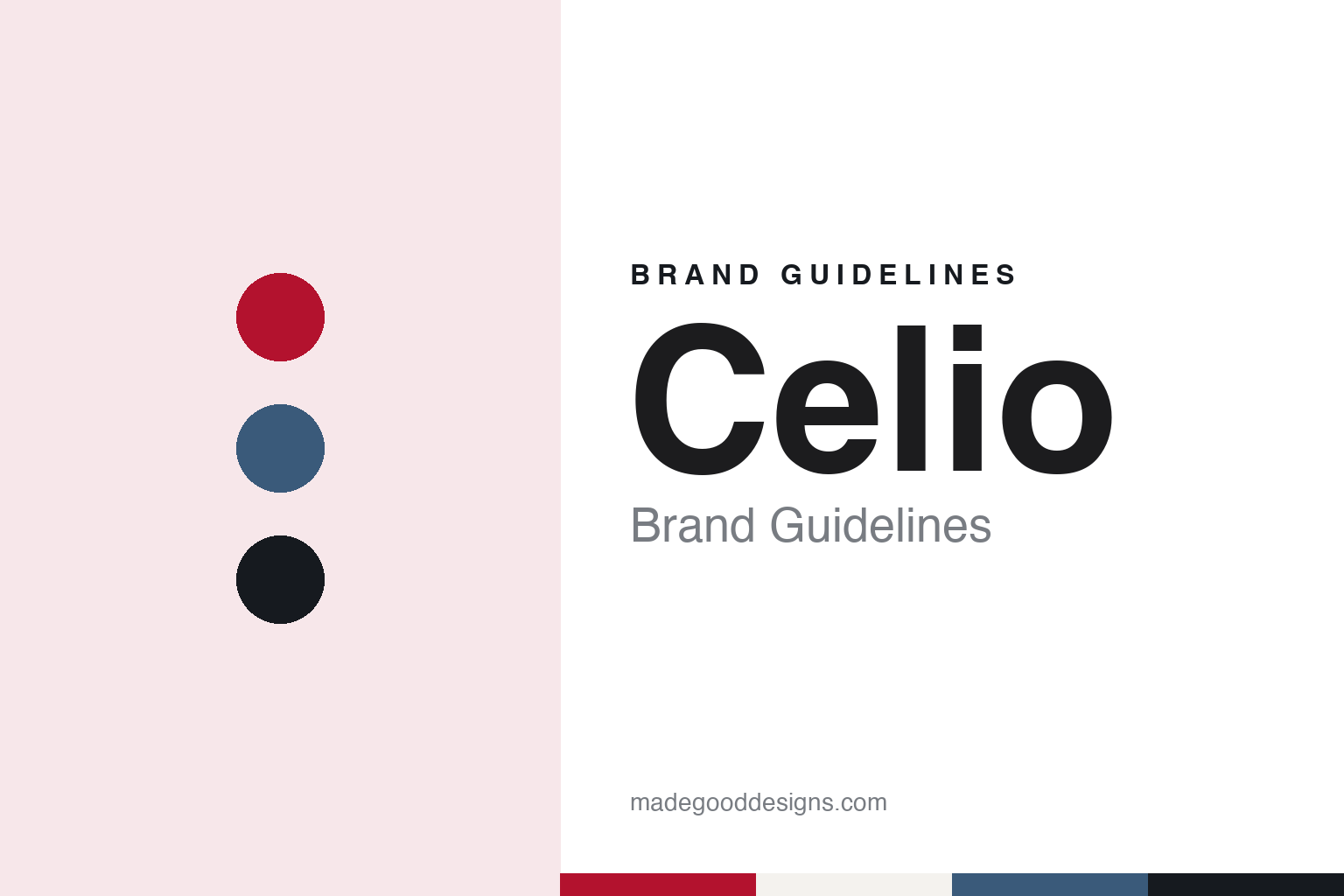
Celio Brand Guidelines
The Paris menswear chain with a red asterisk, founded in 1978.
Aa
Two constants: an asterisk red, ink and denim blue palette and a sturdy grotesque register. Abstract homage — not a Celio product or mark; no logo, asterisk or label is reproduced.
Cléo 3000
A family shop, rearranged letters and an extra i.
Celio began in Paris in 1978, on rue Saint-Lazare in the ninth arrondissement. Le Figaro, in a 2009 profile marking the chain’s thirtieth year, told the story through one of its co-founders, Laurent Grosman, who started the business with his brother Marc. Their parents owned a 200-square-metre womenswear shop called Cléo 3000. The brothers wanted to add menswear, so they rearranged the letters of the shop name and added an i, which he said was cheaper than changing everything. French Wikipedia dates the parents’ shop to 1970 and names their father, Maurice Grosman, as founder; English Wikipedia gives 1978 as the founding year.
At the start the brothers sold other labels. In the early 1980s, Le Figaro wrote, men in Paris were still held in the suit-and-tie mould, and Celio brought colour and ease into their wardrobe. A second shop followed, then a third. In 1985 the concept was properly launched: every shop carried the Celio name, and the brothers stopped selling other brands and made their own collections. The house style that grew from this was described as a kind of Latin sportswear, full of colour and pattern, and one of its signature pieces was a cotton piqué polo sold in twenty-five colours.
Advertising gave the brand its voice. Le Figaro recalled early campaigns aimed at a man who did not take himself seriously, with lines such as “T’as du pot d’être un mec,” roughly “lucky you, being a guy,” and a television and cinema spot in 1995. In 1996 Celio opened a 1,000-square-metre store on the avenue de l’Opéra in Paris, and by 1999 it had more than a hundred shops in France, many of them in shopping centres on the edges of large cities. Around then the brand changed its mark. The green and blue flags that had stood for the label gave way, Le Figaro wrote, to a more graphic signature with a bright red asterisk, which it called emblematic of the brand.
Colour
Brussels, India and a court-supervised reset.
The chain grew fast after 2000. In 2002 it reached 230 stores in France and opened a flagship on the Champs-Élysées, Le Figaro reported in 2009. Celio had been in Brussels since 1992 and set up its international headquarters there in 2008; it entered Italy in 1999, Eastern Europe from 2004 and India in late 2008, and by early 2009 it was present in some sixty countries. The same profile described four collections a year plus a Christmas line, about five hundred references a season, and style offices in France and Italy working together. A casual-chic range was added to the sportswear in 2003, and in 2008 a more formal line, Celio*Club, put the asterisk inside a sub-brand name. That year the company also launched a website, a mobile service and codes in shop windows that shoppers could photograph during the sales.
The next decade was harder. On 22 June 2020 Celio asked to be placed under a procédure de sauvegarde, a French court-supervised safeguard procedure that shields a company from its creditors while it reorganises, Le Figaro reported. The newspaper said the group, wholly owned by the Grosman family, then had about 4,000 staff and 1,585 stores in 46 countries, including 488 in France, mostly in India, France, Spain and Italy. Only the 345 French stores that Celio ran itself were covered. The chain had closed its shops worldwide for two months in the spring of 2020, and Le Figaro noted that it had already presented a transformation plan in October 2019, covering online sales, a refreshed image with more natural materials, and a smaller store estate.
The procedure ended in the autumn of 2021. A legal notice published in November 2021 records that the Commercial Court of Bobigny, which covers Celio’s home base of Saint-Ouen, adopted the safeguard plan on 14 October 2021, for a period of 120 months. Republik Retail reported on 15 October 2021 that the sixteen months had been used to rework the offer around the basics of the men’s wardrobe, to refocus on the home market, and to build a communication plan around a new signature, “Be Normal.”
Typography
How French fashion chains present themselves.
France’s mass-market fashion and childrenswear chains grew up mostly in retail parks and shopping centres rather than on high streets. Kiabi opened its first store at Roncq, outside Lille, in 1978, and Gémo was created by the Éram group in 1991 to sell shoes and clothing for the whole family in stores on the edges of towns. For these chains the shop fascia, the logo on the bag and the label inside the garment are often the same name, because most of what they sell is their own.
Own-label ranges carry much of the identity. The International Directory of Company Histories traces Kiabi’s house brands back to its first store, with Winch and Decade, and later children’s labels; Le Journal des Entreprises reported in 2021 that own-label products made up 85 to 90 per cent of Gémo’s offer. Catalogues, websites, apps and seasonal campaigns present those ranges, and logos are redrawn from time to time: Kiabi unveiled a new single-letter K in December 2025, CB News reported.
Many of the chains belong to family-owned groups, and their corporate pages say so plainly. Kiabi sits in the Mulliez family’s retail group alongside Auchan and Decathlon; Gémo belongs to Éram, based at Saint-Pierre-Montlimart in Maine-et-Loire; French Wikipedia describes Groupe Beaumanoir as a family group founded in 1981 by Roland Beaumanoir. Founders, owners and changes of control are part of each brand’s story, and receiverships and sales have reshaped several of these names in recent years.
This guide sets out what can be checked about each brand: who founded it, who owns it, how its stores, labels and logos have changed, and what has happened to it. Company statements are marked as such, and counts of stores and countries are given with the date of the source.
Aa
A sturdy grotesque for a plain-spoken menswear chain. (Specimen set in Archivo, a sans STAND-IN; NOT the Celio logo.)
Celio
A menswear chain that bought a womenswear name.
Celio’s most unusual move came in 2022. The womenswear chain Camaïeu had been liquidated by the Commercial Court of Lille on 26 September 2022, closing its 512 stores, Le Figaro reported. On 7 December 2022 the liquidator auctioned the brand, with its logos and domain names, at the Mercier saleroom in Vendeville, near Lille. More than ten candidates came, including the Beaumanoir group, Kindy and Celio, and after a few minutes of bidding the lot went to Celio. Its president, Sébastien Bismuth, told the newspaper that reopening the old Camaïeu stores was not possible in the market of the day and that the brand would need to be present online.
The answer arrived in 2024. Le Figaro reported that from 29 August 2024 a new women’s collection, “be camaïeu,” went on sale in twelve stores, ten of them under the Celio name and two dedicated to the new line, with a range of basics such as jumpers, T-shirts and trousers in several colours. The newspaper added that Celio was still owned by the Grosman family, and quoted its president describing a store at the Euralille shopping centre that had moved from 300 to 1,200 square metres to hold both ranges. In June 2025, Capital reported, Celio also took over seven stores of the young-womenswear chain Jennyfer when a court in Bobigny approved a takeover of that chain led by Beaumanoir.
Through all of this, the core of the identity stayed small and simple: a short invented name drawn from a family shop, and a red asterisk that has sat next to it, and inside sub-brand names, since the end of the 1990s.
For a design guide, Celio shows how one small typographic mark can carry a whole retail brand through changes of owner, store format and range. Compare Camaïeu, the womenswear name Celio bought in 2022, and La Halle, another French chain reshaped through a court-supervised process in 2020. For this guide we use an asterisk red, ink, chalk and denim blue with a sans, an unofficial interpretation; no product or logo is reproduced.
Explore & save
Keep Celio’s identity on hand — save it to a board in the Made Good inspiration library.
Celio identity set
Pin the Celio asterisk red, ink and denim blue palette and the sturdy grotesque register to your own board.
Source & notes
Frequently Asked Questions
What font can I use to match the Celio look?
This guide describes Celio’s type as “A sturdy grotesque for a plain-spoken menswear chain”. Its type specimen is set in Archivo from Google Fonts as a stand-in; Archivo is not Celio’s own lettering.
What colours are in the Celio palette?
This guide’s Celio palette is Asterisk red #B3122E, Ink #161A1F, Chalk #F4F2EE, Denim blue #3A5A7A and Stone #C9C3B8. The tones are the guide’s own unofficial interpretation, not official Celio hex codes.
When was Celio founded?
Celio was founded in 1978, in Paris, France. Celio is known for Menswear basics, the red asterisk.
Who founded Celio?
Celio was founded by Laurent and Marc Grosman in 1978.


