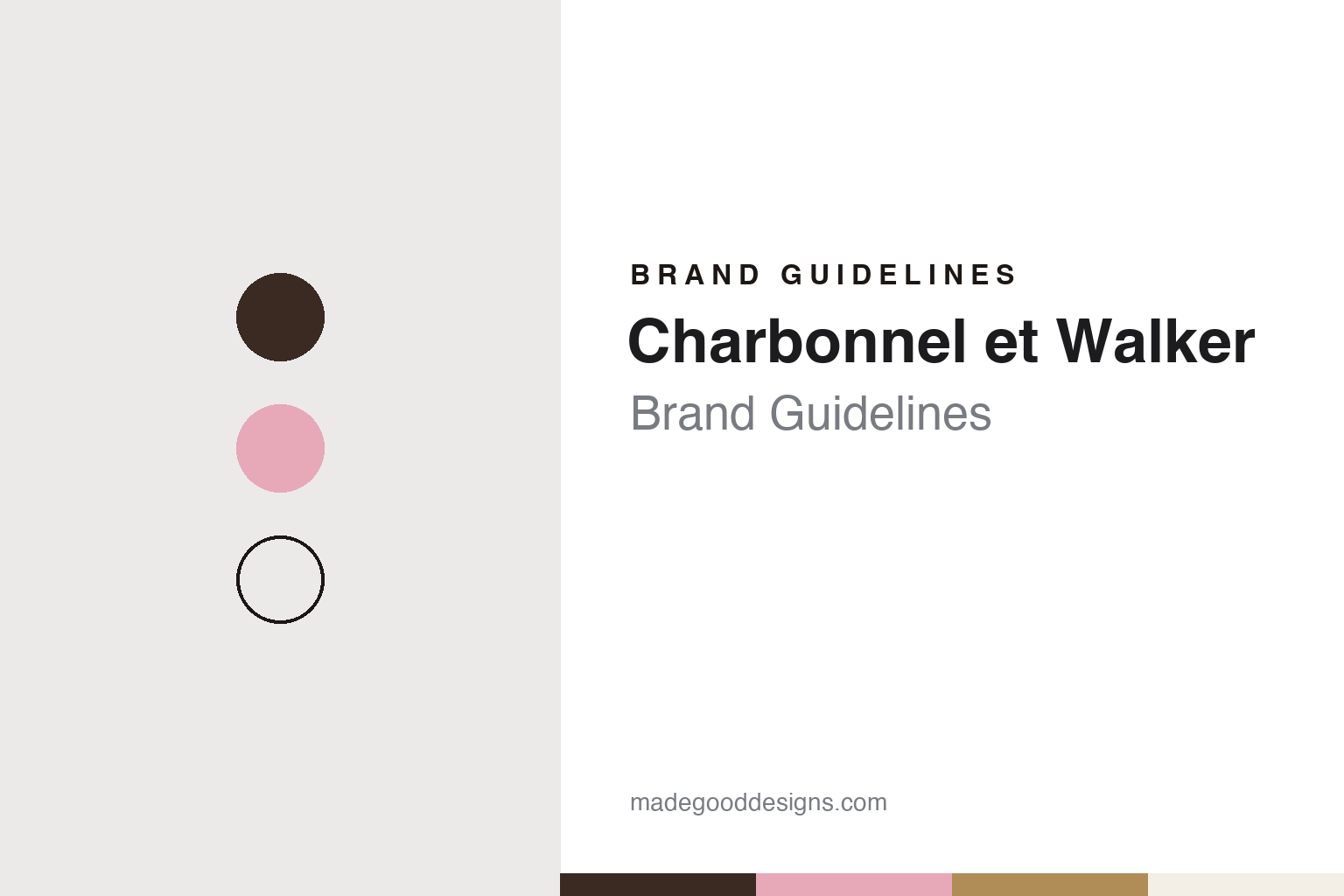
Charbonnel et Walker Brand Guidelines
The Bond Street chocolatier born of a confectioner and a box maker.
Aa
Two constants: a couverture brown, truffle pink and ribbon gold palette and a classical serif register. Abstract homage — not a Charbonnel et Walker product or mark; no box, logo or label is reproduced.
Bond Street, 1875
A Paris chocolatier and a London box maker.
Charbonnel et Walker dates itself to 1875, when, the company says, Madame Charbonnel, “known for making fine chocolates in Paris,” was introduced to Mrs Walker, a London maker of “jewellery boxes, hat boxes and more,” with encouragement from the Prince of Wales, the future Edward VII. English Wikipedia names the partners as Virginie Eugénie Lévy, née Charbonnel, of the Paris chocolate house Maison Boissier, and Minnie Walker, and says they traded as “Parisian Confectioners and Bon-Bon Manufacturers.” The division of labour in the company’s telling — one partner made the chocolates, the other made the boxes — is still the origin story on its website.
The partnership itself was short. Notices in the London Gazette, cited by Wikipedia, record that it was dissolved on 16 April 1878 and that Walker carried on alone until her death in 1883; the notice named her as “Mary Ann Alphandery also known as Minnie Walker.” A company called Charbonnel and Walker Limited went into liquidation in 1894, the Gazette recorded, and the present company, Charbonnel et Walker Limited, was incorporated in August 1920, according to Companies House. The name, in other words, has outlived more than one business.
The address has been steadier. The company says its first shop opened at 173 New Bond Street in Mayfair and that it “has remained on Bond Street ever since”; its flagship today is in the Royal Arcade, the Victorian shopping arcade off Old Bond Street.
Colour
Truffles, drinking chocolate and a warrant.
The house is known for boxed chocolates rather than bars. Wikipedia singles out its Marc de Champagne truffles, made with a chocolate butter infused with the grape spirit, and says its drinking chocolate goes back to a recipe Charbonnel created in 1875. The range also takes in sugar confections such as crystallised ginger and glazed Brazil nuts, and a licensed James Bond 007 collection that includes Dry Martini truffles; in October 2026 the company’s homepage was advertising what it calls “the World’s First Bond Advent Calendar.” The company says its chocolates are “hand-made to the traditional recipes of Madame Charbonnel” and that it is “particularly renowned” for dark chocolate made from dark couverture. It does not say where its cocoa comes from.
Royal patronage is central to the story the company tells. It says that “from 1970 – 2022” it held the Royal Warrant to Queen Elizabeth II, and its website in 2010 described the warrant as being “as chocolate manufacturers to Her Majesty The Queen.” It also lists famous customers: Noël Coward, it says, “requested a box of our finest selections to be delivered to his home every fortnight.”
For about four decades the chocolates were made in Kent. The company’s 2010 website said they were hand-made “at our long-time home in Royal Tunbridge Wells,” and in February 2018 Kent Online reported that the Tunbridge Wells factory, on Quarry Road, was likely to stop production around 29 March that year after 40 years, with manufacturing moving to Poundbury, on the edge of Dorchester in Dorset. The company’s current website does not say where its chocolates are made.
Typography
London’s chocolate houses.
The seven brands in this group are all British chocolate names: Thorntons, Green & Black’s, Montezuma’s, Divine Chocolate, Charbonnel et Walker, Prestat and Rococo Chocolates. Between them they cover most of the ways chocolate is sold in Britain, from the high street and the supermarket shelf to the small shop with a box tied in ribbon.
Some are high-street makers, known for shops in town centres and for the boxes people buy as presents at Easter and Christmas. Some built their names on ethics, putting organic farming, fair trade or the cocoa growers themselves at the centre of the story told on the wrapper. Others are London houses whose identity rests on age, address and patronage: shops in Mayfair and the West End, hand-finished truffles, and, in some cases, the royal warrant that allows a firm to display the royal arms on its packaging.
British chocolate brands have also changed hands often, and several of the best-known names now belong to larger groups at home or abroad. Each guide separates what independent sources record from what the company says about itself — who founded it, who owns it now, where its cocoa comes from and where its chocolate is made — and marks plainly what rests only on the company’s own word.
Aa
A classical serif — for a house that sells the box as much as the chocolate. (Specimen set in Cormorant Garamond, a serif STAND-IN; NOT the Charbonnel et Walker logo.)
Charbonnel et Walker
A box maker’s name on the lid.
Ownership is recorded more plainly than it is publicised. Companies House lists a single person with significant control of Charbonnel et Walker Limited: Richmond Corporation Limited, a London company incorporated in 1995, which has held 75 per cent or more of the shares and voting rights since the register of controllers began in 2016. Both companies give the same Royal Arcade address. The company does not discuss its owners on its website.
The retail footprint is small and concentrated. The company’s locations page lists shops in the Royal Arcade, at Canary Wharf, at Broadgate Circle and in Leeds’s Victoria Quarter, and counters in the chocolate rooms of Harrods and Selfridges; Wikipedia gave the same list as of 2022. The look that goes with it is the one the founding story implies: the company describes “luxurious hand-made boxes and satin ribbons,” and the gift box, more than any wrapper or bar, carries the name.
The name is a small piece of branding in its own right. The French “et” gives a London firm a Parisian accent, yet the Gazette notices of 1878 and 1894, as quoted by Wikipedia, used the English “Charbonnel and Walker”; the French form is the one the business trades under today. Its drinking chocolate, too, is sold under the founding date: Wikipedia says it comes in Original and Sea Salt Caramel versions.
No logo designer, typeface or official colour is documented in the sources we checked. For a design guide, Charbonnel et Walker shows how a nineteenth-century partnership — one confectioner, one box maker — can still define a brand, with the packaging written into the founding story itself. Compare the Prestat guide, another royal-warrant London chocolatier founded by a French chocolatier, and the Pierre Marcolini guide, a Brussels house that also sells through boxes and boutiques. For this guide we use couverture brown, truffle pink, ribbon gold and box ivory with a classical serif, an unofficial interpretation; no product or logo is reproduced.
Explore & save
Keep Charbonnel et Walker’s identity on hand — save it to a board in the Made Good inspiration library.
Charbonnel et Walker identity set
Pin the Charbonnel et Walker brown, pink and gold palette and the classical serif register to your own board.