Charlotte Russe Brand Guidelines
The 1975 California mall chain revived by YM Inc.
Aa
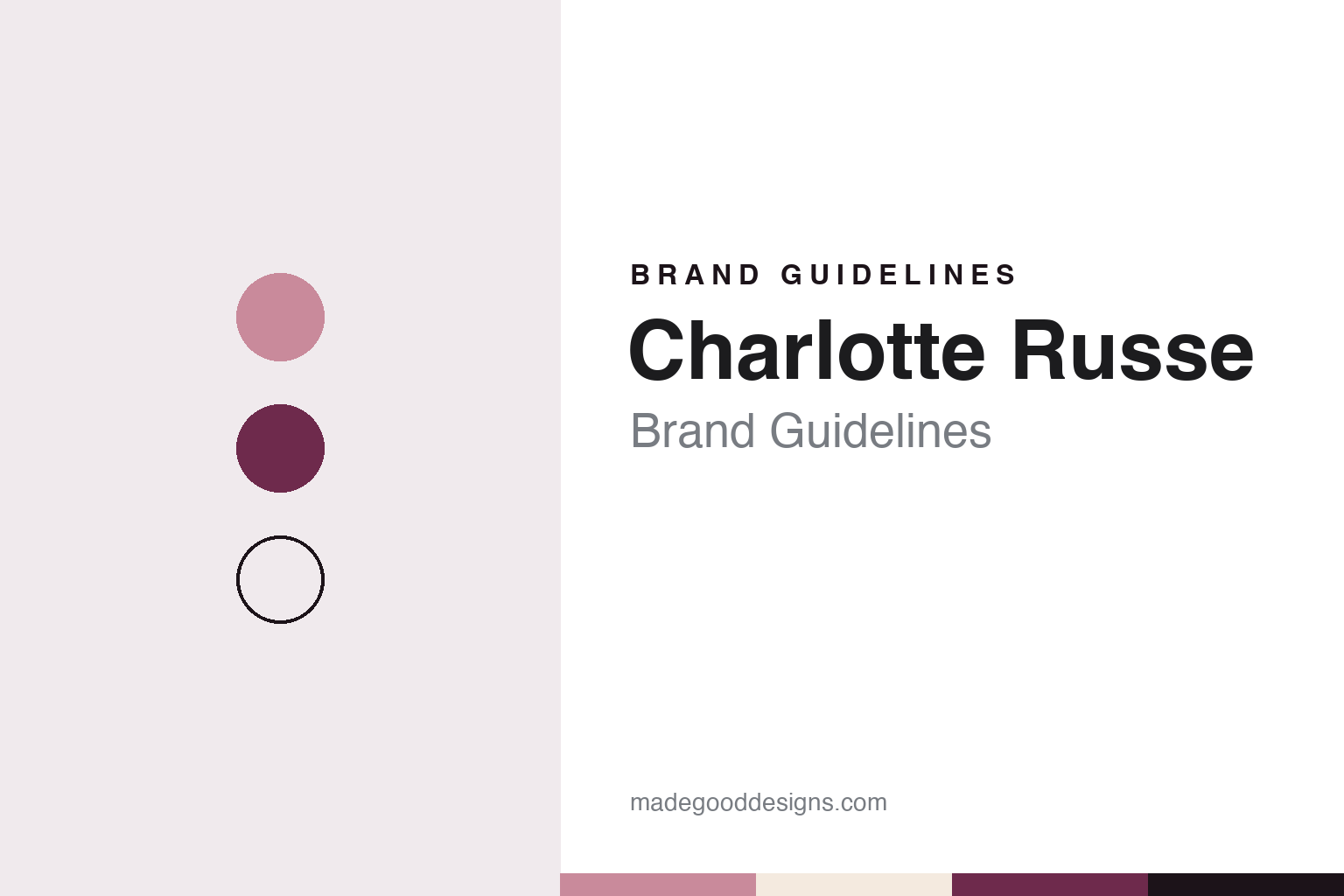
Two constants: a Charlotte Russe rose, plum and cream palette and an Art Deco serif register. Abstract homage — not a Charlotte Russe product or mark; no garment, bag, logo or shop sign is reproduced.
Lawrence Merchandising
Three brothers and a store named after a dessert.
Charlotte Russe began in Southern California in 1975. The International Directory of Company Histories (volume 35, St. James Press, 2001) says the brothers Dan, Frank and Larry Lawrence, who had grown up working in a family clothing store in Brooklyn, moved west, formed Lawrence Merchandising Corp. and that year opened a 1,500-square-foot store in Carlsbad, California; English Wikipedia places the first storefront in San Diego. They named it after charlotte russe, a dessert they remembered from childhood, the directory says.
Growth was steady and regional. Over the next ten years the brothers opened six more stores in San Diego County, then moved into other parts of the state, taking larger units in busy malls. In 1990 they opened three stores in Phoenix, Arizona, and in 1992 stores in Las Vegas and Los Angeles, according to the directory. It adds that WWD in 1995 counted Charlotte Russe among the three most aggressive junior retail concepts in California, alongside Rampage and Wet Seal.
Investors took over in 1996. In April the company hired Bernard Zeichner, who had run the retail division of Guess? and had led Contempo Casuals, as president and chief executive, and later that year he and two funds managed by the investment firm Saunders Karp & Megrue (SKM) bought the chain from the Lawrence brothers; the directory dates the deal to September in one passage and October in another. At the sale the chain had 35 stores in California, Arizona and Nevada. In October 1997 it bought 16 Rampage stores out of that retailer’s bankruptcy and ran them as a second chain under the Rampage name.
Colour
Windows, big stores and a printed bag.
From the start the chain sold itself through its stores. The directory says the Lawrences concentrated on visual displays, location and packaging: their windows made the local news, and customers carried the shopping bags, printed with a psychedelic Art Deco drawing of a woman, to the beach and on their travels. Their first store outside San Diego, of 20,000 square feet, had television monitors playing rock and fashion videos and some 65 mannequins, and customers on opening day were served the charlotte russe pastry, which had become a tradition.
Under SKM the stores kept that scale. Around 2000 they averaged about 7,500 square feet, roughly twice the space of most competitors, the directory says, with separate areas for casual, career and club wear, shoes, lingerie and accessories, and dressing rooms with couches in soft, feminine colours. The tagline was “Where You Fit In.” More than 80 percent of the goods carried house labels, the company aimed at women aged about 15 to 35, and it dealt mainly with American manufacturers so that it could get clothes into stores quickly.
The holding company went public in October 1999, when it ran 96 stores in 15 states and Puerto Rico. A month later it began testing Charlotte’s Room, a store format selling bedding, rugs, bean bags and lamps to younger customers, with two units in Los Angeles and Phoenix. By April 2000 Charlotte Russe Holding ran 113 stores in 17 states and Puerto Rico across its two chains, according to the directory.
Typography
Malls, catalogues and banners.
Youth and mall fashion chains in the United States and Canada mostly present themselves through their stores: the shop sign above a mall unit, the shopping bag and the labels on the rails. Few of them publish a formal identity manual, so what can be described is what the companies show in their stores, on their websites and in their announcements, and what the business press has reported about them.
The formats vary. Some chains began as a single surf or skate shop and moved into enclosed malls; PacSun traces itself to a Newport Beach surf shop of 1980 and opened a mall store the following year, and Zumiez started in 1978 as a shop in Seattle’s Northgate Mall. Others built their business on catalogues and later online shops, and several now trade across the United States, Canada and further abroad.
Ownership is just as varied. Some chains are still run by founders or their families, some are listed on stock exchanges, and others are owned by private-equity firms or brand-licensing groups, often after a Chapter 11 or other restructuring. Those changes are part of each brand’s story, and the guides here give them as dated facts, with the store estate described as it stood at the date of the source.
On the rails, these retailers mix outside labels with their own brands and with licensed ranges, from surf and skate names to sports and entertainment partnerships, and they name those collections in their own announcements. Each guide in this series sets out who founded the chain, who owns it now, how it has traded and what it sells, and separates what independent dated sources report from what the company says about itself.
Aa
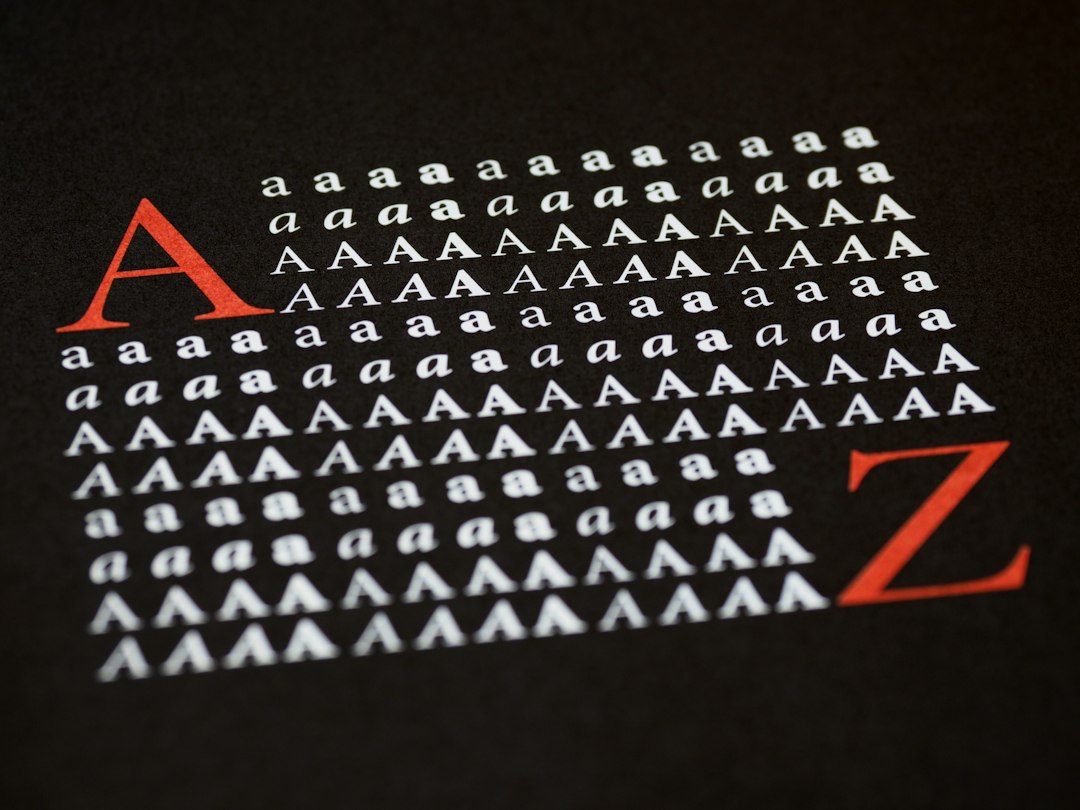
An Art Deco serif — a nod to the printed shopping bags of the early stores. (Specimen set in Playfair Display, a serif STAND-IN; NOT the Charlotte Russe logo.)
Charlotte Russe
Private again, bankrupt, then revived.
In 2009 the company went private again. Private Equity Wire reported in October 2009 that Advent International had closed its tender offer for Charlotte Russe Holding, with about 89 percent of the shares, on a fully diluted basis, tendered by 13 October, and had taken the rest by a short-form merger under Delaware law, ending trading on the NASDAQ Global Select Market. Advent said it would work with Jenny Ming, a former president of Old Navy, as an operating partner.
A decade later the company failed. Charlotte Russe Holdings filed for Chapter 11 in the US Bankruptcy Court for the District of Delaware in February 2019, Retail Insight Network reported; Retail Dive gave its store count at filing as 512 and said court documents cited falling sales and store traffic, while Retail Insight Network described about 500 stores in malls and outlet centres across 48 states before the filing. A month later the company announced it would close all its stores, FashionUnited reported, and the store estate was liquidated. On 1 April 2019 FashionUnited reported the sale of the Charlotte Russe brand and its intellectual property to YM Inc. of Toronto, and of the Peek Kids brand to Mamiye Brothers.
YM brought the name back. The online shop reopened on 3 June 2019 and five stores opened on 5 June, in malls in Michigan, Georgia, New Jersey and Pennsylvania, FashionUnited and Retail Dive reported. In November 2019 an executive at YM’s US subsidiary told Retail Dive that about 135 stores had opened. YM also runs Canadian banners including Urban Planet, Bluenotes and Suzy, and in June 2024 it was the stalking-horse bidder for the assets of rue21, then in bankruptcy, English Wikipedia says. English Wikipedia counted 223 Charlotte Russe stores in July 2026.
For a design guide, Charlotte Russe shows how a mall chain built on windows, store scale and a printed shopping bag can return as a brand name after its original company has gone. Compare rue21, another mall chain that YM bid for out of bankruptcy, and Wet Seal, the California junior chain named alongside it by WWD in 1995. For this guide we use a dusty rose, a deep plum, cream and ink with a serif, an unofficial interpretation; no product or logo is reproduced.
Explore & save
Keep Charlotte Russe’s identity on hand — save it to a board in the Made Good inspiration library.
Charlotte Russe identity set
Pin the Charlotte Russe rose, plum and cream palette and the Art Deco serif register to your own board.
Source & notes
Frequently Asked Questions
What font can I use to match the Charlotte Russe look?
This guide describes Charlotte Russe’s type as “An Art Deco serif — a nod to the printed shopping bags of the early stores”. Its type specimen is set in Playfair Display from Google Fonts as a stand-in; Playfair Display is not Charlotte Russe’s own lettering.
What colours are in the Charlotte Russe palette?
This guide’s Charlotte Russe palette is Dusty rose #C98A9B, Deep plum #6E2A4C, Cream #F4EADF, Velvet ink #1C1319 and Paper #FBF8F4. The tones are the guide’s own unofficial interpretation, not official Charlotte Russe hex codes.
When was Charlotte Russe founded?
Charlotte Russe was founded in 1975, in Carlsbad, California. This guide lists SKM 1996, public 1999, Advent 2009 as its owner.
Who founded Charlotte Russe?
Charlotte Russe was founded by Dan, Frank and Larry Lawrence in 1975.
Who owns Charlotte Russe?
Charlotte Russe is owned by SKM 1996, public 1999, Advent 2009.