Buckle Brand Guidelines
The Kearney denim chain that began as Mills Clothing.
Aa
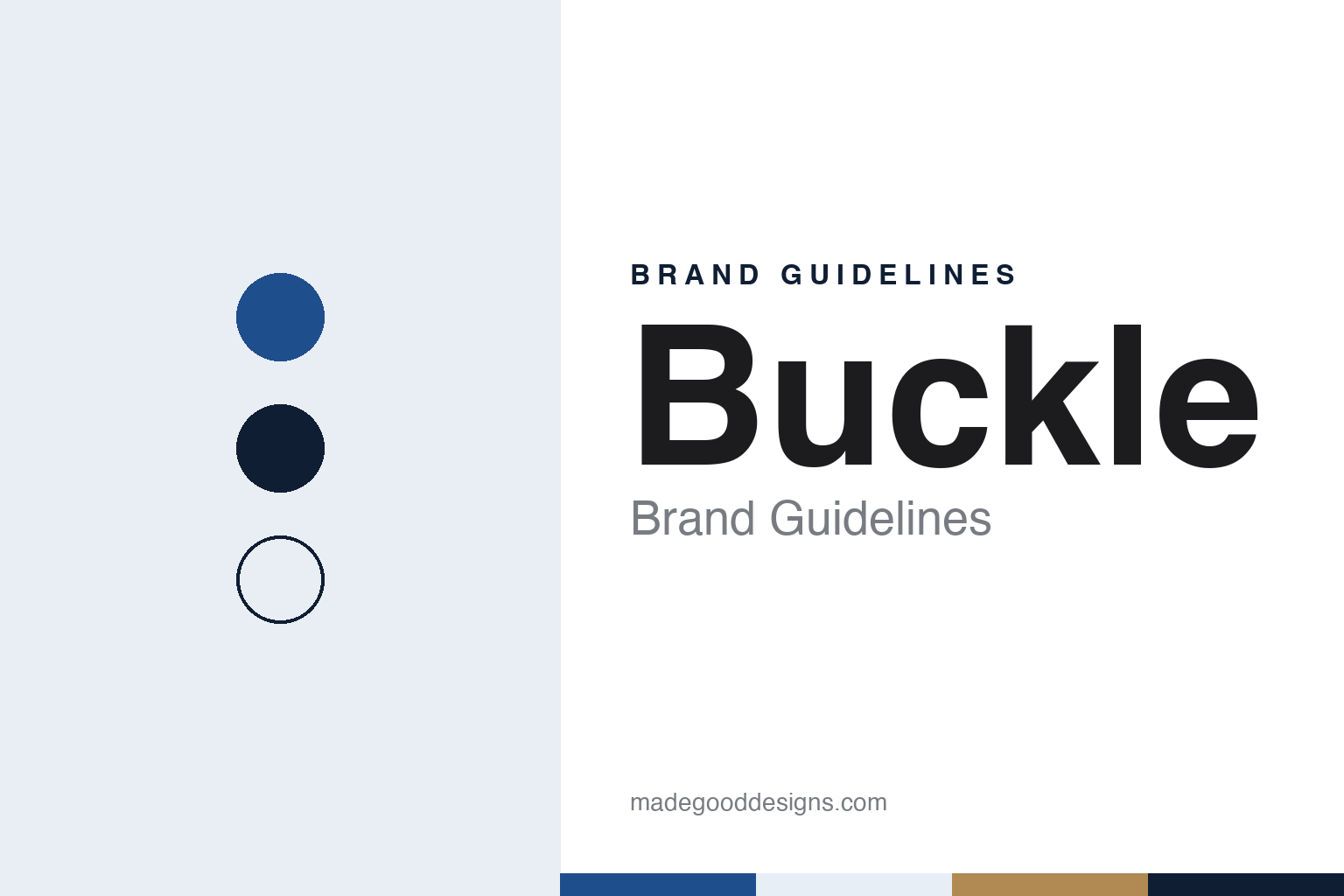
Two constants: a denim blue and brass palette and a condensed sans register. Abstract homage — not a Buckle product or mark; no logo, sign or garment is reproduced.
Mills Clothing
A men’s clothier in downtown Kearney.
Buckle began as a single men’s clothing shop in Kearney, Nebraska. The International Directory of Company Histories, in an entry that follows the company to 1996, says it was founded in 1948 as Mills Clothing, Inc., in downtown Kearney; English Wikipedia names the founder as David Hirschfeld. The company is still based in Kearney.
The next generation took over in the 1960s. English Wikipedia says David Hirschfeld’s son, Dan Hirschfeld, took over the business in 1965; the International Directory says Daniel J. Hirschfeld had been with the company since 1962 and became president and chief executive in 1967, so the two sources give different years.
The name came from a second shop. In 1967 Mills Clothing opened another store in Kearney under the name Brass Buckle, the International Directory says, and in 1970 the original Mills Clothing store was renamed Brass Buckle too, recast as a jeans store with a wide choice of denim and shirts to go with it. A second town followed in 1976, when a Brass Buckle opened in Columbus, Nebraska. The directory describes the early stores as furnished in a rustic style, with built-in jeans bins and chrome display fixtures.
In 1977 the business added women’s clothing and opened its first store in a shopping mall, and by the end of 1981 it had 17 outlets, the directory says. On 23 April 1991 the company took the name The Buckle, Inc.; English Wikipedia says that the same year it began a private label, first written “bkle” and now known as BKE.
Colour
Denim, brand names and the BKE label.
Denim has been the centre of the business since the Brass Buckle years. English Wikipedia lists the range today as jeans and other casual trousers, tops and shirts, dresses and rompers, sportswear, outerwear, footwear, swimwear and accessories from sunglasses to bags and wallets, for men, women and children, sold under both brand names and the company’s own labels. The website’s page title, read in November 2026, sums it up as “Quality Jeans, Shoes & Clothes | BKE & Top Brands.”
The mix of outside brands goes back decades. The International Directory says that by the early 1990s the company stocked names including Levi’s, Girbaud, Lawman and Guess?, alongside a limited amount of private-label clothing, and that it had built close relationships with Pepe and Lucky Brand. The BKE label, begun in 1991, gave the chain a denim line under its own initials, and the three letters later became the company’s stock-market symbol.
The directory also records how the stores were run in the mid-1990s. Shoppers were called “guests” rather than customers; most stores had a seamstress on site for alterations; gift-wrapping and layaway were offered; and stores were placed in malls in college towns and in cities of roughly 20,000 to 250,000 people, aimed at a target market of 12-to-24-year-olds. The company did not hold storewide sales, the directory says, marking down slow items instead. In 1992 it added a Buckle Kids line, and in October 1994 a frequent-shopper scheme called the Primo Card.
The look of the stores changed with the name. The directory says that in 1990 the company introduced a new store design, with redesigned layouts, new lighting and new fixtures, and began a five-year programme to renovate its older stores, which it reports had been completed by 1996.
Typography
Signs, bags and own labels.
Youth and mall fashion chains in the United States and Canada mostly present themselves through their stores: the shop sign above a mall unit, the shopping bag and the labels on the rails. Few of them publish a formal identity manual, so what can be described is what the companies show in their stores, on their websites and in their announcements, and what the business press has reported about them.
The formats vary. Some chains began as a single surf or skate shop and moved into enclosed malls; PacSun traces itself to a Newport Beach surf shop of 1980 and opened a mall store the following year, and Zumiez started in 1978 as a shop in Seattle’s Northgate Mall. Others built their business on catalogues and later online shops, and several now trade across the United States, Canada and further abroad.
Ownership is just as varied. Some chains are still run by founders or their families, some are listed on stock exchanges, and others are owned by private-equity firms or brand-licensing groups, often after a Chapter 11 or other restructuring. Those changes are part of each brand’s story, and the guides here give them as dated facts, with the store estate described as it stood at the date of the source.
On the rails, these retailers mix outside labels with their own brands and with licensed ranges, from surf and skate names to sports and entertainment partnerships, and they name those collections in their own announcements. Each guide in this series sets out who founded the chain, who owns it now, how it has traded and what it sells, and separates what independent dated sources report from what the company says about itself.
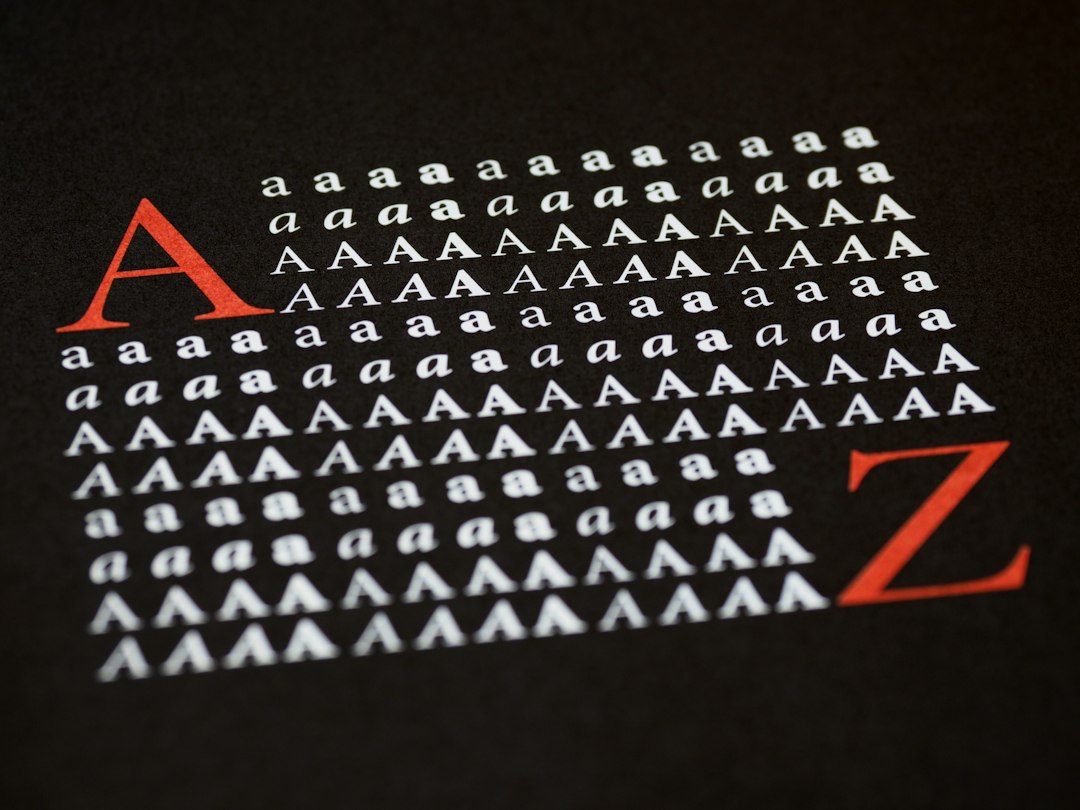
Aa
A condensed sans for a denim wall. (Specimen set in Oswald, a sans STAND-IN; NOT the Buckle logo.)
Buckle
From NASDAQ to the New York Stock Exchange.
Buckle became a public company in 1992. The International Directory of Company Histories says the shares were offered on the NASDAQ National Market System that year, when the company had 89 stores, and that the money raised paid for new stores and the last years of its remodelling programme; English Wikipedia gives the NASDAQ symbol as BKLE and gives 100 stores in 18 states for that year, against the directory’s count of 89 at the time of the offering. In 1997, Wikipedia says, the listing moved to the New York Stock Exchange, where the company trades as BKE, the same letters as its own denim label.
Growth was steady and largely inland. The directory counts 45 stores in 1987 and 181 stores in 22 states by 1996, mostly in the Midwest. English Wikipedia continues the count: 200 stores in 29 states in 1998, 400 stores in 41 states in 2009, and more than 450 in 44 states in 2017. It currently puts the estate at 451 stores in 42 states, trading as Buckle and The Buckle. The company launched its first e-commerce website in 1999, according to Wikipedia, and in 2010 it completed a 240,000-square-foot distribution centre. Its stores were supplied from the start through a central system in Kearney; the directory describes bar-coded merchandise received, sorted and reshipped to the stores, usually within one business day.
The brand’s early graphic signals are recorded in the same directory, which describes the company’s blue, triangular logo as appearing on storefronts and on its shopping bags. It also records that Dennis Nelson, who joined in 1970 as a part-time salesman, became president in 1991, when Daniel Hirschfeld gave up one of his two titles.
For a design guide, Buckle shows how a regional store name can turn into a label and a ticker symbol, with denim as the constant from a Kearney jeans shop to a chain in more than 40 states. Compare Abercrombie & Fitch, another American mall retailer built around casual clothing, and PacSun. For this guide we use a denim blue, a deep indigo and a brass tone with a condensed sans, an unofficial interpretation; no product or logo is reproduced.
Explore & save
Keep Buckle’s identity on hand — save it to a board in the Made Good inspiration library.
Buckle identity set
Pin the Buckle denim blue and brass palette and the condensed sans register to your own board.
Source & notes
Frequently Asked Questions
What font can I use to match the Buckle look?
This guide describes Buckle’s type as “A condensed sans for a denim wall”. Its type specimen is set in Oswald from Google Fonts as a stand-in; Oswald is not Buckle’s own lettering.
What colours are in the Buckle palette?
This guide’s Buckle palette is Prairie denim #1F4E8C, Indigo night #0F1E33, Brass #B08A52, Chambray #E8EEF5 and Paper #F8F7F4. The tones are the guide’s own unofficial interpretation, not official Buckle hex codes.
When was Buckle founded?
Buckle was founded in 1948 (as Mills Clothing), in Kearney, Nebraska.
Who founded Buckle?
Buckle was founded by David Hirschfeld in 1948 (as Mills Clothing).