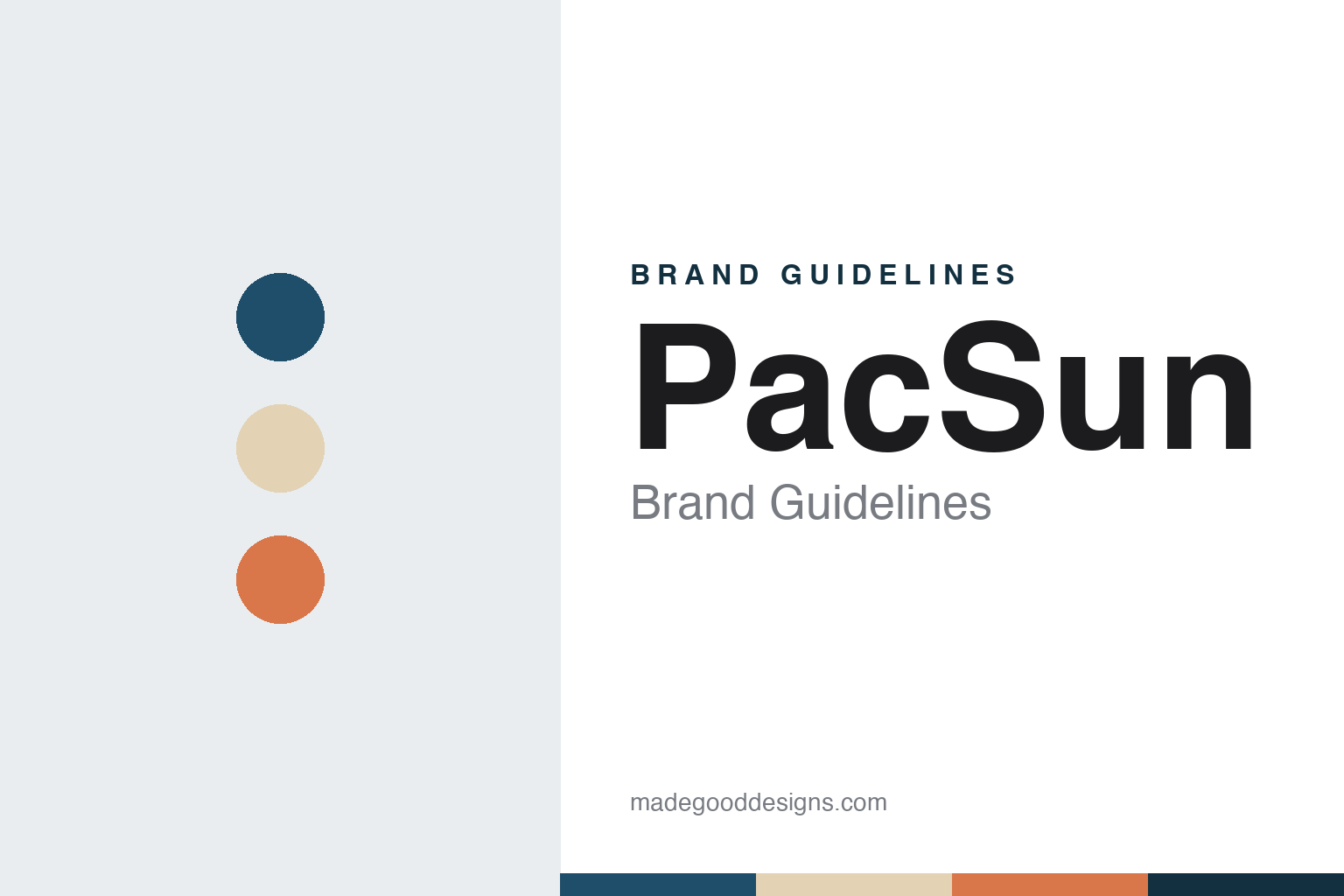
PacSun Brand Guidelines
A Newport Beach surf shop that became a California mall chain.
Aa
Two constants: a harbour blue, sand and late-sun orange palette and a coastal grotesque register. Abstract homage — not a PacSun product or mark; no logo, sign or shopping bag is reproduced.
Pacific Sunwear
A surf shop that moved into the mall.
PacSun is the trading name of Pacific Sunwear of California. The company traces itself to a single surf shop in Newport Beach, California, opened in 1980. The International Directory of Company Histories (volume 28, 1999) credits Tom Moore with opening that shop; English Wikipedia names Jack Hopkins and Tom Moore together as the founders. FashionUnited, profiling the company in August 2026, still describes its start as a small surf shop in Newport Beach.
The decisive step came a year later. Hoping for year-round trade, Moore and his partners opened a second shop in 1981 inside a shopping mall, Santa Monica Place, and for the next seventeen years the chain traded only in malls, the Directory says. Ten more mall stores followed near the coast. With venture-capital backing from 1987 the chain reached 21 stores in 1988, but early stores outside California struggled: the Directory records a store at the Mall of America trying to sell shorts in a Minnesota winter.
New management arrived in 1990 under Michael Rayden, who recast the business as a young men’s casual-wear retailer stocking surf and skate labels such as Stussy, Quiksilver, Rusty and Billabong. The company filed to list its shares in March 1993; English Wikipedia dates the offering to 15 March 1993. By late 1994 it had 118 stores in 17 states, according to the Directory.
From 1995 footwear and junior women’s clothing joined the range, and new stores grew larger to hold them, to about 3,000 square feet. By 1999 the shelves mixed outside labels with own labels the Directory names as Bullhead, Breakdown, Diversion and Tilt, and T-shirts and tops made up more than a quarter of sales. In September 1997 the company bought Good Vibrations, a 15-store mall chain in Florida, and the same year opened a freestanding store in New York’s Greenwich Village, away from the malls where it had traded until then. In February 1999 it ran national advertising in magazines including Teen People and Seventeen.
Colour
d.e.m.o., sneakers and California casual.
In February 1998 Pacific Sunwear announced a second chain, d.e.m.o., aimed at urban rather than suburban tastes and stocking what the company called “popular and emerging cross-cultural brands.” Good Vibrations stores were converted to the new format, and fifteen d.e.m.o. stores opened between April and August 1998, the Directory says; English Wikipedia dates the chain to 2000. The format did not last. In January 2008 WWD reported that the company would close its remaining 154 d.e.m.o. stores after a strategic review, following 74 closures that spring; it had also discontinued a footwear chain called One Thousand Steps.
The Los Angeles Times, writing in April 2016, described the late 2000s as a period of missteps: the retailer stopped selling sneakers in 2008 before bringing them back, leaned on less familiar own-label clothing, and grew to nearly 1,000 stores, many of them in costly mall locations. From 2009, under chief executive Gary Schoenfeld, it moved toward a broader California casual style and added labels such as Brandy Melville, the paper reported.
The range today covers lifestyle clothing with swimwear, footwear and accessories for teenagers and young adults, according to English Wikipedia. In November 2022 Formula 1 and PacSun unveiled a six-piece range of T-shirts, sweatshirts and hoodies at the ComplexCon festival in California, the start of a multi-year licensing partnership, with a fuller men’s, women’s and children’s collection for the spring 2023 season, formula1.com reported. English Wikipedia also records partnerships with the Los Angeles Rams and Los Angeles FC in 2024.
The company has also spelled its own name differently over time. Press coverage from the 2000s and 2016 writes PacSun with a capital S; recent company announcements and FashionUnited’s 2026 coverage write Pacsun. This guide keeps the PacSun form throughout.
Typography
How the chains present themselves.
Youth and mall fashion chains in the United States and Canada mostly present themselves through their stores: the shop sign above a mall unit, the shopping bag and the labels on the rails. Few of them publish a formal identity manual, so what can be described is what the companies show in their stores, on their websites and in their announcements, and what the business press has reported about them.
The formats vary. Some chains began as a single surf or skate shop and moved into enclosed malls; PacSun traces itself to a Newport Beach surf shop of 1980 and opened a mall store the following year, and Zumiez started in 1978 as a shop in Seattle’s Northgate Mall. Others built their business on catalogues and later online shops, and several now trade across the United States, Canada and further abroad.
Ownership is just as varied. Some chains are still run by founders or their families, some are listed on stock exchanges, and others are owned by private-equity firms or brand-licensing groups, often after a Chapter 11 or other restructuring. Those changes are part of each brand’s story, and the guides here give them as dated facts, with the store estate described as it stood at the date of the source.
On the rails, these retailers mix outside labels with their own brands and with licensed ranges, from surf and skate names to sports and entertainment partnerships, and they name those collections in their own announcements. Each guide in this series sets out who founded the chain, who owns it now, how it has traded and what it sells, and separates what independent dated sources report from what the company says about itself.
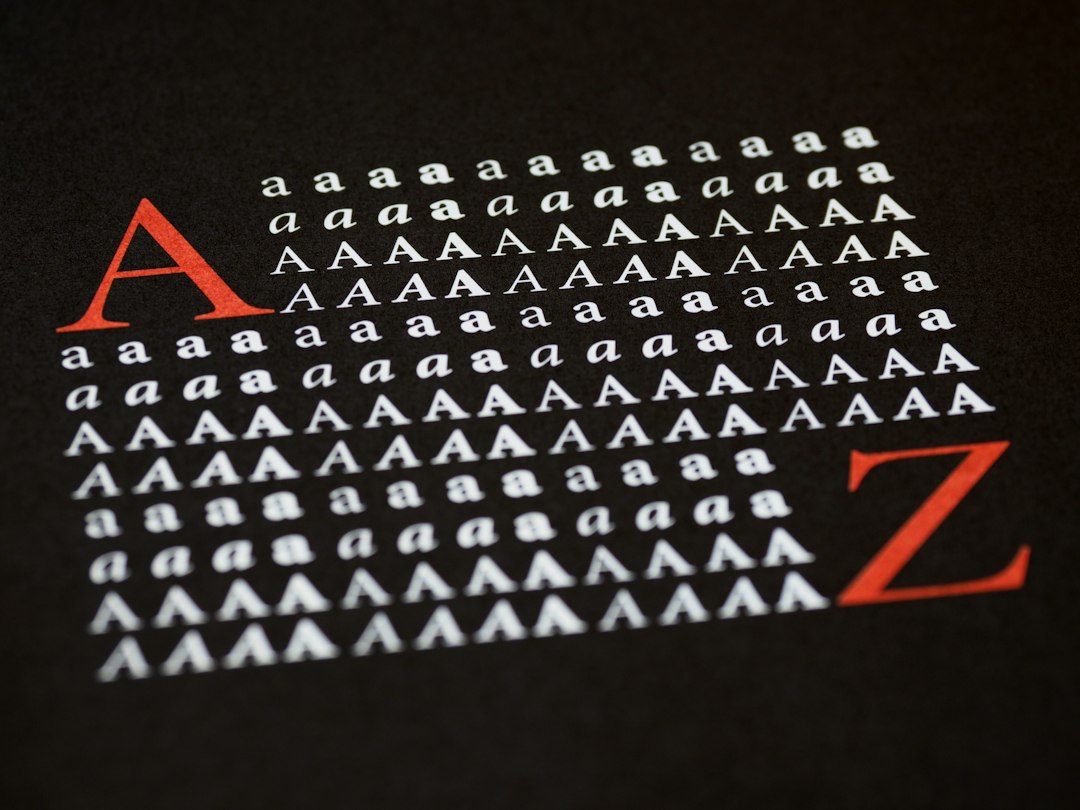
Aa
A bold coastal grotesque for a surf-to-street register. (Specimen set in Archivo, a sans STAND-IN; NOT the PacSun logo.)
PacSun
Chapter 11, Golden Gate and a new chief executive.
On 7 April 2016 the Anaheim-based company filed for Chapter 11 bankruptcy protection, the Los Angeles Times reported. It proposed to reorganise through a debt-for-equity agreement with Golden Gate Capital, a San Francisco private-equity firm that already owned Eddie Bauer, and to emerge as a privately owned company; the filing listed 593 PacSun stores across the United States and Puerto Rico. In September 2016 the bankruptcy court in Delaware confirmed the plan and Golden Gate completed its acquisition, FashionUnited reported, citing the Los Angeles Times; the chain had 583 stores on leaving bankruptcy.
In June 2018 Golden Gate announced that Eddie Bauer and Pacific Sunwear would become portfolio companies of a new operating company, PSEB Group, English Wikipedia says, citing the firm’s release. English Wikipedia gives the headquarters as Anaheim, California.
Brieane Olson, who joined in 2007 as a senior design director for women’s clothing, became chief executive in 2023, FashionUnited reported in August 2026. The same report describes a store in New York’s Soho, a vintage resale platform called PS Vintage, and the chain’s opening of a store outside the United States, at the Mall of the Emirates in Dubai.
For a design guide, PacSun shows how a retailer born in a beach town carried a coastal register into the mall, then widened it to skate, streetwear and licensed sports ranges without dropping the California reference. Compare Zumiez, a Seattle-born skate and snow chain, and Tilly’s, another California youth fashion chain. For this guide we use a harbour blue, dry sand and a late-sun orange with a bold sans, an unofficial interpretation; no product or logo is reproduced.
Explore & save
Keep PacSun’s identity on hand — save it to a board in the Made Good inspiration library.
PacSun identity set
Pin the PacSun harbour blue, sand and late-sun orange palette and the coastal grotesque register to your own board.
Source & notes
Frequently Asked Questions
What font can I use to match the PacSun look?
This guide describes PacSun’s type as “A bold coastal grotesque for a surf-to-street register”. Its type specimen is set in Archivo from Google Fonts as a stand-in; Archivo is not PacSun’s own lettering.
What colours are in the PacSun palette?
This guide’s PacSun palette is Harbour blue #1F4E6B, Night swell #12303F, Dry sand #E3D3B4, Late-sun orange #D9774A and Shell white #F6F2EA. The tones are the guide’s own unofficial interpretation, not official PacSun hex codes.
When was PacSun founded?
PacSun was founded in 1980 (as a surf shop), in Newport Beach, California.
Who founded PacSun?
PacSun was founded in 1980 (as a surf shop) by Tom Moore, with partners.
Who owns PacSun?
PacSun is owned by Golden Gate Capital (since September 2016).