Zumiez Brand Guidelines
A Seattle mall shop that grew into a skate and snow chain.
Aa
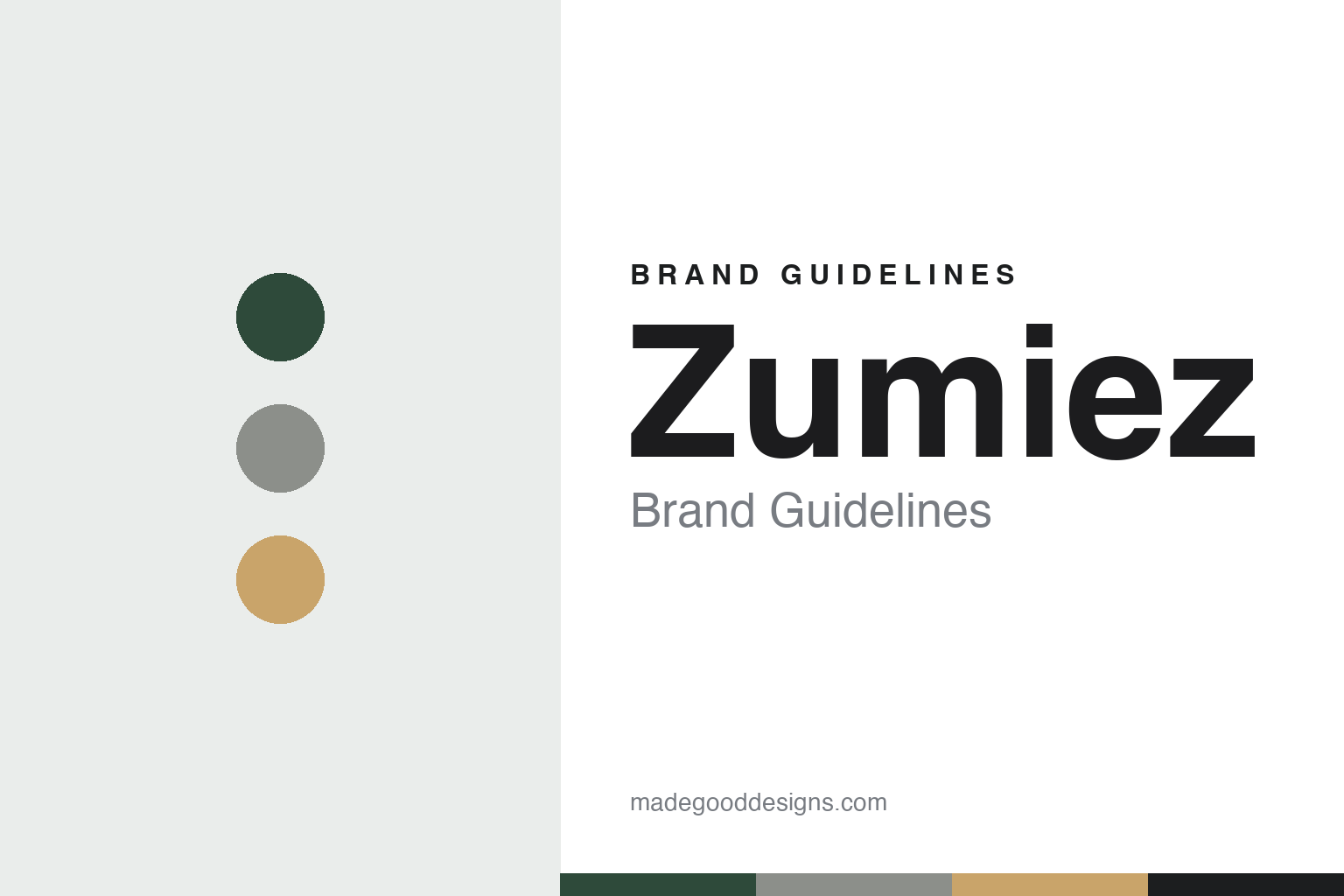
Two constants: a spruce green, concrete grey and deck maple palette and a condensed skate sans register. Abstract homage — not a Zumiez product or mark; no logo, sign or shopping bag is reproduced.
Above the Belt
Two department-store colleagues and a mall shop.
Zumiez started in 1978 under another name. That year Tom Campion and Gary Haakenson left their jobs at the J.C. Penney store in Seattle’s Northgate Mall and opened a shop in the same mall called Above the Belt, The Herald of Everett reported in 2003 and again in 2005. A photograph of that opening store showed racks of button-down shirts, and Haakenson recalled that the company’s office was at first in a tunnel running under the mall. A second store followed in 1979 at Everett Mall, north of Seattle, and English Wikipedia lists further early stores at Tacoma Mall, Alderwood Mall and Bellevue Square.
In the mid-1980s the small chain had to change its name to avoid a conflict with another business, The Herald reported. It chose Zumiez, pronounced “zoomies”; Campion told the paper the word does not mean anything and that he simply liked its sound and the distinct identity it gave the stores. Around the time of the change the chain began aiming at a younger crowd and added shoes, and snowboards arrived in the stores in the late 1980s. The company was based in Everett from the mid-1980s.
Haakenson left day-to-day operations in 1993 and sold his share of the business in 2002, the 2003 Herald report says. That year Campion described his customers as “a little edgier, a little more punk” than those of other chains, and the reporter found shoppers at the Alderwood Mall store playing a video game on a small couch near the back of the shop.
Colour
Private equity, Nasdaq and a move into Europe.
Outside money arrived in 2002, when the Los Angeles equity firm Brentwood Associates became a major partner and took two seats on the board, and Rick Brooks became president and chief executive, The Herald reported in November 2003. By then Zumiez had 115 stores in 15 states, selling clothing and shoes alongside skateboards, snowboards and related equipment to customers mostly between 12 and 24 years old.
The company’s shares began trading on Nasdaq under the symbol ZUMZ on 6 May 2005, The Herald reported; at that point the chain had 140 stores in 18 states and described its customers as skateboarders, snowboarders, surfers and bike riders. English Wikipedia records the purchase of a chain called Fast Forward in 2006 and a move of the corporate office from Everett to Lynnwood, Washington, in 2012.
The same year Zumiez confirmed it was buying Blue Tomato, the Austrian board-sports and streetwear retailer, FashionUnited reported in June 2012. German Wikipedia says Blue Tomato was founded in 1988 in Schladming, Austria, by the snowboarder Gerfried Schuller and has been a Zumiez subsidiary since 2012. An Australian skateboard retailer, Fast Times, later joined the group.
Events have been part of the brand’s presence in malls. English Wikipedia describes an annual Couch Tour, run for thirteen years, which brought live bands, professional skateboarding demonstrations and an amateur contest to malls with Zumiez stores, with free entry; because the company did not sponsor riders itself, skate-industry companies supplied the prizes.
The offices carried the same informal tone. In 2003 The Herald described the headquarters in southwest Everett, near the Boeing manufacturing complex, as having wildly decorated halls down which employees sometimes rode skateboards. Campion said the company encouraged individual store managers to make their own decisions, and that it held a yearly winter retreat in the North Cascades for all of them, combining snowboarding and skiing with training in merchandising and sales.
Typography
How the chains present themselves.
Youth and mall fashion chains in the United States and Canada mostly present themselves through their stores: the shop sign above a mall unit, the shopping bag and the labels on the rails. Few of them publish a formal identity manual, so what can be described is what the companies show in their stores, on their websites and in their announcements, and what the business press has reported about them.
The formats vary. Some chains began as a single surf or skate shop and moved into enclosed malls; PacSun traces itself to a Newport Beach surf shop of 1980 and opened a mall store the following year, and Zumiez started in 1978 as a shop in Seattle’s Northgate Mall. Others built their business on catalogues and later online shops, and several now trade across the United States, Canada and further abroad.
Ownership is just as varied. Some chains are still run by founders or their families, some are listed on stock exchanges, and others are owned by private-equity firms or brand-licensing groups, often after a Chapter 11 or other restructuring. Those changes are part of each brand’s story, and the guides here give them as dated facts, with the store estate described as it stood at the date of the source.
On the rails, these retailers mix outside labels with their own brands and with licensed ranges, from surf and skate names to sports and entertainment partnerships, and they name those collections in their own announcements. Each guide in this series sets out who founded the chain, who owns it now, how it has traded and what it sells, and separates what independent dated sources report from what the company says about itself.
Aa
A condensed sans for a skate-and-snow register. (Specimen set in Barlow Condensed, a sans STAND-IN; NOT the Zumiez logo.)
Zumiez
Three store names on three continents.
Zumiez remains a listed company headquartered in Lynnwood. English Wikipedia, citing the annual report filed in March 2018, gives 726 stores as of 3 February 2018: 608 in the United States, 52 in Canada, 54 in Europe and 12 in Australia. In its results release of 12 March 2026 the company said it operated 716 stores as of 28 February 2026 — 560 in the United States, 45 in Canada, 83 in Europe and 28 in Australia — under the names Zumiez, Blue Tomato and Fast Times, with online shops at zumiez.com, zumiez.ca, blue-tomato.com and fasttimes.com.au. The same release describes its range as clothing, footwear, accessories and hardgoods for young men and women.
The three store names have different roots: a Seattle mall shop renamed in the 1980s, an Austrian snowboard business from an Alpine resort town, and an Australian skateboard retailer. Each keeps its own name and its own web address rather than being folded into the Zumiez name.
The history of the name is also part of the identity. Zumiez is a coined word chosen in the 1980s for its sound rather than its meaning, and the company has kept it, with its unusual spelling and its “zoomies” pronunciation, through the move from button-down shirts to skateboards and snowboards. English Wikipedia now ties the stores to action sports in general — skateboarding, snowboarding, BMX and motocross — a long way from the button-down shirts of the Northgate store, and the 2026 release adds streetwear to that list.
For a design guide, Zumiez shows how a coined, meaningless name can carry a retailer through a complete change of product, from shirts in a Seattle mall to skate, snow and streetwear across North America, Europe and Australia. Compare PacSun, a California surf-shop chain that also moved into malls, and Tilly’s, another US youth fashion chain. For this guide we use a spruce green, a concrete grey and a deck-maple tan with a condensed sans, an unofficial interpretation; no product or logo is reproduced.
Explore & save
Keep Zumiez’s identity on hand — save it to a board in the Made Good inspiration library.
Zumiez identity set
Pin the Zumiez spruce green, concrete grey and deck maple palette and the condensed skate sans register to your own board.
Source & notes
Frequently Asked Questions
What font can I use to match the Zumiez look?
This guide describes Zumiez’s type as “A condensed sans for a skate-and-snow register”. Its type specimen is set in Barlow Condensed from Google Fonts as a stand-in; Barlow Condensed is not Zumiez’s own lettering.
What colours are in the Zumiez palette?
This guide’s Zumiez palette is Spruce green #2E4A3A, Grip-tape black #1C1E1F, Concrete grey #8C8F8A, Deck maple #C9A46A and Slush white #F3F3F0. The tones are the guide’s own unofficial interpretation, not official Zumiez hex codes.
When was Zumiez founded?
Zumiez was founded in 1978 (as Above the Belt), in Seattle, Washington.
Who founded Zumiez?
Zumiez was founded by Tom Campion and Gary Haakenson in 1978 (as Above the Belt).