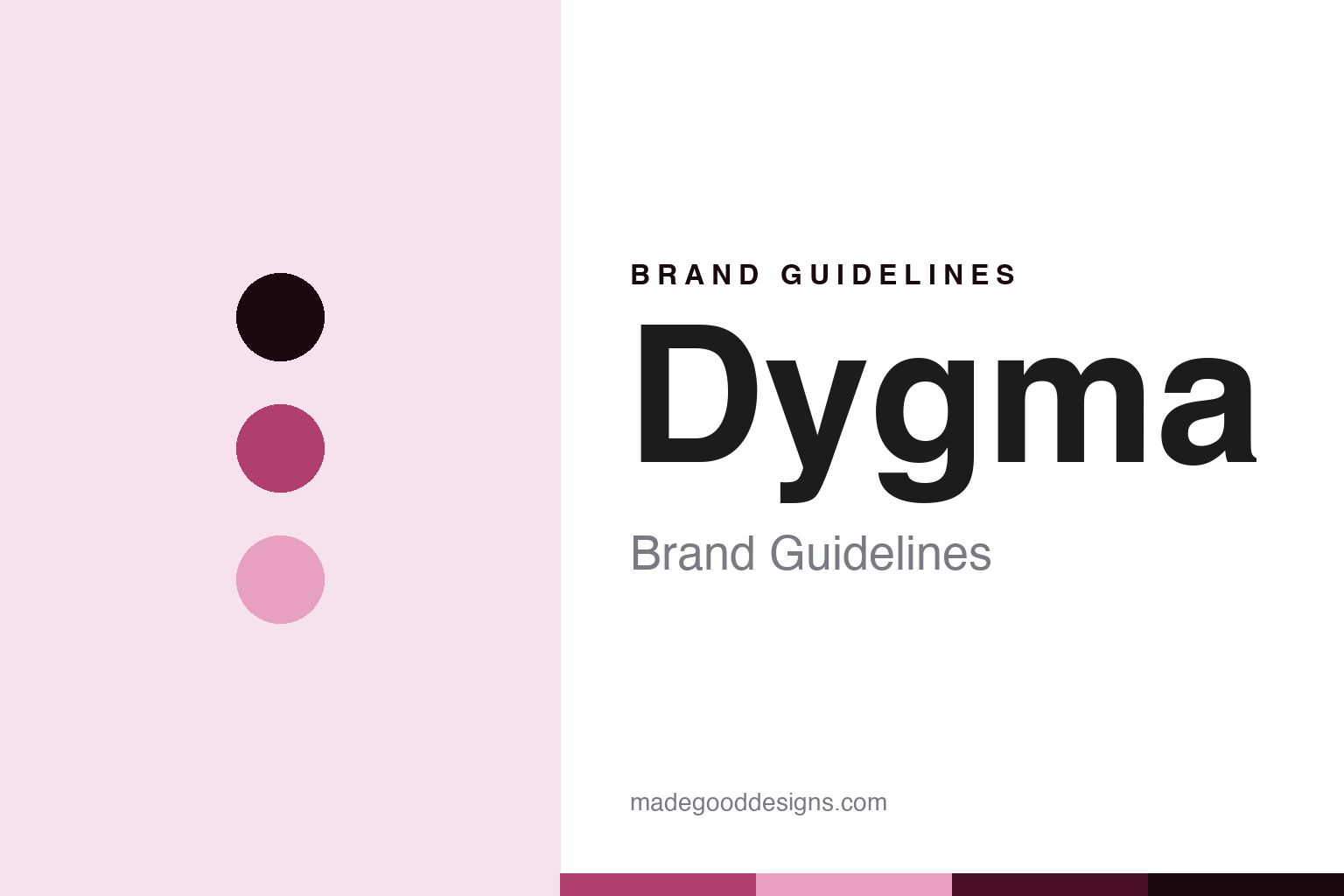
Dygma Brand Guidelines
The split ergo keyboard for gamers.
Aa
Two constants: an esports-magenta palette and a gaming-sans register. Abstract homage — not a Dygma product or mark.
The split ergo keyboard for gamers
Dygma is the Spanish maker of the Raise and Defy split ergonomic keyboards — for gamers and power users.
Dygma brings the round its crossover — the Spanish brand whose split ergonomic keyboards, the Raise and the Defy, with their thumb-key clusters and wireless, brought the ergo split to gamers and productivity power users alike. Dygma makes split ergonomic keyboards, and its answer to a round about ergo and split boards is performance: an ergo split with a gamer’s sensibility, layers and macros, from a founder who came from esports. A keyboard, split for speed.
Its identity is the split ergo keyboard for gamers. Dygma’s Raise and Defy, its thumb clusters and its esports roots are the story here. A keyboard, split. The split ergo keyboard for gamers.
(Honest notes, so the story stays precise. Dygma — Dygma Lab S.L., at dygma.com — is a Spanish company, with the exact headquarters city not confirmed, Alicante reported, so we say Spain. It makes split ergonomic mechanical keyboards: the Raise 2, a row-staggered sixty-percent split with wireless and tenting; the Defy, a columnar split with sixteen thumb keys and wireless; and a newer low-profile Sonsei, plus its Bazecor configurator, reported open source. Its founder is Luis Sevilla, a former League of Legends esports coach, its first prototype the Shortcut in January 2017, and its Raise ran a Kickstarter in 2017. On where it is made — a theme of this round — Dygma designs in Spain but manufactures through overseas partners, so it is not EU-made, though part of its fulfilment is handled at a Spanish facility that employs only people with disabilities, which we note as a genuine detail. On ownership, it is independent, privately held and founder-led. Its marks — Dygma, Raise, Defy — are IP we describe but do not reproduce, and there is no official brand hex; these tones are an unofficial interpretation. This is design commentary and does not promote any product.)
Colour
Dygma lives in an esports magenta. Click a swatch to copy the hex.
Dygma’s identity is performance, split and crossover — an esports magenta, an ink, a bloom, a deep magenta, and a paper. The palette leans esports magenta and bloom: a bold, energetic register that nods to a gaming-crossover brand rather than a clinical ergo palette. It signals a performance-minded maker. The honest caveat: with no published brand hex, these values are an original, unofficial interpretation, not first-party colours.
The lesson is an esports magenta signals a performance, crossover identity. Dygma’s world is a performance, made object. For designers, it is a reminder that a bold magenta and a soft bloom can carry an ergo brand — the tone of a gaming crossover. Because these tones can fail as small text, keep type dark and let the colour live in the accents, palette and band. The takeaways: bring ergo to gamers; use thumb clusters; be honest it is made abroad; and treat any single hex as unofficial.
Typography
The register is a gaming sans — performance, split, plain.
Dygma’s identity carries a performance, split, plain spirit — a gaming-crossover brand, not a clinical one. A gaming sans captures the mood: bold, capable and modern, the register of an ergo split with a gamer’s edge. Set in an esports-magenta palette, the gaming sans feels performance and split — exactly the personality Dygma carries. It is a performance tool rather than a logo, mirroring a thumb cluster. (Dygma’s real wordmark is a thing we describe but do not reproduce, and the exact typeface is not ours to use.) Because it is not ours to use, the honest description is “a gaming-sans spirit,” shown here in a stand-in. The type behaves like the keyboard: performance, split and plain.
Aa
A gaming-sans spirit — performance and split. (Specimen set in Libre Franklin, a gaming-sans STAND-IN; NOT the Dygma logo.)
Ergo & split boards
Dygma stands for the split ergo keyboard for gamers.
Dygma brings the round its crossover. An esports-magenta palette, a gaming sans and a split board make one thing — the split ergo keyboard for gamers — the whole identity: performance, split and crossover. The thumb clusters are the differentiator, and the esports roots are the meaning. The point is a Spanish brand that brought the ergonomic split to gamers and productivity power users, from a founder who came from competitive esports.
Put to work, the identity is a performance crossover told straight, as design. A maker in this spirit would bring ergo to gamers, use thumb clusters, and be honest it is made abroad. A reader in this spirit would keep the facts right: Dygma is Dygma Lab S.L., a Spanish company, with the exact city unconfirmed; it makes the Raise 2, the Defy and the low-profile Sonsei with its Bazecor configurator; its founder is Luis Sevilla, a former League of Legends coach, with a 2017 prototype and Kickstarter; it designs in Spain but manufactures through overseas partners, with some fulfilment at a Spanish facility employing only people with disabilities; and it is independent and founder-led. Dygma sits in the round’s split thread with ZSA, UHK and Keyboardio, and its where-made thread at the made-abroad end with Kinesis, Keyboardio and MoErgo. The honest editorial moves are to say Spain not a specific city, to say designed-Spain and made-abroad, to note the disability-employing fulfilment, and to credit the esports founding. The lesson Dygma teaches is that a performance crossover can be a whole identity, and honesty about the overseas making keeps the crossover credible.
For designers and brand-builders, Dygma continues ergo & split boards: bring ergo to gamers — and be honest where it is made. The lessons: cross a category into a new audience; use a signature feature like thumb clusters; say designed-here and made-abroad honestly; note a genuine social detail without overclaiming; and never reproduce a logo. It is also a reminder to stay precise: Dygma is the Spanish maker of the Raise and Defy split ergonomic keyboards for gamers and power users — with the palette here an unofficial interpretation. Read that way, Dygma is less a keyboard than a crossover: an ergo split with a gamer’s edge, designed in Spain. The lesson for a brand is that a crossover and honest making reinforce each other, and saying made-abroad keeps the crossover earned. Dygma made the-split-ergo-keyboard-for-gamers the identity — proof that a crossover can define a maker.
Explore & save
Keep Dygma’s identity on hand — save it to a board in the Made Good inspiration library.
Dygma identity set
Pin the esports-magenta palette and the gaming-sans register to your own board.