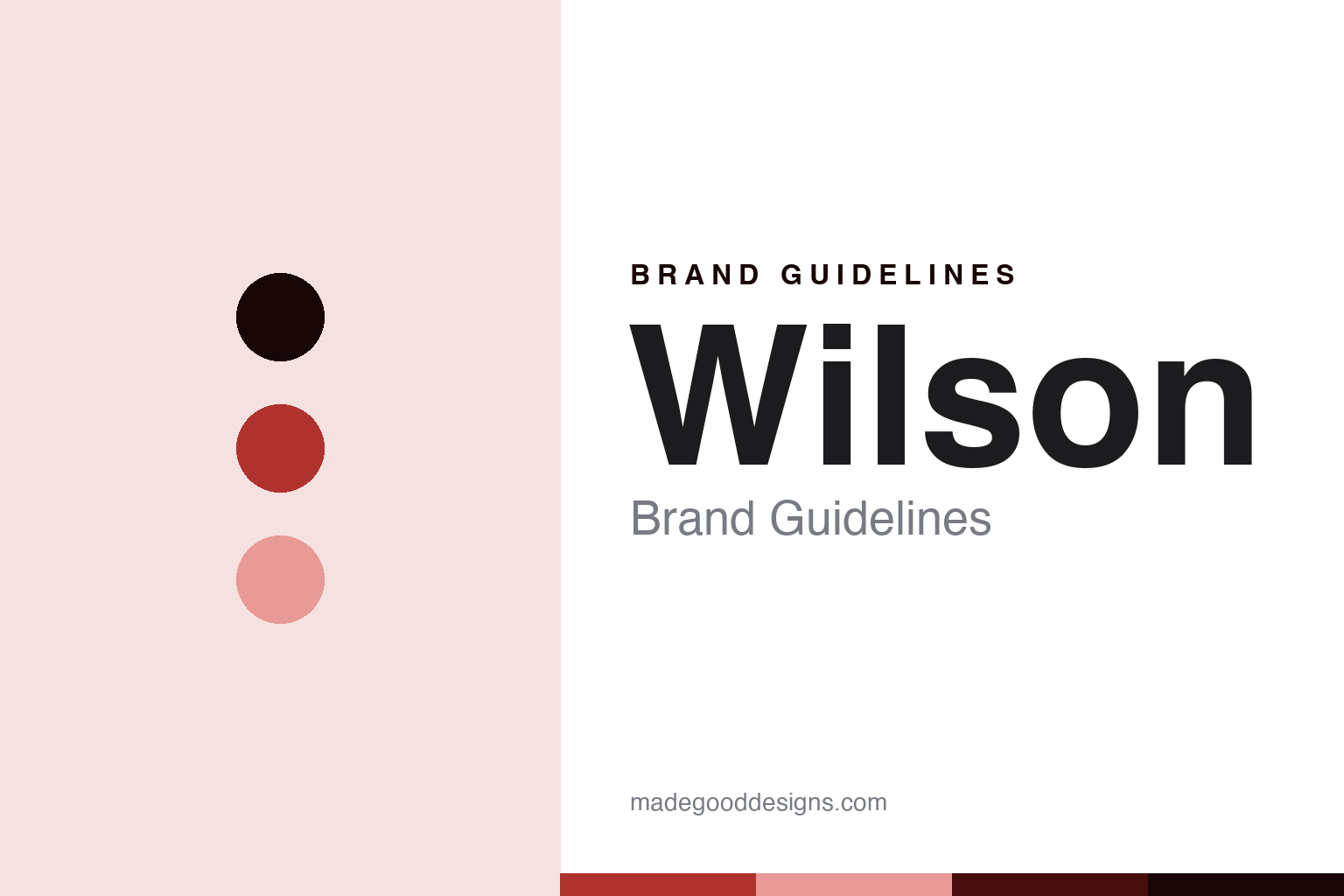
Wilson Brand Guidelines
The Pro Staff racket house.
Aa
Two constants: a Wilson-red palette and a court-sans register. Abstract homage — not a Wilson product or mark.
The Pro Staff racket house
Wilson is the Chicago sporting-goods house of the Pro Staff racket and the US Open ball — owned by Amer Sports.
Wilson brings the round its American breadth — the Chicago sporting-goods house whose Pro Staff racket line is long associated with Roger Federer, whose ball is the official ball of the US Open, and which grew from a meatpacking byproduct into a giant, now owned by Amer Sports. Wilson makes rackets and balls, and its answer to a round about the racket makers is scale and heritage: a racket power inside a company that also makes the NBA basketball and the NFL football. A brand, from Chicago.
Its identity is the Pro Staff racket house. Wilson’s Pro Staff, its US Open ball and its Chicago heritage are the story here. A brand, American. The Pro Staff racket house.
(Honest notes, so the story stays precise. Wilson Sporting Goods — at wilson.com — makes tennis rackets, the Pro Staff line long associated with Roger Federer, the Blade and the Clash, plus the tennis ball that has been the official US Open ball since 1979, and padel and pickleball, within a much broader portfolio that includes the official NBA basketball and NFL football and Louisville Slugger. It was founded in 1913 in Chicago as the Ashland Manufacturing Company, tied to a meatpacking firm that used animal byproducts to make strings, and was renamed after Thomas E. Wilson. On where it is made — a theme of this round — its rackets are made in Asia, so we say US-heritage and designed with Asian manufacture, not US-made. On ownership, Wilson is owned by Amer Sports, which also owns Salomon, Atomic and Arc’teryx, and which is controlled by an ANTA-led consortium and listed on the New York Stock Exchange since 2024; we note that the investor Chip Wilson, of Lululemon, is unrelated to the Wilson brand name. On its players, we frame Federer generally as having long played the Pro Staff line, since a past class action questioned exact-model claims, so we do not say a specific model won a specific title. Its W logo is IP we describe but do not reproduce; there is no official brand hex; these tones are an unofficial interpretation. This is design commentary.)
Colour
Wilson lives in a Wilson red. Click a swatch to copy the hex.
Wilson’s identity is American, broad and heritage — a Wilson red, an ink, a blush, a deep red, and a paper. The palette leans Wilson red and blush: a confident, sporting register that nods to a classic American sports brand rather than a quiet palette. It signals a racket power with reach. The honest caveat: with no published brand hex, these values are an original, unofficial interpretation, not first-party colours.
The lesson is a Wilson red signals an American, heritage identity. Wilson’s world is a broad, made object. For designers, it is a reminder that a confident red and a soft blush can carry a sports brand — the tone of American sport. Because these tones can fail as small text, keep type dark and let the colour live in the accents, palette and band. The takeaways: build broad heritage; own a category like the ball; be honest about ownership and making; and treat any single hex as unofficial.
Typography
The register is a court sans — American, sporting, plain.
Wilson’s identity carries an American, sporting, plain spirit — a heritage sports house, not a fashion. A court sans captures the mood: confident, clean and broad, the register of a classic American brand. Set in a Wilson-red palette, the court sans feels American and sporting — exactly the personality Wilson carries. It is heritage rather than a logo, mirroring grip and felt. (Wilson’s real W logo is a thing we describe but do not reproduce, and the exact typeface is not ours to use.) Because it is not ours to use, the honest description is “a court-sans spirit,” shown here in a stand-in. The type behaves like the brand: American, sporting and plain.
Aa
A court-sans spirit — American and sporting. (Specimen set in Work Sans, a court-sans STAND-IN; NOT the Wilson logo.)
The racket makers
Wilson stands for the Pro Staff racket house.
Wilson brings the round its American breadth. A Wilson-red palette, a court sans and a heritage line make one thing — the Pro Staff racket house — the whole identity: American, broad and heritage. The Pro Staff and the US Open ball are the differentiators, and the byproduct-to-giant arc is the meaning. The point is a Chicago house that grew from meatpacking strings into a racket power and a maker of America’s official balls, now owned by Amer Sports.
Put to work, the identity is broad heritage told straight, as design. A maker in this spirit would build broad heritage, own a category, and be honest about ownership and making. A reader in this spirit would keep the facts right: Wilson was founded in 1913 in Chicago as Ashland Manufacturing, from a meatpacking firm, renamed after Thomas E. Wilson; it makes the Pro Staff, Blade and Clash rackets and the US Open ball since 1979; its rackets are made in Asia, so it is US-designed not US-made; it is owned by Amer Sports, ANTA-controlled and NYSE-listed since 2024; and Federer is framed generally as a Pro Staff player. Wilson sits in the round’s string-first thread with Babolat and Tecnifibre, its own strings born of meatpacking byproduct, and its ownership sits with the corporate owners. The honest editorial moves are to date the founding to 1913, to tell the byproduct origin, to say US-designed not US-made, to state the Amer Sports ownership, and to frame Federer generally. The lesson Wilson teaches is that broad heritage can be a whole identity, and honesty about the making and ownership keeps the heritage credible.
For designers and brand-builders, Wilson continues the racket makers: build broad heritage — and own a category. The lessons: grow from a humble origin; own defining categories like official balls; say designed-here not made-here; state a corporate owner and avoid a name-coincidence trap; and never reproduce a logo. It is also a reminder to stay precise: Wilson is the Chicago sporting-goods house of the Pro Staff racket and the US Open ball, owned by Amer Sports — with the palette here an unofficial interpretation. Read that way, Wilson is less a racket than a heritage: a byproduct-born house that became a racket power. The lesson for a brand is that broad heritage and honest disclosure reinforce each other, and telling the byproduct origin keeps the heritage earned. Wilson made the-Pro-Staff-racket-house the identity — proof that heritage can define a brand.
Explore & save
Keep Wilson’s identity on hand — save it to a board in the Made Good inspiration library.
Wilson identity set
Pin the Wilson-red palette and the court-sans register to your own board.