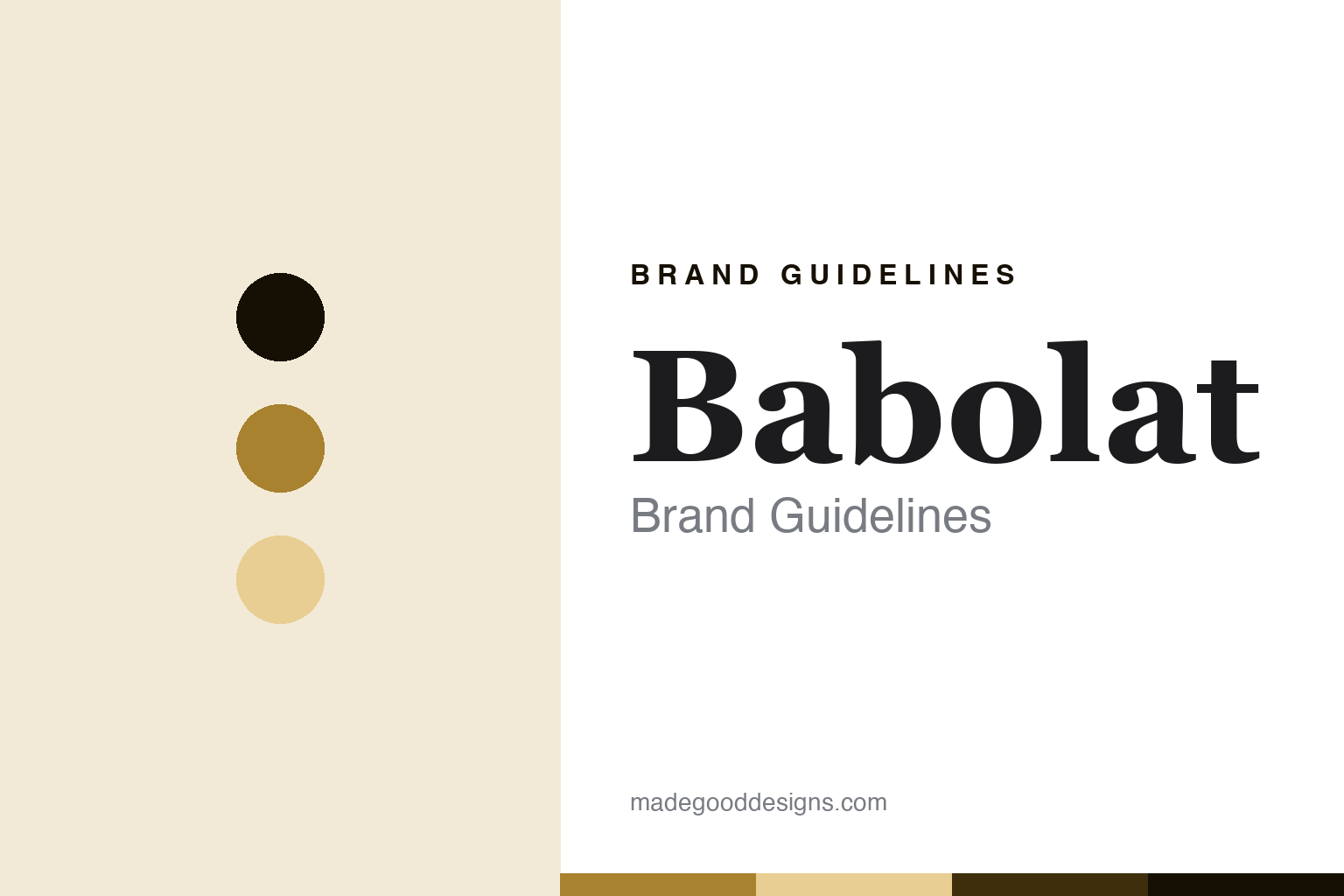
Babolat Brand Guidelines
The oldest name in racket sports.
Aa
Two constants: a gut-gold palette and a gut-serif register. Abstract homage — not a Babolat product or mark.
The oldest name in racket sports
Babolat is the French house that invented the tennis string in 1875 — and became a racket power.
Babolat opens the round as the origin — the Lyon house that invented the natural gut tennis string in 1875, calls itself the oldest racket-sports company in the world, and turned a century of string-making into a modern racket power. Babolat makes rackets and strings, and its answer to a round about the racket makers is heritage plus reinvention: the company that strung the game before it built the frames. A brand, that began with string.
Its identity is the oldest name in racket sports. Babolat’s natural gut, its Pure line and its French heritage are the story here. A brand, string-first. The oldest name in racket sports.
(Honest notes, so the story stays precise. Babolat — at babolat.com — was founded in 1875 in Lyon, France by Pierre Babolat, who created the first natural gut tennis string, its VS gut later perfected, and the company describes itself as the oldest racket-sports company in the world, which we treat as its own claim. Today it makes rackets, the Pure Drive flagship, the Pure Aero associated with Rafael Nadal and the Pure Strike, plus strings, balls, grips, shoes and padel, badminton and pickleball gear. A heritage nuance: for about its first hundred and twenty years Babolat was a strings-and-accessories company, only making complete rackets from 1994, so it is string-first, then a racket power. On where it is made — a theme of this round — we do not claim its rackets are French-made: they are designed in Lyon but, like the whole industry, produced offshore, in Asia, while the VS natural gut is the French-heritage product. On ownership, it is family-linked and privately held, with Éric Babolat, a descendant, as CEO. Player associations, such as Nadal and Carlos Alcaraz, are public facts we state without inventing endorsements. Its wordmark and frame geometry are IP we describe but do not reproduce; there is no official brand hex; these tones are an unofficial interpretation. This is design commentary.)
Colour
Babolat lives in a gut gold. Click a swatch to copy the hex.
Babolat’s identity is original, French and string-rooted — a gut gold, an ink, a string tone, a deep gold, and a paper. The palette leans gut gold and string: a warm, heritage register that nods to natural gut and a Lyon workshop rather than a loud palette. It signals the oldest name in the sport. The honest caveat: with no published brand hex, these values are an original, unofficial interpretation, not first-party colours.
The lesson is a gut gold signals an original, string-rooted identity. Babolat’s world is a heritage, made object. For designers, it is a reminder that a warm gold and a soft string tone can carry a sports brand — the tone of natural gut. Because these tones can fail as small text, keep type dark and let the colour live in the accents, palette and band. The takeaways: own an origin; build on a component heritage; be honest where rackets are made; and treat any single hex as unofficial.
Typography
The register is a gut serif — original, heritage, considered.
Babolat’s identity carries an original, heritage, considered spirit — a string house turned racket power, not a fashion. A gut serif captures the mood: warm, classic and a little venerable, the register of the oldest name in racket sports. Set in a gut-gold palette, the gut serif feels original and heritage — exactly the personality Babolat carries. It is a string heritage rather than a logo, mirroring gut and grip. (Babolat’s real wordmark and frame geometry are things we describe but do not reproduce, and the exact typeface is not ours to use.) Because it is not ours to use, the honest description is “a gut-serif spirit,” shown here in a stand-in. The type behaves like the brand: original, heritage and considered.
Aa
A gut-serif spirit — original and heritage. (Specimen set in Cormorant Garamond, a gut-serif STAND-IN; NOT the Babolat logo.)
The racket makers
Babolat stands for the oldest name in racket sports.
Babolat opens the round as the origin. A gut-gold palette, a gut serif and a string heritage make one thing — the oldest name in racket sports — the whole identity: original, French and string-rooted. The 1875 natural gut is the differentiator, and the string-first-then-racket-power arc is the meaning. The point is a Lyon house that invented the tennis string, strung the game for over a century, and only became a racket maker in 1994.
Put to work, the identity is a string heritage told straight, as design. A maker in this spirit would own an origin, build on a component heritage, and be honest where rackets are made. A reader in this spirit would keep the facts right: Babolat was founded in 1875 in Lyon by Pierre Babolat, inventor of the natural gut string; it makes the Pure Drive, the Nadal-associated Pure Aero and the Pure Strike; it was string-first for about a hundred and twenty years, making complete rackets only from 1994; its rackets are designed in Lyon but made offshore, not French-made; and it is family-linked, led by Éric Babolat. Babolat opens the round’s string-first thread with Wilson and Tecnifibre, the string-makers that became racket powers, and its where-made thread is the honest industry norm. The honest editorial moves are to date the founding to 1875, to frame the oldest-in-the-world line as its own claim, to say designed-France not made-France, and to state the player links as public facts. The lesson Babolat teaches is that a component origin can be a whole identity, and honesty about the offshore making keeps the heritage credible.
For designers and brand-builders, Babolat opens the racket makers: own an origin — and be honest where it is made. The lessons: build on a genuine component heritage; grow from a part into a whole product; frame a superlative as your own claim; say designed-here not made-here; and never reproduce a logo. It is also a reminder to stay precise: Babolat is the French house that invented the tennis string in 1875 and became a racket power — with the palette here an unofficial interpretation. Read that way, Babolat is less a racket than a string: the oldest name in the sport, which strung the game before it built the frame. The lesson for a brand is that a component origin and honest making reinforce each other, and saying designed-France keeps the heritage earned. Babolat made the-oldest-name-in-racket-sports the identity — proof that a string can open a round.
Explore & save
Keep Babolat’s identity on hand — save it to a board in the Made Good inspiration library.
Babolat identity set
Pin the gut-gold palette and the gut-serif register to your own board.