Francesco Melzi is usually remembered as the young man at Leonardo’s side in his last years. That is true, but it undersells him. Melzi was also a polished painter, a draughtsman who absorbed his master’s pen technique, and the person who turned scattered pages into an organised text. Anyone who has structured a messy archive or design system will recognise his problem.
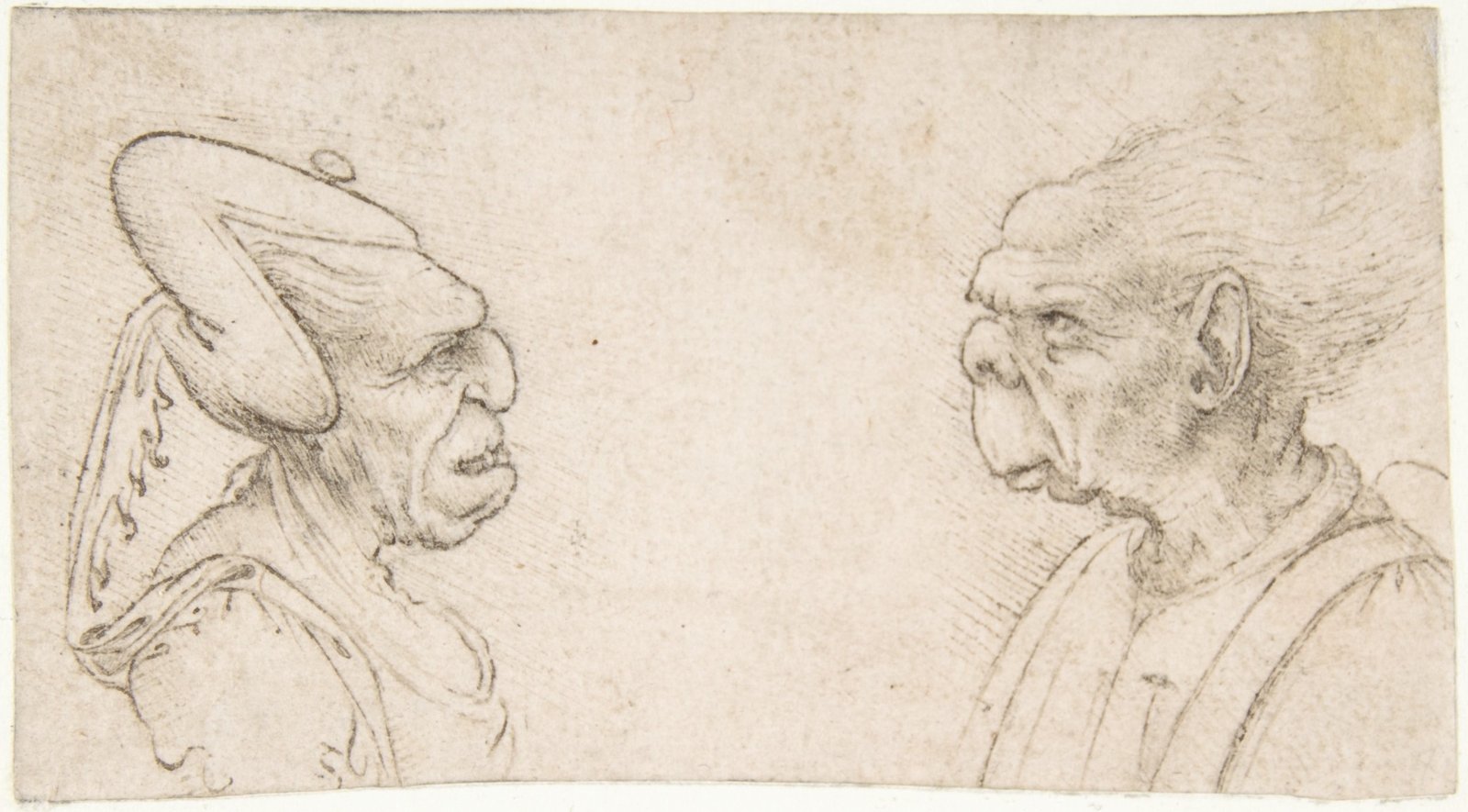
One drawing attributed to him is public domain at the Metropolitan Museum of Art; his paintings are described in text with the museums that hold them. For more historic images cleared for reuse, browse the MGD museum inspiration collection.
Who was Francesco Melzi?
The Metropolitan Museum of Art records him as Giovanni Francesco Melzi, born in Milan in 1491 or 1493 and died around 1570 at Vaprio d’Adda, where his family had a villa above the river Adda. The Dizionario Biografico degli Italiani, published by Treccani, gives the same uncertain birth years, names his father as Gerolamo, from a noble Lombard family, and places his death around 1570, probably at Vaprio. The National Gallery in London, which showed his work in 2019, describes him as a wealthy Milanese gentleman and Leonardo’s favoured assistant and companion in his final years.
Treccani’s entry suggests that his father arranged his entry into Leonardo’s workshop around 1506, and notes a draft letter from Leonardo to Melzi in the Codex Atlanticus, which shows the young man handling correspondence.
A dated career outline
- About 1506–08, Milan. Joins Leonardo’s circle. Treccani gives about 1506; the Discovering da Vinci project dates his formal documentation as an assistant to 1508.
- 1510, early drawings. A male head in the Biblioteca Ambrosiana, Milan, is dated 14 August 1510, according to Treccani, and is among the anchors used to define his hand.
- 1513, Rome. Treccani records Leonardo and Melzi leaving Milan for Rome on 24 September 1513; the Staatliche Museen zu Berlin also note the Rome journey of 1513.
- 1516–17, France. He follows Leonardo to the court of Francis I. Discovering da Vinci gives 1516; Treccani gives 1517.
- April 1519, Amboise. Leonardo’s will names him heir and executor and leaves him the manuscripts and drawings, as recorded by Treccani, the National Gallery and the Berlin museums.
- About 1515–18, the portrait of Leonardo. The Royal Collection dates its red chalk profile portrait of Leonardo to about 1515–18 and calls it probably the work of Melzi.
- 1518–22 or earlier, Vertumnus and Pomona. The Gemäldegalerie in Berlin dates its panel to 1518–22; Treccani reports Pietro Marani’s proposed date of 1511–13.
- About 1520, Flora. The State Hermitage Museum’s panel, transferred to canvas, is dated about 1520 by the National Gallery, which borrowed it in 2019.
- About 1540, the Libro di pittura. Treccani reports Carlo Vecce’s suggested date for the compilation now in the Vatican Library, while noting that the codex’s date is still debated.
What to look at in a Francesco Melzi drawing
The Met’s sheet is tiny, about 5.4 by 9.9 centimetres in pen and brown ink, and the museum catalogues it as attributed to Melzi after Leonardo. Two caricatured heads face each other in strict profile across a wide band of empty paper: on the left an old woman with a swept-back headdress, on the right an old man with large ears and a receding chin. It should be read as Melzi studying a Leonardo model rather than inventing one.
Composition. The two heads sit near the left and right edges, leaving the centre almost blank. The empty middle is what makes the sheet work: your eye travels across it, comparing nose with nose and jaw with jaw.
Line. Look at how the hatching is built. Fine parallel strokes run diagonally behind each head as a ground, while shorter curved strokes follow the forms of cheek and neck. The outline is light and slightly broken, and the dark accents are saved for the eye, the nostril and the corner of the mouth.
Palette. On the museum’s scan of this sheet, measured with PIL quantisation, the paper reads around #ECE0D1, the mid tones around #BAAA95 and the darkest ink cluster around #9B8A75. These values are measured from the scan and not from the original ink, which has faded and browned over five centuries.
What to look at in his paintings
None of Melzi’s paintings is in the open-access collections of the Met, the Art Institute of Chicago or the Cleveland Museum of Art, so they are described here in text only.
Vertumnus and Pomona, Gemäldegalerie, Berlin. A large poplar panel, about 186 by 135 centimetres, illustrating Ovid’s story of the god of the seasons who courts the orchard goddess Pomona disguised as an old woman. The Berlin museum’s catalogue notes that the figure of Pomona derives from the Virgin in Leonardo’s cartoon of the Virgin and Child with Saint Anne.
Flora, State Hermitage Museum, St Petersburg. The National Gallery describes the goddess of flowers seated in a leafy grotto of fern and ivy, examining a sprig of aquilegia, with jasmine on her lap and anemones beside her. It notes that restoration revealed a strong ultramarine blue and flowers growing from the grotto walls, and that infrared imaging showed Melzi working out the figure’s anatomy before painting the drapery. The gallery also points to the Leonardesque face, soft tonal transitions and careful plants.
Both works were once attributed to Leonardo. The Berlin painting was listed under his name at Sanssouci, and Flora arrived at the Hermitage in 1850 as a Leonardo, according to the National Gallery. That history tells you how closely Melzi matched his model, and also why attribution remains debated: the 1913 Catholic Encyclopedia doubted that any painting could be firmly given to him.
Technique: learning by copying, working by structure
Melzi’s training followed workshop practice. Treccani connects a red chalk study of a foot in the Ambrosiana, dated about 1510, with his figure of Pomona, which shows him preparing parts of a painting through separate studies. The Met’s grotesque heads show the other half of that training: copying the master’s inventions in pen until the hatching became second nature.
His larger achievement was editorial. Leonardo left notes on painting scattered across many notebooks. Melzi selected, copied and arranged them into the manuscript known as the Libro di pittura, now in the Vatican Library as Codex Urbinas Latinus 1270. Treccani identifies his handwriting in the compilation, and Britannica and the University of Rochester’s library describe the codex as the source behind the abridged manuscripts that led to the printed Trattato della pittura of 1651, published in Paris.
Melzi also acted as keeper of the archive. The Royal Collection suggests that its red chalk portrait of Leonardo is the one Giorgio Vasari saw at Melzi’s villa, and Vasari drew on the collection for his Lives. If you want the wider context, read our guides to Leonardo da Vinci, to Giorgio Vasari and to Renaissance art.
How designers can borrow from Francesco Melzi
- Edit before you design. Melzi’s compilation shows the value of sorting content into numbered, topic-based chapters before thinking about layout. Audit a large archive, group it into themes and write short, self-contained sections.
- Use the empty centre. The grotesque heads show how a blank middle between two facing elements creates comparison. Try it on product pairs, before-and-after spreads or speaker cards.
- Build tone with hatching. For line illustration, set a light diagonal ground first, then add curved strokes that follow form and save the darkest marks for focal points.
- Work in a warm, narrow range. A paper tone, a mid tone and one dark accent are enough for a calm, archival palette. Sample your own scans with the colour palette generator rather than copying hex values from a reference.
- Quote, then adapt. Melzi reused a tested figure from Leonardo and built a new scene around it. In a design system, reuse proven components and change the context, not the core.
- Draw plants from life. The detail of the flowers in Flora is a reminder that botanical accuracy reads as care. Browse the botanical theme for public-domain references.
Frequently asked questions
Who was Francesco Melzi?
Francesco Melzi was a Milanese nobleman and painter, born in 1491 or 1493, who joined Leonardo da Vinci’s workshop around 1506, travelled with him to Rome and France, and inherited his manuscripts and drawings in 1519. He died around 1570.
What did Francesco Melzi do with Leonardo’s notebooks?
He kept them and compiled Leonardo’s notes on painting into the Libro di pittura, now Codex Urbinas Latinus 1270 in the Vatican Library. Abridged copies of it led to the printed Trattato della pittura of 1651. After his death the papers were gradually dispersed.
Which paintings are attributed to Francesco Melzi?
The Gemäldegalerie in Berlin attributes Vertumnus and Pomona to him, and the State Hermitage Museum holds Flora, dated about 1520. Other attributions are debated by scholars.
Is Francesco Melzi’s work public domain?
His works are centuries old, and the Met flags its drawing attributed to him as public domain. Image rights for photographs of paintings in other museums depend on each museum’s own terms, so check before reusing a reproduction.