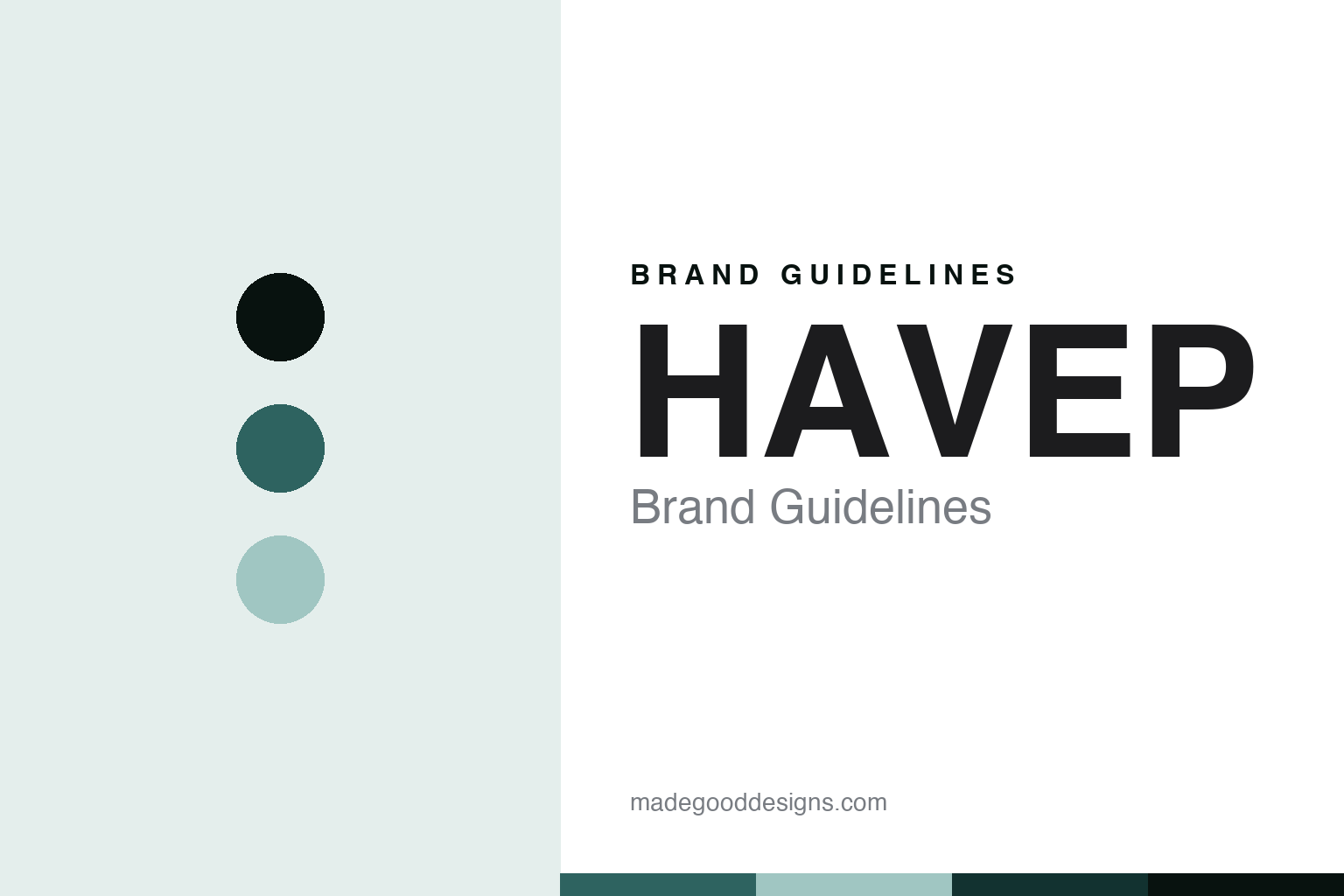
HAVEP Brand Guidelines
The protective cloth.
Aa
Two constants: a technical-teal palette and a technical-sans register. Abstract homage — not a HAVEP garment or mark.
The protective cloth
HAVEP is the Dutch family workwear house whose protective multinorm cloth is woven in the Netherlands and sewn in its own workshops abroad.
HAVEP is the round’s protective cloth — a fabric engineered to keep the wearer safe. From Goirle, in the Netherlands, HAVEP makes technical workwear for the trades — work trousers, jackets and coveralls — and, above all, a serious flame-retardant and multinorm protective line. Its answer to how a maker becomes a name is an engineered cloth: weave a single fabric that meets several safety standards at once, and build the workwear around it. A work garment, in a cloth built to protect.
Its identity is the protective cloth. HAVEP’s multinorm fabric, its Dutch weaving and its family heritage are the work it is known for. A garment, in a protective cloth. Safety, woven in.
(Honest notes, so the story stays precise. HAVEP — at havep.com — takes its signature from protective cloth: flame-retardant and multinorm fabrics engineered to meet several combined safety norms — heat, flame, arc, chemical, antistatic — in one garment. On its history, it is a Van Puijenbroek family textile firm from Goirle, in North Brabant; its name abbreviates the founding family’s name, H. van Puijenbroek. Its founding date carries a genuine discrepancy we present honestly: the company dates its 150th anniversary and royal grant to 1865, while its own history also traces a linen-trading business from the early 1870s, so we say founded 1865, with a linen trade from the early 1870s, rather than a bare single year. On where it is made — the crux of this round — HAVEP designs and weaves its cloth and runs its headquarters in the Netherlands, but its garments are sewn in its own and linked workshops abroad, named as Tunisia and North Macedonia, with Belgium historically; as a founding member of the Fair Wear Foundation, it frames that offshore making as audited and transparent, so the honest line is Dutch-woven cloth, garments sewn abroad, not made in the Netherlands. On ownership, it is family-owned through the family’s VP Capital, as Koninklijke Van Puijenbroek Textiel, and carries a Royal “Koninklijke” designation granted in 2015, which we keep as words, not heraldry. Its name and marks are IP, described but never reproduced, and there is no official brand hex; these tones are an unofficial interpretation. This is design commentary and does not promote any product.)
Colour
HAVEP lives in a technical-teal palette. Click a swatch to copy the hex.
HAVEP’s identity is technical, protective and made — a technical teal, an ink, a mist, a deep teal, and a paper. The palette leans technical teal and mist: the register of an engineered protective cloth and a hard-wearing twill, without a fluoro safety lockup. It signals protective technical workwear. The honest caveat: with no published brand hex, these values are an original, unofficial interpretation, not first-party colours.
The lesson is a technical-teal palette signals a protective, engineered identity. HAVEP’s world is a technical, protective, engineered object. For designers, it is a reminder that a technical teal and a soft mist can carry a protective-workwear house — the tone of an engineered cloth and the neutral of a twill — without reaching for hi-vis. Because these tones can fail as small text, keep type dark and let the colour live in the accents, palette and band. The takeaways: engineer the cloth; weave what you can at home; be honest about offshore sewing; and treat any single hex as unofficial.
Typography
The register is a technical sans — even, engineered, made.
HAVEP’s identity carries an even, engineered, made spirit — a technical-workwear house, not a fashion label. A technical sans captures the mood: clean, precise and safety-minded, the register of a Dutch textile firm. Set in a technical-teal palette, the technical sans feels engineered and made — exactly the personality HAVEP carries. It is engineered protection rather than a logo, mirroring a protective coverall. (HAVEP’s real wordmark, its hi-vis and reflective detailing, and its royal crest are things we describe but never reproduce, and the exact typeface is not ours to use.) Because it is not ours to use, the honest description is “a technical-sans spirit,” shown here in a stand-in. The type behaves like the cloth: even, engineered and made.
Aa
A technical-sans spirit — engineered and made. (Specimen set in Space Grotesk, a technical-sans STAND-IN; NOT the HAVEP wordmark, hi-vis mark or royal crest.)
How workwear is made
HAVEP stands for the protective cloth, woven at home and sewn abroad.
HAVEP is a lesson in how an engineered cloth, honestly made, can be an identity. A technical-teal palette, a technical sans and a protective garment make one thing — the protective cloth — the whole identity: technical, protective and made. The multinorm fabric is the differentiator, and the honest weave-here-sew-there making is the meaning. The point is a Dutch family firm that weaves a safety cloth at home and is transparent that its garments are sewn abroad.
Put to work, the identity is an engineered cloth, told straight, as design. A maker in this spirit would engineer the fabric and be plain about the make — protective cloth woven in the Netherlands, garments sewn in its own workshops abroad. A reader in this spirit would separate the two: weaving and sewing are different steps in different places, and “Dutch” here means the cloth and the company, not the country of assembly. HAVEP carries the round’s cloth thread through engineered protection, and its where-made thread with unusual clarity, a firm that weaves at home, sews offshore, and audits it through Fair Wear. The honest editorial moves are to attribute the 1865-versus-1870s founding, to say Dutch-woven cloth with garments sewn in Tunisia and North Macedonia rather than made in the Netherlands, and to keep the royal designation textual rather than heraldic. The lesson HAVEP teaches is that an engineered cloth can hold an identity: the protective fabric gives it substance, and the honesty about weaving-here and sewing-there keeps it credible. The protective cloth is the personality, and the multinorm fabric is the proof.
For designers and brand-builders, HAVEP holds the Netherlands pole in how workwear is made: engineer the cloth — and separate weaving from sewing honestly. The lessons: own a protective fabric; weave what you can at home; be transparent about offshore assembly; keep a royal mark as words; and never reproduce a logo. It is also a reminder to stay precise: HAVEP is the Dutch family workwear house whose protective multinorm cloth is woven in the Netherlands and sewn in its own workshops abroad — with the palette here an unofficial interpretation. HAVEP made a protective cloth the identity — proof that a workwear fabric, honestly made, can be the difference.
Explore & save
Keep HAVEP’s identity on hand — save it to a board in the Made Good inspiration library.
HAVEP identity set
Pin the technical-teal palette and the technical-sans register to your own board.