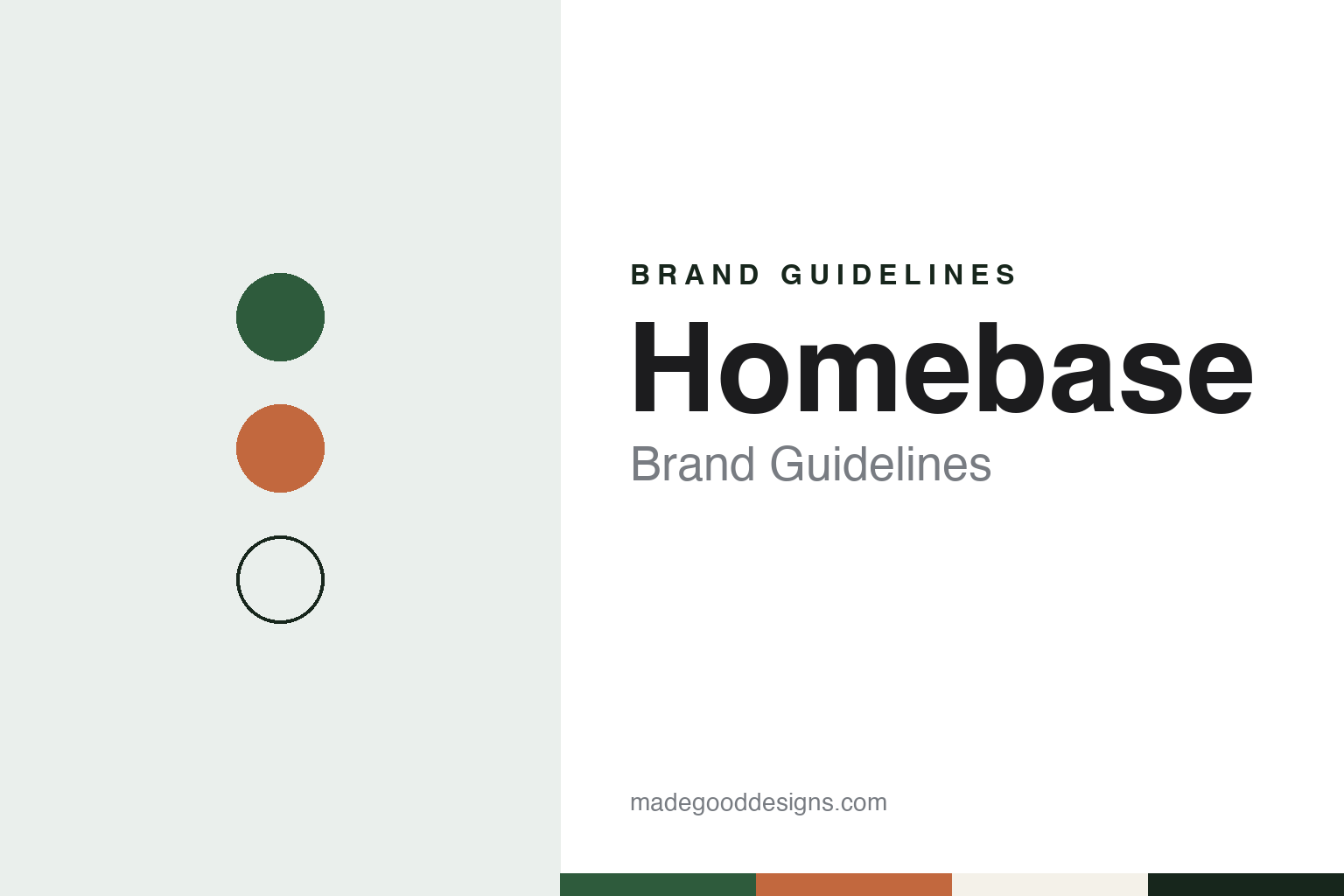
Homebase Brand Guidelines
A 1981 Croydon DIY chain that now lives inside The Range.
Aa
Two constants: a garden green and terracotta palette and a retail-park sans register. Abstract homage — not a Homebase sign or mark; no logo, fascia or product is reproduced.
A supermarket for DIY
A grocer and a Belgian retailer open a store on Purley Way.
Homebase was a joint idea of two retailers. Sainsbury’s, the British supermarket chain, and GB-Inno-BM, a Belgian retail group, worked out the concept in 1979, the BBC wrote in January 2016. English Wikipedia says the aim was to bring a supermarket-style layout to the British do-it-yourself market. The first store opened on Purley Way in Croydon on 3 March 1981, trading as Sainsbury’s Homebase, and the BBC added that the first stores opened in Croydon and Leeds that year.
The supermarket background showed in how the chain was run. English Wikipedia says Homebase used Sainsbury’s experience to move to central warehouses early on, and that by the 1990s most of its stock arrived at central depots before being sent out to the shops. By the end of the 1980s it had opened its fiftieth store. In 1982 it began the Spend & Save card, a loyalty scheme it kept until 2009, when it switched to the Nectar card; it left Nectar again at the end of 2016.
The chain grew sharply in January 1995, when Sainsbury’s bought the rival chain Texas Homecare from Ladbrokes. English Wikipedia says the deal roughly tripled Homebase in size. The Texas stores were converted to the Homebase format one by one, starting in February 1996 with the store at Longwell Green near Bristol, and the work was finished by 1999. That year the Sainsbury’s prefix was dropped and the business traded simply as Homebase. In October 1999 Sainsbury’s also bought the Hampden Group, which had run ten Homebase stores in Ireland as a franchise.
Colour
A new owner every few years.
Sainsbury’s sold Homebase in a deal announced in December 2000. The chain of 283 stores went to the private-equity firm Schroder Ventures in March 2001, while a set of development sites went to Kingfisher, owner of B&Q, English Wikipedia says. In November 2002 Homebase was sold again, to Argos Retail Group, part of GUS; in October 2006 that business was renamed Home Retail Group, putting Homebase alongside Argos and, later, Habitat concessions in its stores.
Under Home Retail Group the brand spoke mostly through television. In March 2005 it launched advertising by the agency AMV BBDO built around the line “Make a house a home,” and English Wikipedia lists the pop songs that soundtracked the campaign over the following years. The estate grew in late 2007 when Home Retail Group took 27 leasehold stores from Focus DIY and refitted them as Homebase. In May 2014 it opened Homebase Design Centres, a store format with a decorating ideas and advice area using touch screens, English Wikipedia says.
In January 2016 Home Retail Group agreed to sell Homebase to Wesfarmers, the Perth group that owns Bunnings. At the time Homebase had 265 stores and about 18,000 staff, the BBC reported, and Wesfarmers planned to turn them into Bunnings Warehouse stores. The sale completed in February 2016. The first conversion, in St Albans, opened in February 2017, and a Bunnings store in Penge, south-east London, followed in March 2018. The BBC reported in May 2018 that Wesfarmers had admitted “self-induced” mistakes, including dropping popular kitchen and bathroom ranges.
Typography
Sheds, counters and catalogues.
DIY chains, home-improvement retailers and builders’ merchants present themselves through the places where customers meet them. A home-improvement store is usually a large warehouse-style building with long aisles, high racking and a garden or timber area, and the chains describe those stores in their own words on their websites. A builders’ merchant is more often a yard and a branch, where tradespeople buy timber, bricks and fixings across a counter. For a design reader, the shed, the yard and the counter are where the colours, signs and lettering of these companies are seen at full size.
Many trade suppliers also sell from a catalogue and a website, with orders collected from a counter or delivered to site. Printed catalogues, product codes and click-and-collect services appear in the companies’ own descriptions, and in the trade press that covers them. Liveried vans and lorries carry the same names and colours from the branch to the building site, so a merchant’s identity often travels further on the road than it does on the high street.
Store and own-label naming is usually plain. Chains carry a founder’s surname, two merged surnames, or a literal compound of a product and a place, and many sell house ranges under their own names alongside the branded tools and materials they stock. Groups often run several trading names side by side, one for each trade or customer type, rather than folding them into one.
Corporate pages fill in the rest: founders, owners, listings, demergers and the investment groups that sit behind many chains. Ownership in this sector changes more often than the shop signs do, so the guides in this series date each change of owner to an independent source, describe each name and colour as documented, and treat the palettes shown here as unofficial interpretations.
Aa
A plain, sturdy sans in the spirit of retail-park signage and aisle markers. (Specimen set in Work Sans, a sans STAND-IN; NOT the Homebase logo.)
Homebase
Hilco, administration and a new home inside The Range.
On 25 May 2018 Wesfarmers sold Homebase to the restructuring firm Hilco for a nominal sum, the BBC reported. The chain then had about 250 stores and 11,500 workers, and the 24 stores that had been converted to Bunnings went back to the Homebase name. In August 2018 creditors approved a company voluntary arrangement that closed 42 stores, English Wikipedia says. In December 2018 Hilco opened a redesigned store in Orpington that mixed the old Homebase gondola shelving with the red Bunnings racking and put the weight back on decorating. By February 2020 the chain had 164 stores and said it would leave its CVA early.
Hilco put Homebase up for sale in November 2020 and again in February 2024. In 2024 it sold eleven UK stores to Sainsbury’s, the BBC reported. On 13 November 2024 Homebase went into administration, with Teneo appointed as administrators. On the same day CDS Superstores, the owner of The Range, bought the Homebase name, its intellectual property and up to 70 stores; the BBC reported that the brand would continue online while the shops became The Range stores. Other stores went to rivals: B&Q took three in Ireland and five in England, and Wickes took four leases, English Wikipedia says. The last four original Homebase stores, in Bishop’s Stortford, Frome, Market Harborough and Sevenoaks, traded for the final time on 22 March 2025.
Homebase therefore no longer runs stores of its own. In February 2025 Retail Gazette reported that CDS had relaunched the Homebase website in January and was using the name inside The Range: converted stores in Glasgow, Christchurch and Birmingham opened with Garden Centres by Homebase, and 34 existing kitchen showrooms were renamed Kitchens by Homebase. In June 2025 BBC Radio 4 told the chain’s story in an episode of Toast, its series on businesses that have gone.
For a design guide, Homebase shows how a retail name can outlast its own shops: the stores closed, but the word now labels garden centres and kitchen showrooms inside another chain. Compare Bunnings, whose format Wesfarmers tried to bring to its sites, and B&Q, which took over several of its stores. For this guide we use a garden green, terracotta and seed-tray paper tones with a sans, an unofficial interpretation; no product or logo is reproduced.
Explore & save
Keep Homebase’s identity on hand — save it to a board in the Made Good inspiration library.
Homebase identity set
Pin the garden green and terracotta palette and the retail-park sans register to your own board.