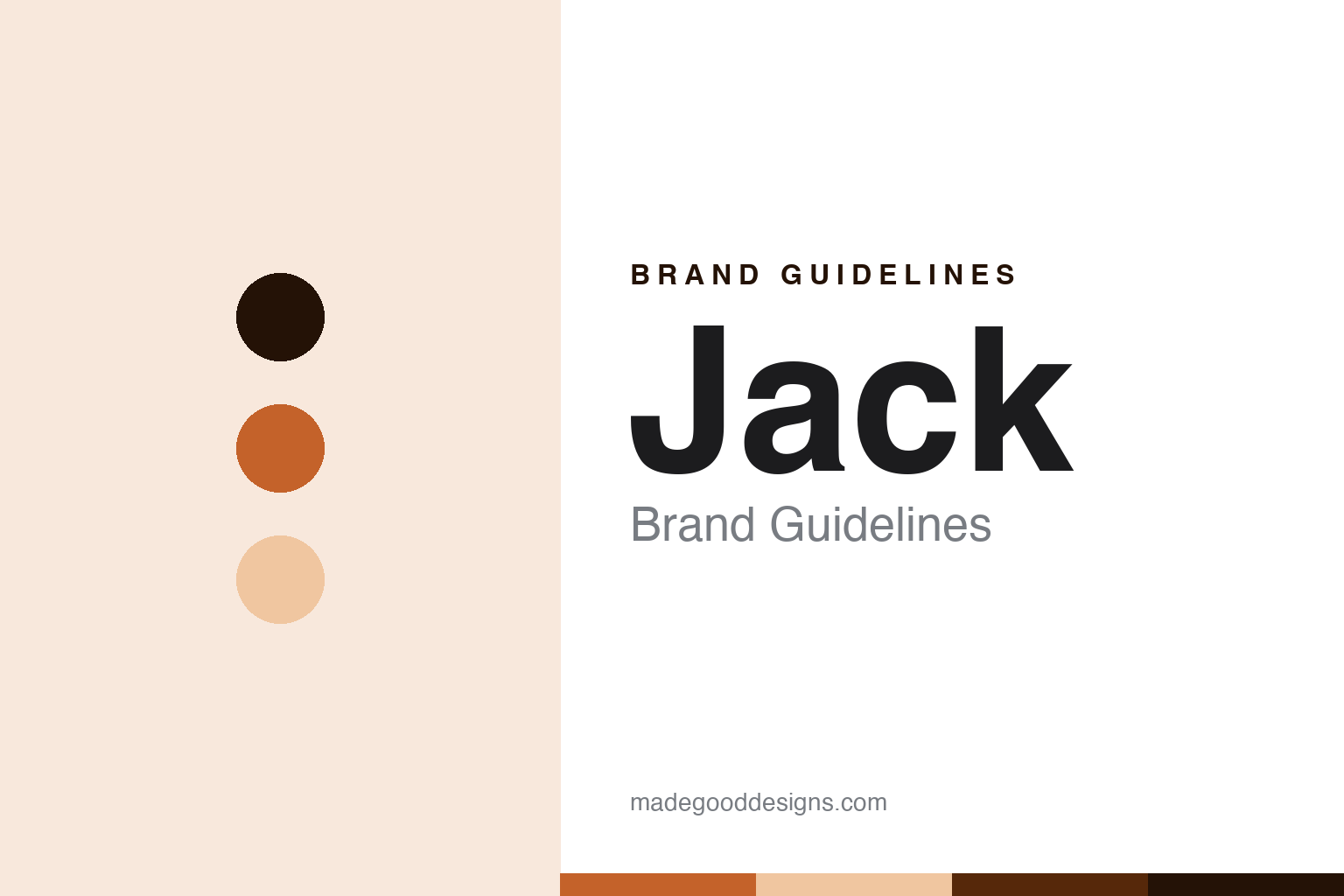
Jack Brand Guidelines
One in five, from a Taizhou workshop.
Aa
Two constants: a Jack-orange palette and a volume-sans register. Abstract homage — not a Jack product or mark; no machine, needle or logo is reproduced.
One in five, from a Taizhou workshop
Jack is the Chinese maker that grew from a 1995 workshop into the world’s largest industrial sewing-machine brand by volume — now listed in Shanghai.
Jack follows Necchi as the round’s volume node — a Chinese company that started as a backstreet workshop, grew into the largest industrial sewing-machine maker in the world by volume, went public in Shanghai, and then bought the storied European brands that once defined the high end. Its answer to a round about who owns the machines and where they are made is a scale one: a founder-controlled public company, made in China, that reached the top by volume and then acquired its way into the premium.
Its identity is one in five, from a Taizhou workshop. The workshop-to-leader growth, the Shanghai listing and the European acquisitions are the story here. Volume, then the high end. One in five, from a Taizhou workshop.
(Honest notes, so the founding, the ownership and the acquisitions are framed accurately, and one assumption corrected. Jack sells industrial sewing machines as its heroes — lockstitch, overlock and interlock machines, thick-material series and increasingly computerised servo-direct-drive automated machines, sold into more than 170 countries; we report its language as the brand’s own. On origin: the company was founded in 1995 as a workshop originally named Feiqiu by Ruan Jixiang and his brothers, and was rebranded Jack in 2003, which is also when the formal company entity was registered, so we say founded in 1995 as Feiqiu, rebranded Jack in 2003, and credit Ruan Jixiang and his brothers without naming the others; it is headquartered in Taizhou, Zhejiang. On ownership: Jack Technology is publicly listed on the Shanghai Stock Exchange under ticker 603337, with its IPO on 19 January 2017, and it is controlled by the founding Ruan family, with Ruan Jixiang as chairman — a founder-controlled public company, not a private-equity holding. On scale: it is described by multiple independent accounts as the world’s largest by volume, roughly a fifth of the global market. On the acquisitions: from 2009 Jack acquired the German automated-cutting maker Bullmer and the Italian makers Maica, for shirt-making, and Vibemac, for jeans production, so we credit those and note that there is no evidence of a “Maier” acquisition, which we drop. On where it is made: Jack-branded machines are made in China, while its acquired European brands keep some German and Italian production. Its designs and the Jack name are IP we describe but do not reproduce; there is no official brand hex; these tones are an unofficial interpretation.)
Colour
Jack lives in a Jack orange. Click a swatch to copy the hex.
Jack’s identity is high-volume, public and acquisitive — a Jack orange, an ink, a pale amber, a deep amber, and a paper. The palette leans Jack orange and pale amber: a bold, energetic register that nods to industrial scale and momentum rather than a loud logo colour. It signals one in five, from a Taizhou workshop — high-volume, public and acquisitive. The honest caveat: with no official brand hex, and the branding red-dominant, these values are an energetic, unofficial interpretation, not first-party colours.
The lesson is a strong orange signals a bold, high-volume identity. Jack’s world is the machine made at enormous scale. For designers, it is a reminder that a strong orange and a soft amber can carry a bold, industrial brand — an energetic tone held as an accent, not a product shot. Because a bright hue can fail as small text, keep type dark and let the colour live in the accents, palette and band. The takeaways: credit the workshop-to-leader growth; date it to 1995 as Feiqiu, rebranded Jack 2003; note the Shanghai listing and founder-family control; credit the Bullmer, Maica and Vibemac acquisitions; and drop the unverified “Maier.”
Typography
The register is a volume sans — high-volume, public, acquisitive.
Jack’s identity carries a high-volume, public, acquisitive spirit — a company built on scale that then bought its way upmarket. A volume sans captures the mood: clean, modern and confident, the register of an industrial leader. Set in a Jack-orange palette, the volume sans feels bold and scaled — exactly the personality Jack carries. It behaves like a made, high-throughput thing rather than a loud logo, mirroring a bobbin-ring and a stitch-line. (Jack’s real products and the name are things we describe but do not reproduce, and the exact typeface is not ours to use.) Because it is not ours to use, the honest description is “a volume-sans brand,” shown here in a stand-in. The type behaves like the brand: high-volume, public and acquisitive.
Aa
A volume-sans brand — bold and scaled. (Specimen set in Space Grotesk, a volume-sans STAND-IN; NOT the Jack logo or products.)
The sewing node
Jack stands for one in five, from a Taizhou workshop.
Jack sits fifth in the round as its volume node. A Jack-orange palette, a volume sans and a workshop-to-leader history make one thing — one in five, from a Taizhou workshop — the whole identity: high-volume, public and acquisitive. The scale is the pitch, the Shanghai listing is the frame, and the European acquisitions are the twist. The point is a founder-controlled public company that reached the top by volume, in a round about who owns the machines and where they are made.
Put to work, the identity is the brand told straight, the founding dated, the ownership named and the acquisitions credited. A brand in this spirit would credit the workshop-to-leader growth, date it to 1995 as Feiqiu, note the Shanghai listing and founder-family control, credit Bullmer, Maica and Vibemac, and drop the unverified “Maier.” A reader in this spirit would keep the facts right: Jack sells industrial lockstitch, overlock and interlock machines and automated servo-drive machines into 170-plus countries as its heroes; it was founded in 1995 as Feiqiu by Ruan Jixiang and his brothers, rebranded Jack in 2003, HQ Taizhou, Zhejiang; it is publicly listed on the Shanghai Stock Exchange under 603337 since January 2017, controlled by the Ruan family; it is the world’s largest by volume; it acquired Bullmer, Maica and Vibemac from 2009, with no “Maier” acquisition; and its Jack-branded machines are made in China. Jack sits after Necchi and before Merrow. The honest editorial moves are to credit the growth, to date the founding, to name the listing, and to credit the real acquisitions.
For designers and brand-builders, Jack carries the sewing node: date a founding to its workshop origin — and credit the real acquisitions, not a mis-remembered one. The lessons: a brand can rise from a backstreet workshop to global leadership, here in industrial sewing machines; a founding is dated to 1995 as Feiqiu, rebranded Jack in 2003, not simply to the corporate-entity date; an ownership is named as a founder-controlled Shanghai listing; and acquisitions are credited precisely as Bullmer, Maica and Vibemac, with a mis-remembered “Maier” dropped. It is also a reminder to stay precise: Jack is the Chinese volume leader in industrial sewing, public in Shanghai and made in China — with the palette here an unofficial interpretation. The hook is that scale: from a 1995 backstreet Taizhou workshop called Feiqiu, the Ruan family built the machine behind roughly one in five of the world’s industrial sewing machines, then bought the storied German and Italian brands that once defined the high end. Read that way, Jack is less a single machine than one in five, from a Taizhou workshop: high-volume, public, acquisitive. The lesson for a brand is that dating the founding and crediting the real acquisitions reinforce each other, and naming the listing keeps the story earned. Jack made one-in-five-from-a-Taizhou-workshop the identity — proof that a precise growth story can anchor a node.
Explore & save
Keep Jack’s identity on hand — save it to a board in the Made Good inspiration library.
Jack identity set
Pin the Jack-orange palette and the volume-sans register to your own board.